)
)
)
16 Top High School Innovators Compete for ExxonMobil STEM Africa Title at AEW 2026
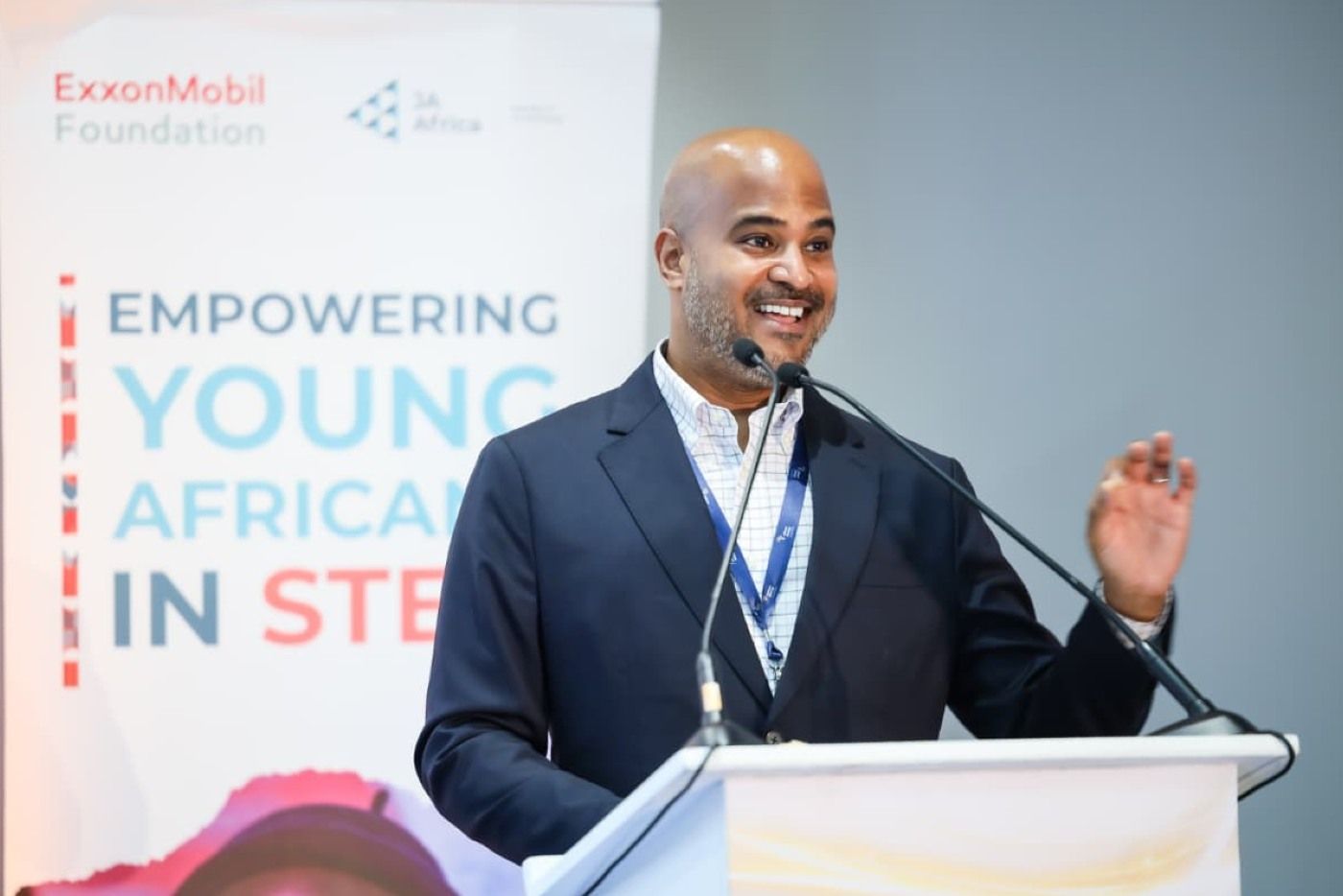
The finals of the 2026 ExxonMobil Foundation STEM Africa Challenge we’re held on during African Energy Week 2026 in Cape Town on Monday where finalists from Angola, Mozambique, Namibia and Nigeria pitched their science, technology, engineering and mathematics-driven projects and prototypes to a panel of judges.
The 16 finalists were selected from an initial pool of approximately 10,000 African high school students, competing in online STEM quizzes, in-person Zonal Competitions and National STEM Innovation Camps, where the students were challenged to think creatively and develop solutions to solve real-world challenges being faced across the continent.
ExxonMobil and the ExxonMobil Foundation have collectively spent $1.6 billion since 2000 in support of education in the areas in which ExxonMobil operates throughout the world, helping to refill the pipeline of engineers and scientists through STEM education for the next generation.
“We cannot do this work without really strong implementing partners in each of our countries,” Alvin Abraham, President of the ExxonMobil Foundation said, thanking each of the partners for their commitment to increasing STEM education in their respective countries, as well as ExxonMobil volunteers and employees who helped the students with their projects.
2026 solutions
Team Ixietu from Angola tackled an issue central to food security and developed an AI-powered soil analysis system to help farmers collect data on their soil fertility, with the aim of improving soil quality and improving agricultural productivity.
The solution addresses the challenges of low soil fertility and limited soil analysis. By placing a sampling stake into the soil, soil data is collected that is then fed into an AI powered soil analysis app that generates customised technical soil correction and remedial recommendations for farmers. This solution is aimed at enhancing food security, introduce precision agriculture, increase agricultural productivity.
Team Nexora Nexus from Nigeria addressed one of Africa’s most pressing development challenges – access to reliable electricity. The team’s Solar Hydro Smart Grid is a renewable energy solution designed to provide reliable, uninterrupted and affordable energy to under-served communities in Nigeria.
The solution uses solar power to store solar energy as pumped water, as well as store excess solar power in a battery. A solar powered pump, pumps water from a lower level storage tank to an elevated storage tank. When power is needed, water is released from the elevated tank and flows through a turbine, which drives a generator to produce electricity. The system is integrated with AI and a smart meter to determine when grid power switches off and power is needed. This provides clean power with less money spent on fuel.
Team Mentes Brilhantes from Mozambique presented its Eco Carteiras solutions aimed promoting a circular economy by overcoming with two challenges, namely Mozambique’s high volume of uncollected plastic waste and a significant shortage of school furniture.
The Eco Carteiras solutions aims at using collected high-density polyethylene and polypropylene plastic waste, together with discarded sawdust to manufacture eco-friendly school desks and chairs that is resistant to water and termites. The two plastic were chosen as they do not release toxic gasses when heated while the use of discarded sawdust does not require the use of new wood.
Meanwhile, the team from Namibia presented the AquaVolt water harvesting and purification technology to address the challenge of water scarcity in communities in Namibia facing a flood/drought paradox.
AquaVolt aims to provide water during times when it is scarce by harvesting floodwater during the rainy season. Once the floodwater is harvested using gravity fed channels, it undergoes primary treatment before being stored in smart tanks fitted with sensors and a smart monitoring system. The water then undergoes secondary treatment if needed to meet water quality standards before being distributed to communal water taps during the dry season.
The winner will be announced at the African Energy Week Gala Dinner on 13 October, 2026.