)
)
)
AEW 2024 Closing Panel Talks Advancing African Priorities at COP29
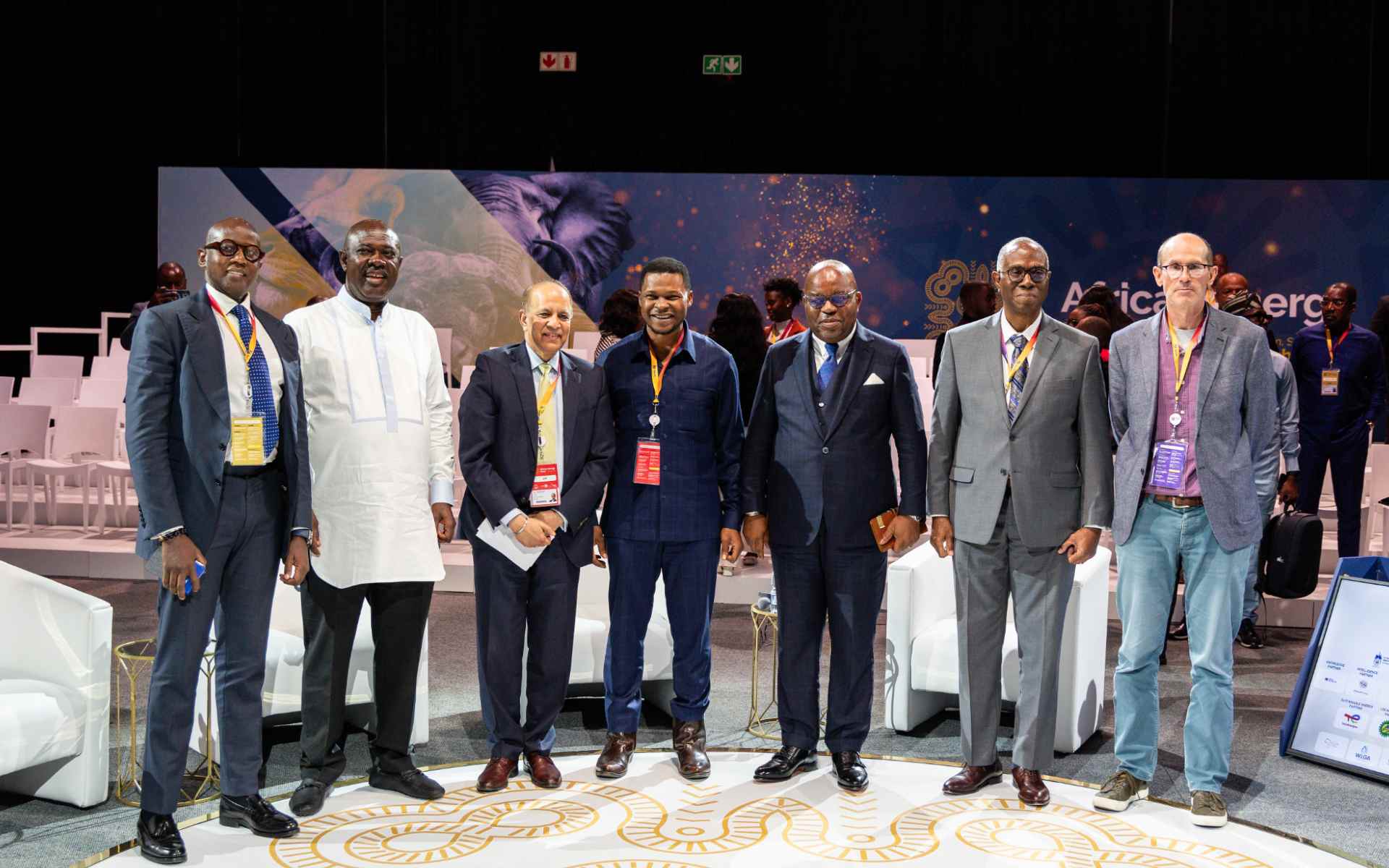
Africa should be the solution to the climate crisis, speakers on the closing panel of the African Energy Week: Invest in African Energies 2024 conference discussed. With the upcoming COP29 commencing next week in Azerbaijan, the panel underscored the vital need for Africa to adopt a differentiated approach to the energy transition, in which gas plays a fundamental role in enhancing energy security and fueling the transition to a cleaner future.
With over 600 million people living without access to electricity and over 900 million without access to clean cooking solutions across the continent, the panel emphasized that Africa’s first priority must be energy security, with natural gas serving as a catalyst in this regard.
Bruno Jean-Richard Itoua, Minister of Hydrocarbons of the Republic of Congo, said that “Africa can be part of the solution, with our gas, hydro, solar and wind. African countries are calling to do the same thing that other [developed] countries have done.”
According to Heineken Lokpobiri, Minister of State for Petroleum Resources (Oil) of Nigeria, “Africa is a victim. We cannot call on Africa to transition – transition from what? If those who are responsible for overnight emissions are still ramping up production, they have no right to call on Africa to stop producing. Africa struggles with energy poverty and our oil and gas resources will enable us to finance the development of other sectors, including wind, hydro and solar.”
Also featuring on the panel was David Le Page, Director-Coordinator at Fossil Free South Africa. Agreeing with some of the points raised, Le Page said that “There can be no question that Africa is a victim, not only in terms of climate change but exploitation in various forms. Unfortunately, we see that colonialism and institutionalized racism are very much alive in current affairs. When we look at the structures that govern international finance, we do not see a framework that is designed to deliver justice and development for Africans.”
However, Le Page believes that in the current, modern context, “there is an amazing opportunity to transition as quickly as possible to renewable energy – if we can find the finance.” Citing climate change impacts seen worldwide in recent months, Le Page stated that “any new developments of oil and gas, no matter where they are developed in the world, risk the chance of pushing us past the point of stability.”
NJ Ayuk, Executive Chairman, African Energy Chamber, offered an alternative perspective. In his view, the fact that Africa only accounts for 3% of global greenhouse gas emissions, Ayuk said “we need oil. We are not saying that we do not welcome solar, wind and renewable energy, but we understand the intermittent nature of these technologies. With oil and gas, you create a market where people do things for themselves rather than relying on others.”
Eric Williams, Principal Consultant and President at Royal Triangle Energy Solutions, added that, “Because molecules are predominantly used for export, you’re faced in this continent with a deficit of development, a deficit of wealth and of income growth from the actual place where the value of the molecule is realized.”
Africa’s natural gas industry – measuring 620 trillion cubic feet in proven resources – is rapidly being positioned as a bridge for the continent’s energy transition. Offering a low-carbon and easily accessible energy solution, gas serves to significantly enhance the continent’s energy availability while reducing emissions across energy operations.
Florival Mucave, Executive Chairman of the Mozambique Oil & Gas Chamber, drew insight into the benefits of natural gas, specifically the low-emission nature of gas. He said that “If the carbon emissions are the problem, we should concentrate on investing in the technologies that make it possible to reduce emissions. One of the biggest advantages of gas is the carbon emissions, but there is no differentiation with other fossil fuels. Gas should be the fuel for the transition.”