


AEW 2026 Highlights Opportunities to Expand Japanese Investment Across African Energy
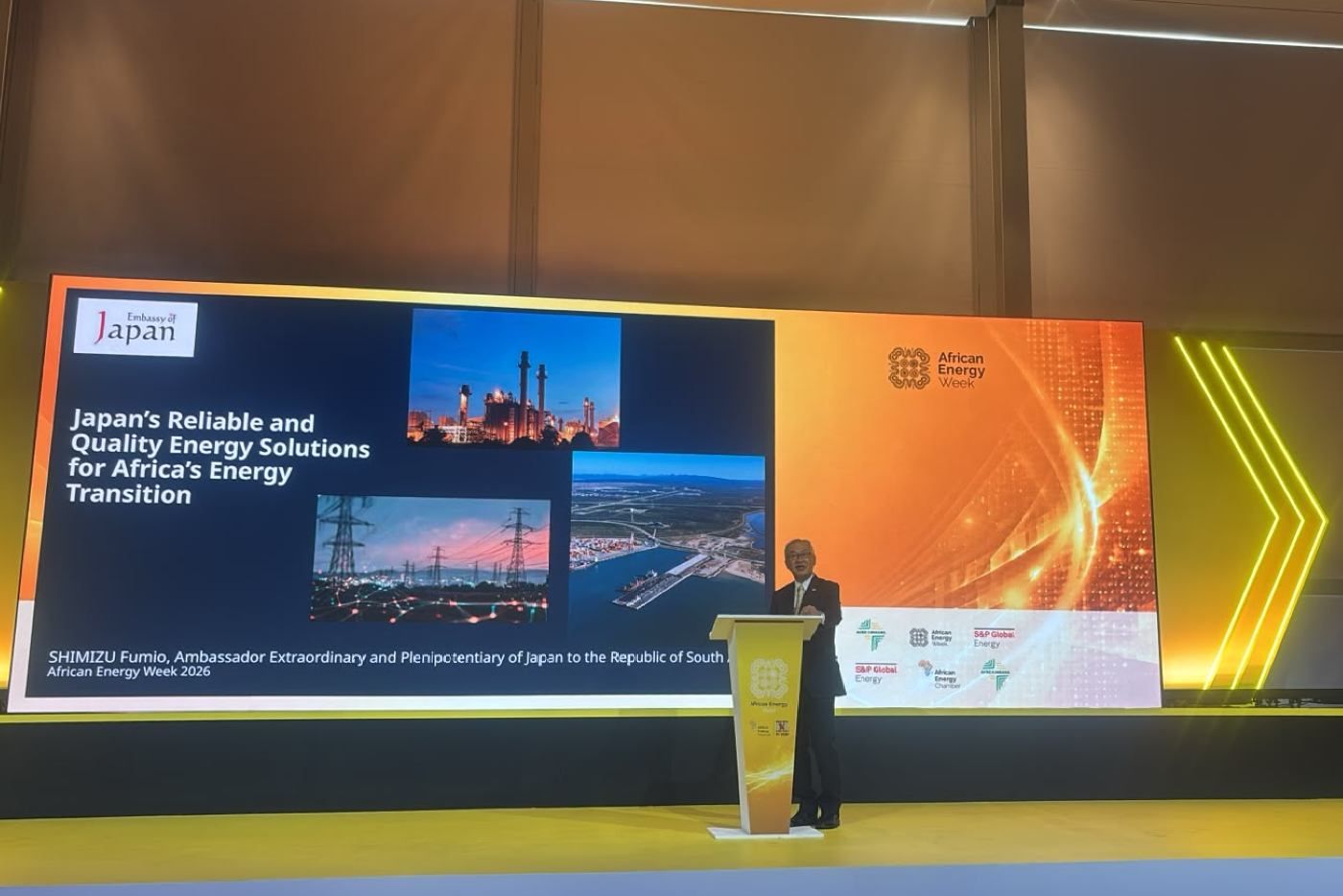
African Energy Week (AEW) 2026 reinforced Africa's growing commercial relationship with Japan, highlighting opportunities to expand Japanese investment across natural gas, electricity infrastructure, critical minerals and low-carbon technologies. With Japanese companies already participating in major African LNG developments and financial institutions supporting energy infrastructure projects, the event provided a platform to explore how Japanese capital, technology and expertise can support the continent's next phase of energy development.
Speaking at AEW 2026 in Cape Town, Fumio Shimizu, Ambassador of Japan to South Africa, emphasized the potential to align Japan's technological and financial capabilities with Africa's abundant resources and growing energy requirements.
“Japan believes that connecting Japanese technology and investment with Africa's abundant resources and growing energy demand can help establish reliable energy supplies and resilient resource supply chains. Through cooperation, we can also support skills development, technology transfer and local value creation, contributing to economic growth in both Africa and Japan,” Shimizu said.
Japanese Investment Anchors Africa's LNG Expansion
Japan's involvement in Africa's energy sector extends well beyond renewable energy, with Mozambique representing one of its most significant upstream investments. Japanese trading company Mitsui & Co. – backed by the Japan Organization for Metals and Energy Security (JOGMEC) - holds a 20% participating interest in the Mozambique LNG project in the Rovuma Basin, which is designed to produce approximately 13.1 million tons of LNG annually.
Japanese financial institutions have also played a major role in supporting the development. In 2020, the Japan Bank for International Cooperation (JBIC) committed up to $3 billion in project financing as part of a $14.4 billion international financing package. Japanese utilities, including JERA and Tokyo Gas, have secured long-term LNG purchasing arrangements, connecting Mozambique's gas resources to Asian energy markets.
The project resumed construction in January 2026 following a prolonged suspension, demonstrating the importance of sustained international partnerships in advancing capital-intensive African energy developments. This model – combining upstream participation, development financing, infrastructure and long-term offtake – illustrates how African producers can leverage Japanese partnerships to monetize resources while strengthening energy security in both markets.
South Africa and Japan Expand Infrastructure Cooperation
Beyond LNG, Japan is strengthening its involvement in African power generation, grid infrastructure and industrial decarbonization. In November 2025, Japan and South Africa signed a memorandum of cooperation covering clean hydrogen and ammonia, carbon capture, utilization and storage, smart grids, transition finance and critical minerals.
At AEW, Shimizu outlined opportunities to translate these commitments into projects, including gas-fired electricity generation, renewable energy, transmission and distribution upgrades, distributed generation and lower-carbon transport infrastructure.
For South Africa, these partnerships could support investment in new generation capacity and modernized electricity networks while creating opportunities for Japanese technology suppliers, infrastructure developers and financiers. Recognizing the country's reliance on coal-fired electricity, Shimizu also emphasized the importance of protecting employment during the transition.
“While pursuing the energy transition, we must also support people working in the coal mining industry,” he said.
Financing and Technology Open New Investment Pathways
Japanese development and financial institutions are positioned to play a central role in expanding these partnerships. JBIC, JOGMEC, Japan International Cooperation Agency and the Japan External Trade Organization provide complementary capabilities spanning project finance, investment support, resource development, capacity building and commercial engagement.
For African governments and developers, this combination offers opportunities to access long-term financing, advanced technologies and technical expertise for large-scale energy projects. For Japanese companies, Africa presents opportunities to diversify resource supply chains, enter growing electricity markets and participate in infrastructure developments supporting industrial expansion.
The discussions at AEW 2026 demonstrated how these interests can translate into broader cooperation across Africa's energy value chain. Building on existing LNG investments and infrastructure partnerships, Japan has opportunities to deepen its commercial presence in both established and emerging African energy markets.
As new projects advance, AEW will remain a key platform for connecting Japanese investors, technology providers and financial institutions with African governments and project developers, supporting the partnerships needed to move projects from investment planning to development.