)
)
)
AEW 2026 Renegade Intel Track to Explore Who Captures Value from Nigeria’s AI Boom
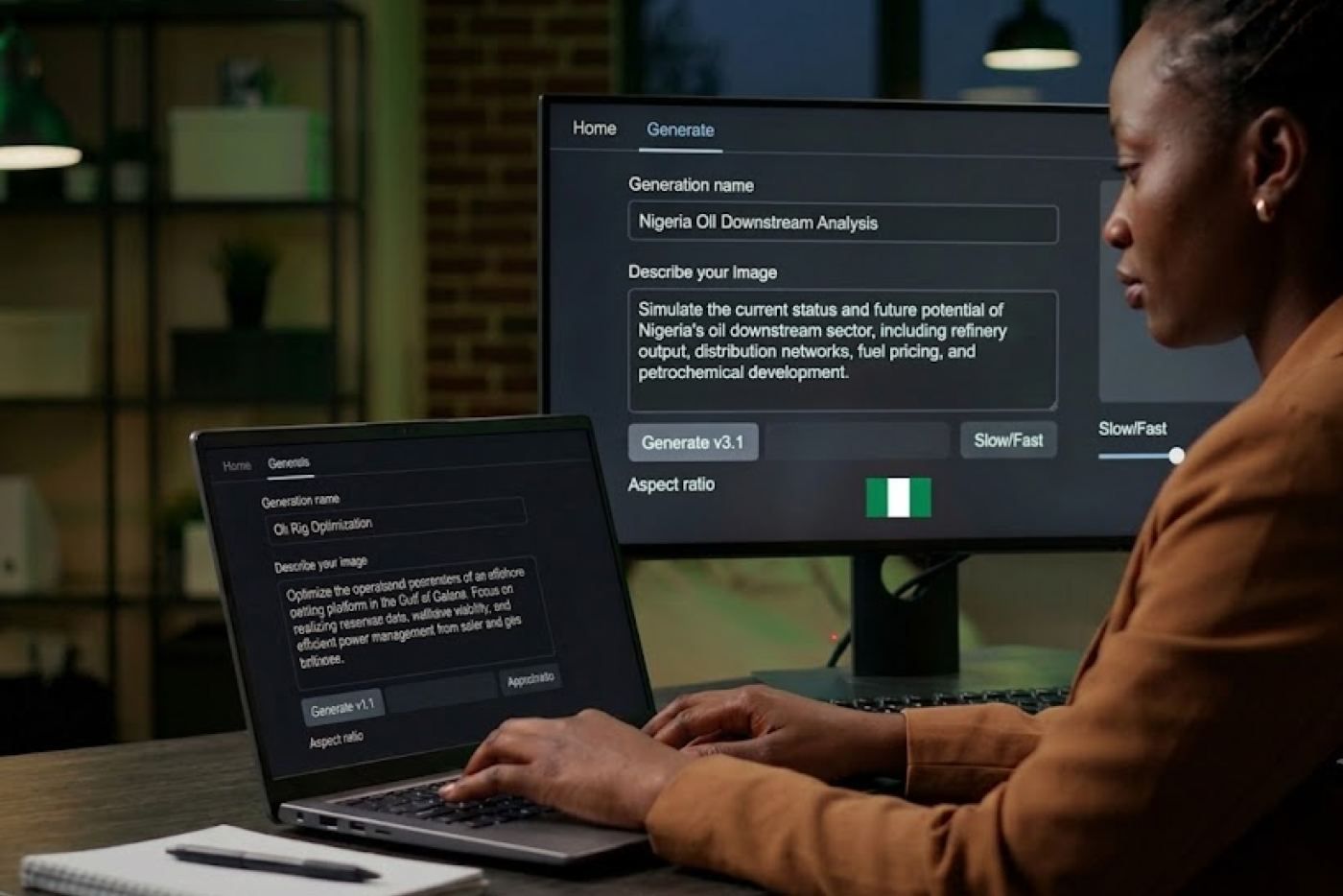
Nigeria is emerging as one of Africa’s most advanced testbeds for AI infrastructure development, where data centers, gas-to-power systems and hyperscale cloud platforms are converging into an integrated digital economy. A three-layer ecosystem is taking shape – upstream gas producers supplying baseload energy, midstream operators building carrier-neutral data centers and downstream hyperscalers monetizing connectivity – positioning the country as a key hub in Africa’s expanding digital infrastructure landscape.
Against this backdrop, African Energy Week 2026’s Renegade Intel Platform, taking place in Cape Town from October 12–16, will examine how energy systems, digital infrastructure and capital markets are converging. Discussions will focus on gas monetization, electricity market reform and hyperscale demand and how these forces are reshaping ownership structures across Africa’s emerging AI and data center economy.
Who Owns Nigeria’s AI Data Center Infrastructure?
Infrastructure ownership in Nigeria is increasingly fragmented across private equity platforms, telecom operators and sovereign-linked developers, reflecting the rapid commercialization of the country’s digital infrastructure ecosystem.
Private equity-led expansion is being driven by Actis through Rack Center, whose LGS2 facility delivers 12 MW of AI-ready capacity designed for hyperscale workloads. Open Access Data Centres, part of WIOCC Group, is also scaling its Lagos footprint toward 24 MW to meet rising regional cloud and enterprise AI demand.
Telecom operators are increasingly shifting from connectivity providers to infrastructure owners. MTN Nigeria is deploying more than $240 million through its Genova data center platform, expanding into domestic cloud and enterprise hosting. Airtel Africa, via Nxtra, is developing a 38 MW hyperscale facility in Eko Atlantic aimed at large-scale AI and cloud tenants.
A sovereign-linked entrant, Kasi Cloud, has launched a 100 MW AI-ready campus in Lekki backed by the Nigerian Sovereign Investment Authority. The facility is designed for high-density GPU workloads using advanced liquid cooling systems, positioning it among West Africa’s largest planned compute hubs.
Powering AI: Gas-to-Compute Systems
Power supply for these assets is increasingly shifting away from the national grid toward embedded gas-to-power systems. Tetracore Energy Group is integrating a 20 MW data center with a 100 MW gas-fired power plant in a $400 million partnership with Huawei, while upstream gas producers such as Seplat Energy provide long-term feedstock under industrial contracts.
Engineering and distributed generation firms such as Clarke Energy are deploying modular gas engine systems that ensure 24/7 uptime for AI workloads. These models effectively convert stranded gas reserves into continuous compute capacity, making energy infrastructure a direct input into digital output.
Where the Long-Term Value Accumulates
Value creation across Nigeria’s AI infrastructure stack is increasingly distributed across software, infrastructure and energy layers. Hyperscalers such as Microsoft, Google and Amazon Web Services capture value through AI services and cloud applications while renting rather than owning infrastructure. Interconnection providers such as Equinix and Digital Realty generate recurring revenues by enabling data exchange between networks and enterprises.
Telecom operators including MTN and Airtel are capturing growing domestic cloud demand, shifting workloads onshore and reclaiming value previously lost to offshore hosting – estimated in the hundreds of millions of dollars annually. Meanwhile, gas producers and midstream developers are securing long-term industrial offtake contracts tied to 24/7 compute demand, creating stable baseload-driven revenue streams across energy markets.
“Africa cannot afford to be a passive consumer in the global AI revolution. By aligning energy investments, digital infrastructure and financing models, we can ensure our resources, our data and our innovation power the next generation of global industry from within the continent,” says NJ Ayuk, Executive Chairman, African Energy Chamber.
The next phase of Nigeria’s AI infrastructure growth will depend on integrating gas production, electricity reform and fiber networks into scalable, bankable digital platforms. These dynamics will be central to the Renegade Intel Platform, where policymakers, financiers and developers will assess how Africa can structure, retain and expand value across the full AI infrastructure stack.