)
)
)
AEW: Natural Gas Takes Centre Stage for Africa’s Sustainable Development at GECF Workshop
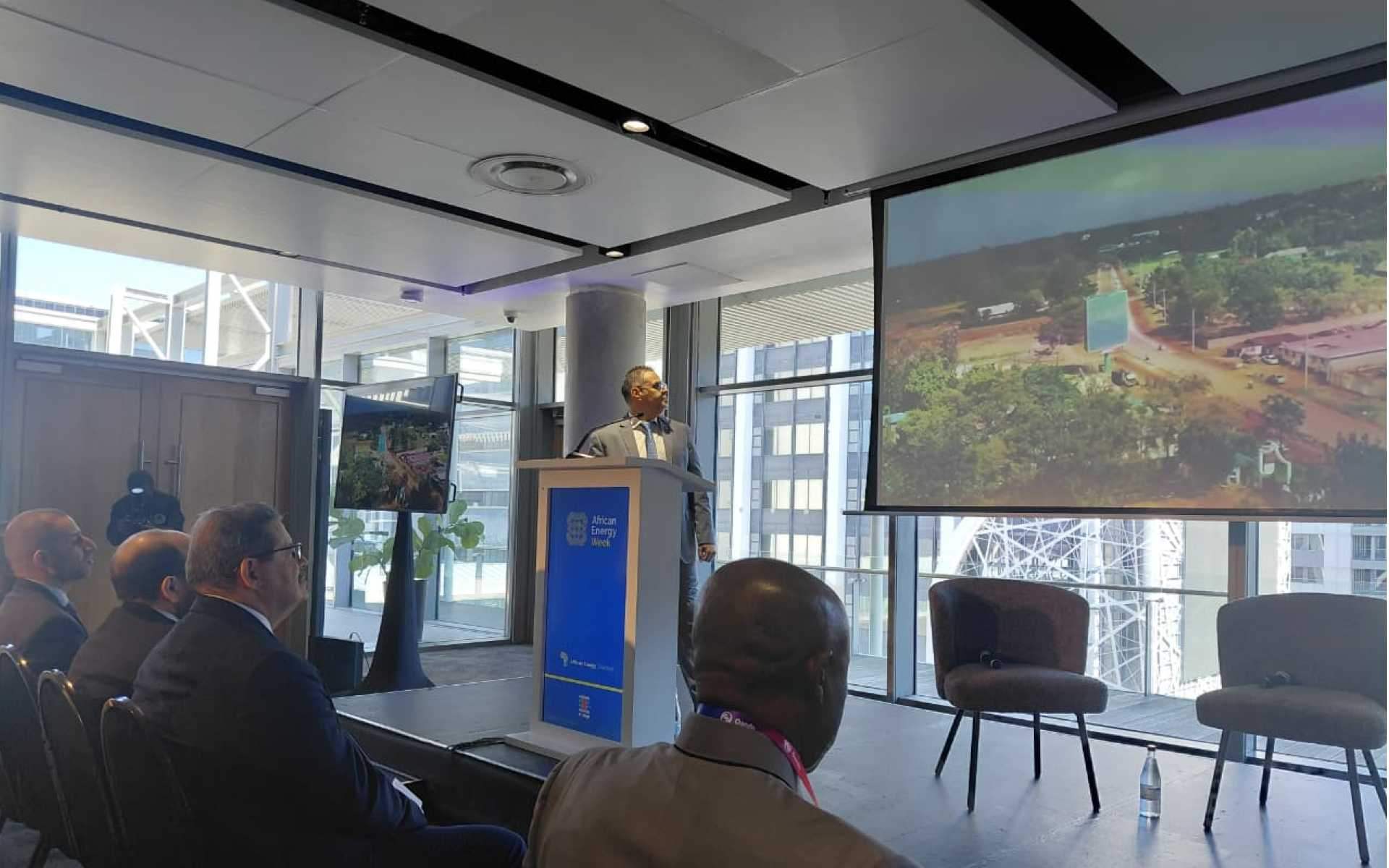
Industry leaders, financiers and policymakers convening at the Gas Exporting Countries Forum (GECF) workshop at African Energy Week (AEW): Invest in African Energies 2025 reemphasized natural gas as a critical energy source for Africa’s sustainable future.
Facing the urgent need to expand energy access to people while navigating the pressures of the Paris Agreement's just energy transition, speakers highlighted that natural gas should not simply be seen as a bridge fuel between coal and renewables, but as the transformative fuel poised to power Africa’s industrialization, economic development and social progress in the decades ahead.
The critical need to shift the narrative surrounding investment in Africa was highlighted during the session – Africa is not lacking in domestic capital and institutional investors hold substantial reserves that are often invested abroad.
“We need to do our homework and better market our own resources,” said Mohamed Hamel, Secretary General of the GECF, calling for enhanced cooperation among governments, private sector and financing institutions to unlock the $1 trillion investment needed in African gas infrastructure by 2050.
Discussions highlighted ongoing projects such as Nigeria’s LNG7 initiative, Senegal’s gas discoveries in the Yakaar-Teranga gas project, which targets a final investment decision later this year, Mozambique’s Coral Norte project and emerging South African gas developments targeting 6,000 MW of new power capacity by 2033.
Nigeria’s Minister of State for Petroleum Resources, Ekperikpe Ekpo, emphasized wide-ranging efforts currently in progress. These include the expansion of gas-to-power projects to stabilize electricity supply – aiming to provide clean cooking solutions to 5 million homes by 2030 – and advancing pivotal pipeline infrastructure, such as the Trans-Saharan and Obiafu-Obrikom-Oben (OB3) gas Pipeline. He reaffirmed Nigeria’s commitment to a gas-driven growth agenda that simultaneously reduces emissions and promotes inclusion.
Cheick Niane, Senegal’s Energy, Petroleum and Mines Ministry Secretary General, highlighted the transformational role of gas for his country’s economic modernization and energy access. He applauded the development of the Yakaar-Teranga gas project as a foundation for a just energy transition and leadership in global gas trade. This is further supported by the Greater Tortue Ahmeyim (GTA) Phase 1 LNG project.Straddling the maritime border between Senegal and Mauritania, the GTA project is set to produce 2.3 million tons of LNG annually, positioning Senegal as a future LNG export hub.
NJ Ayuk, Executive Chairman of the African Energy Chamber, stated, “Natural gas is not just something of the future, it is now. If we do not develop this resource rapidly, we will be left behind. Gas is the force that drives industrialization, fertilizer production and energy access – essential for tackling energy poverty that affects 600 million Africans. Solar and wind alone will not get us there.”
Finally, the workshop stressed that Africa’s future depends on a balanced energy mix with gas at its core – a “gas game” that requires Africa-led policies and private sector dynamism to truly monetize and harness the continent’s resources.
.