)
)
)
AEW’s Power Africa Today Conference to Examine How Africa Turns Clean Energy Potential into Reliable Power at AEW
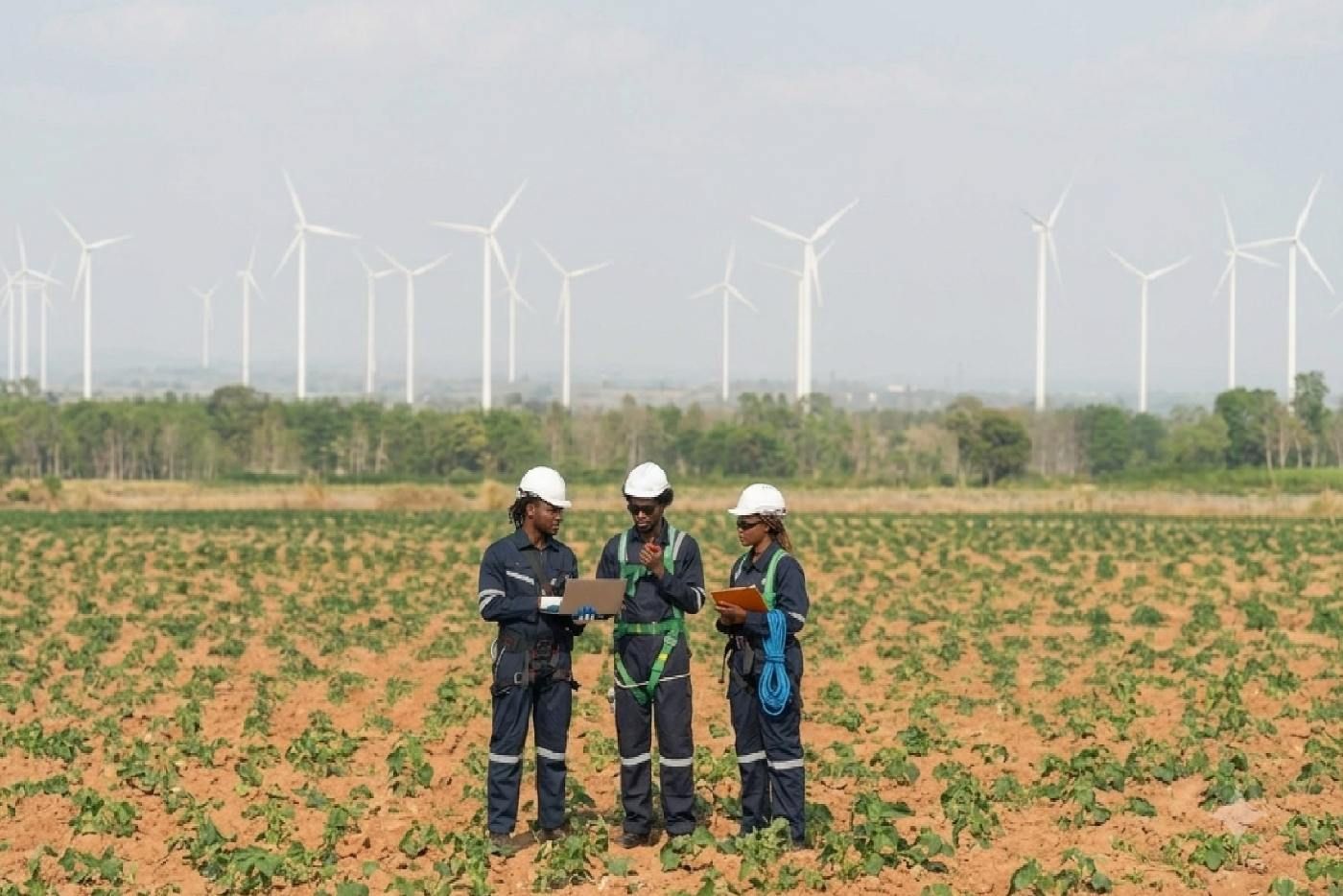
Africa's clean energy debate has reached a turning point. The technologies needed to generate low-cost renewable power are now proven and widely deployed, yet more than 600 million people across sub-Saharan Africa remain without reliable electricity. The continent added a record 11.3 GW of renewable capacity in 2025 – led by Ethiopia, South Africa and Egypt – and the pressing question is no longer how to produce clean power but how to deliver it at the scale and dependability industry requires.
These questions sit at the heart of African Energy Week’s Power Africa Today conference, taking place during in Cape Town from October 12-16. The Capturing Africa's Clean Energy Opportunity to Close the Power Generation Gap session will move past broad ambition toward the design trade-offs, system integration challenges and emerging technical solutions that decide whether new capacity becomes dependable supply.
A defining theme will be the shift from generation to integration. As the cost of solar and storage has fallen, the binding constraint has moved onto the grid. The Africa Clean Energy Corridor captures the imbalance, calling for up to $25 billion a year in generation investment through 2030 alongside a further $15 billion a year for the transmission infrastructure needed to carry that power to the point of consumption.
Energy storage is central to that effort. Across the continent, weak networks and unstable grids have reclassified battery systems as core national infrastructure. The technology is increasingly deployed to steady frequency, reduce curtailment and displace inefficient diesel generation. Harsh operating conditions, from high temperatures to remote geography, are pushing developers toward fully engineered systems with automated maintenance rather than standalone hardware.
Decentralized supply is supported by both governments and private industry, but it raises its own cost and design questions. Mini-grid capital costs in sub-Saharan Africa fell by around 20% between 2020 and 2024, to a four-year average of $6,824 per kWp, yet that figure still runs more than double the global benchmark of roughly $3,000 per kWp. With most of the region’s estimated 3,000 mini-grids still reliant on grants and concessional finance, the session will weigh how commercial models can carry deployment to industrial scale.
"Reliable power touches every part of the value chain. It’s what turns a mining license into a smelter and a connection into a job,” says NJ Ayuk, Executive Chairman of the African Energy Chamber. “Getting the grids and the financing right is how we get there.”
The discussion arrives amid accelerating progress. Mission 300, the World Bank and African Development Bank electrification drive, has now connected more than 50 million people across 40 countries, with roughly half of the connections still to come expected from off-grid solutions. By convening policymakers, utilities, investors and developers around the practical levers of delivery, from competitive procurement to cross-border transmission and storage suited to local conditions, Power Africa Today aims to turn that momentum into firm, affordable power capable of anchoring Africa's industrial growth.