)
)
)
AEW’s Powering Africa Forum Highlights Solar Expansion as Continent Adds Record 4.5 GW in 2025
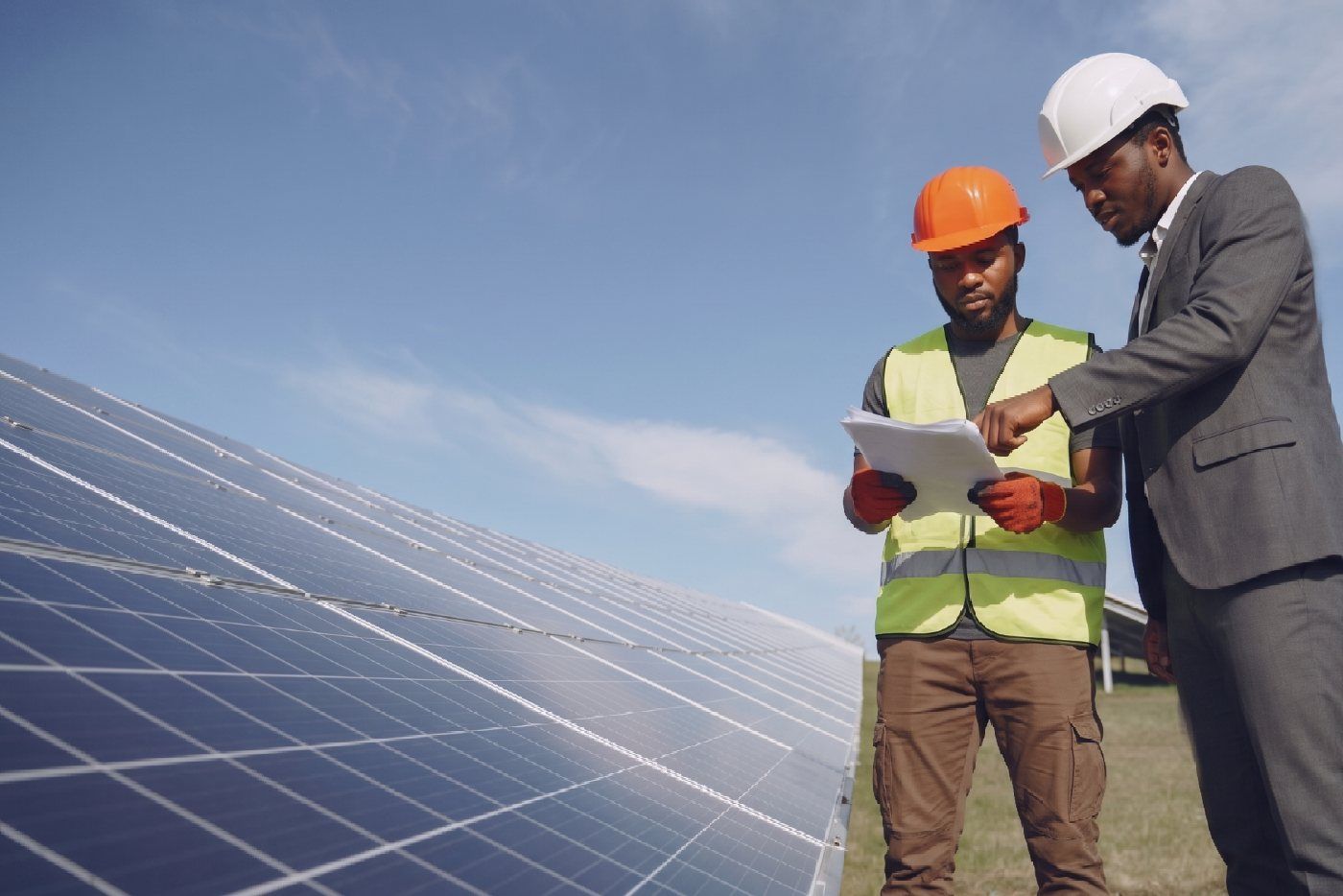
Global energy markets are once again in flux as oil prices surge amid ongoing conflict in the Middle East, with Brent crude breaching $100 per barrel and oil cost volatility rippling into industrial energy budgets. Governments and energy buyers from Asia to Africa are now increasingly spotlighting solar power as a hedge against fossil fuel price shocks and supply risk – part of a broader shift toward cleaner and resilient electricity systems. Underlining this trend, solar installations across Africa jumped 54% in 2025, with 4.5 GW added on the continent – the fastest annual growth ever recorded for photovoltaics in the region.
Africa’s solar potential is immense. The continent hosts 60 % of the world’s most productive solar resources, with average irradiation levels exceeding 2,119 kWh/m² per year. From utility-scale solar parks to rooftop and industrial installations, solar is increasingly becoming a strategic resource for municipalities and companies. Regulatory innovations such as wheeling frameworks and private power purchase agreements (PPAs) allow local governments and industrial users to procure solar energy directly, bypassing aging grids and volatile fossil fuel markets. These developments are unlocking new deployment and financing models, positioning solar not just as a renewable option, but as a key driver in Africa’s energy transition and industrialization.
Solar power will take center stage at African Energy Week’s Powering Africa conference will unite policymakers, utilities, investors and developers to tackle hurdles in generation, distribution and transmission.
A key session, “Scaling Solar Power to Achieve Universal Electricity Access,” will examine innovative financing models, emerging technologies, supportive policies and scalable deployment strategies for expanding reliable, affordable solar power across underserved regions.
“Africa’s solar growth shows that the continent can deploy renewables at scale, but the priority must remain reliable and affordable energy. Solar, gas and other resources all have a role to play in powering industrialization and expanding access to electricity,” said NJ Ayuk, Executive Chairman of the African Energy Chamber.
Regulatory Innovations Clear the Path for Solar Markets
Historically, many African energy markets were oriented toward state utilities and large centralized projects, but evolving regulatory frameworks are enabling wheeling mechanisms and private PPAs that let independent producers (IPPs), industries and municipalities access and trade solar electricity directly.
In South Africa, an energy wheeling framework has been developed alongside the Renewable Energy Independent Power Producer Procurement Program to allow IPPs to transmit renewable energy to commercial off‑takers via the existing grid under Use‑of‑System or wheeling agreements. The 195 MW Springbok solar plant illustrates how multi-buyer corporate PPAs and virtual wheeling structures are scaling private renewable procurement. The facility wheels power across Eskom’s grid to anchor offtakers including AWS and Sibanye-Stillwater.
Distributed Generation: From Rooftops to Industrial Parks
While utility‑scale solar remains central to national planning, 44% of new solar capacity in 2025 came from distributed sources – including rooftop PV, commercial and industrial (C&I) systems and mini‑grids.
At the household and municipal level, solar and storage systems are already delivering results. In Nigeria, Lagos state launched a rooftop solar program for public institutions under a Rural Electrification Agency partnership, signaling growing deployment of distributed solar on municipal buildings. Additionally, $150 million in solar green bonds has been raised to expand rooftop and distributed solar projects across Africa, improving access and reducing reliance on diesel generators.
For industrial energy users, solar is also a strategic asset. In Nigeria, the Electricity Act 2023 opens more room for embedded generation, captive power and direct supply models. Agroindustrial firm Olam Agri’s commercial and industrial (C&I) solar partnership with renewable energy company Husk Power, announced in April 2025, will decarbonize rice processing in Rukubi and reduce dependence on diesel in one of the country’s most energy-intensive agricultural corridors. Husk Power has linked the project to its broader target of deploying 50 MW of C&I solar in Nigeria over five years, in a market expected to add more than 550 MW of C&I solar between 2025 and 2029.
The discussion at AEW 2026 will further highlight projects and investment opportunities linking energy access with Africa’s industrialization and sustainable growth.