)
)
)
Afreximbank’s AEB Eyes First Investments in 2027
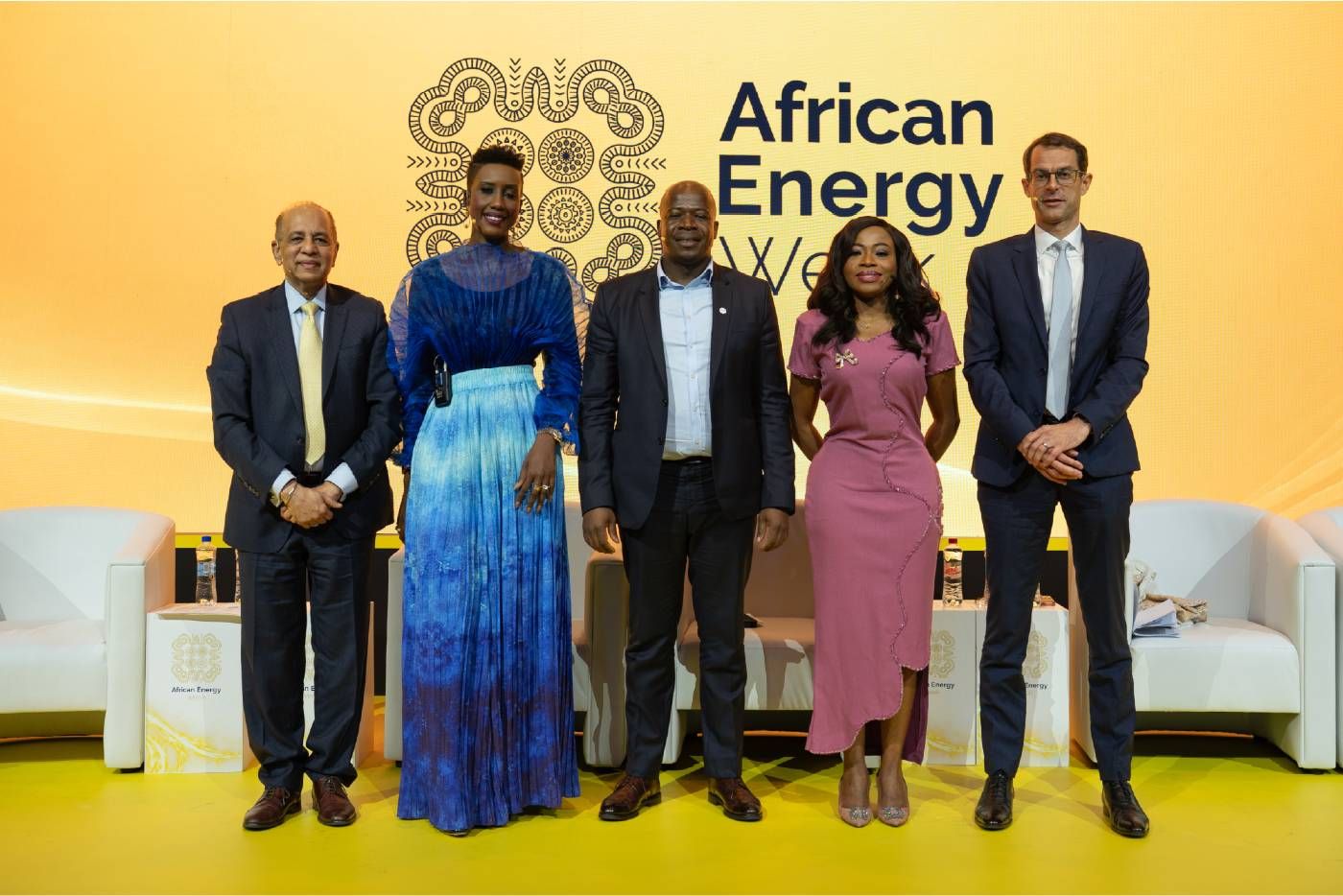
Afreximbank’s Helen Brume says the African Energy Bank has secured $500 million in initial capital and expects first project financings next year, as AEW 2026 panelists discuss Africa’s energy investment priorities.
The African Energy Bank (AEB) expects to finance its first projects in 2027 after securing $500 million in initial paid-up capital, Helen Brume, Director of Project and Asset-Based Finance, Afreximbank, said during African Energy Week (AEW) 2026 in Cape Town.
Speaking on Tuesday she said the bank would create an African-led financing channel for energy projects across the continent, including oil and gas, power, renewables and cross-border infrastructure.
“We always talked about creating our own financial architecture, creating financial institutions led by Africans, which will prioritize supporting African projects. And that’s what the AEB is about,” Brume said.
The bank is a partnership between Afreximbank and the African Petroleum Producers’ Organization, representing African oil-producing countries. Brume said Nigeria had committed $200 million and Afreximbank $222 million, with possible contributions from Egypt, Ghana and Ivory Coast. The partners are developing the bank’s governance framework, selecting a president and preparing its credit and business development policies. Nigeria has been selected to host the institution in Abuja.
Brume said the bank would finance projects across the energy value chain while helping address barriers that prevent infrastructure from reaching financial close. Afreximbank’s project preparation facility provides up to $3 million for feasibility studies, advisory services and other early-stage costs.
“It takes an average of seven years for a project to reach financial close. Seven years just to get from idea to money,” she said, arguing that guarantees, trade finance and secure feedstock and offtake arrangements are also necessary to make projects bankable.
The financing challenge echoed other panelists’ calls for investment and execution. Jean-Marc Kloss, Group Managing Director for West Africa, SLB, said African development investment could rise from $32 billion in 2026 to around $50 billion by 2029. “Do we see an increase in oil and gas activity in Africa? Absolutely. We see it today, and we see it in the years to come,” he said.
Marieme-Sav Sow, Vice President of Engagement & Advocacy, TotalEnergies EP Africa, linked investment to energy sovereignty, arguing that African production could help reduce exposure to disruptions in global supply chains. She said the company’s investment decisions remain guided by a clear principle, “Delivery at cost, delivery on time, and delivery with less emissions.”
Rivoningo Mnisi, Group Executive for Renewables at Eskom Holdings SOC Ltd., highlighted the need to expand renewable generation and storage while ensuring reliable power as South Africa’s aging coal fleet faces increasing pressure. “The more and more we integrate renewables, we’ll probably need some sort of a baseload, in particular, as we’ve got an aging coal fleet that is supporting at the moment as a baseload,” Mnisi said, adding that Eskom was also considering gas-fired generation and technologies to reduce emissions from coal plants.
Together, the panelists underscored that Africa’s energy security depends not only on its resource base, but also on the ability to finance infrastructure, manage project risks and deliver generation and supply projects at scale.