)
)
)
African Energy Leaders Urge Regional Cooperation for Energy Security at AEW 2024
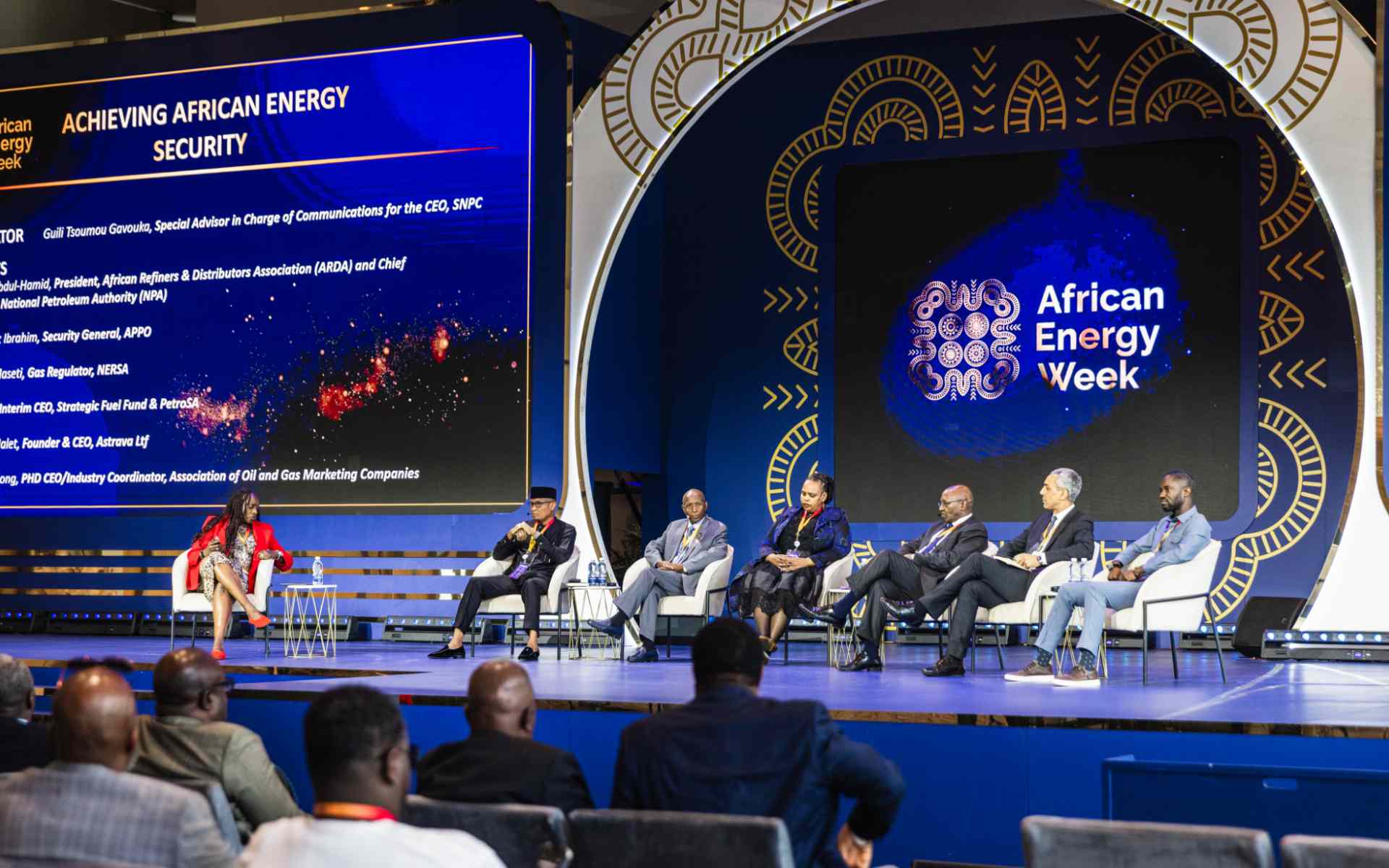
Industry stakeholders and regulators convened during a panel at African Energy Week: Invest in African Energies 2024 on Thursday to discuss strategies for achieving energy security, underscoring enhanced regional collaboration and infrastructure development.
“Energy security is not just an economic imperative, but a foundation for stability. The demand for energy in Africa is surging at an unprecedented pace, with rapid economic growth and urbanization driving our energy needs,” said John Anim, Managing Director of Platform Petroleum.
“This requires Africa to address the need for incremental energy. The economy itself is about energy being transformed to create economic and social development at all levels, whether supporting industrialization or developing infrastructure,” said Christophe Malet, Founder & CEO, Astrava Ltd.
To achieve long-term energy security, Africa's upstream and downstream industry stakeholders must collaborate to develop and implement a practical roadmap for transitioning the continent's primary energy mix toward a more sustainable, lower-carbon future.
“The upstream and downstream must collaborate. Nothing moves without refined petroleum products. This collaboration involves both African governments and regulatory frameworks – the basic structure must be in place before people can collaborate,” said Mustapha Abdul-Hamid, President of the African Refiners & Distributors Association and Chief Executive of National Petroleum Authority of Ghana.
“Even for countries that have the resources, it’s important to have the market for those resources. Collaboration brings the opportunity for aggregation of demand, so those countries can take the product to market,” said Nomfundo Maseti, Gas Regulator, NERSA.
“With the right conditions, we can secure funding, fast-track technology transfer and unlock Africa’s energy potential. African energy security is within reach through collaboration,” said Anim.
The panel emphasized infrastructure as a crucial element in maximizing energy delivery to regional markets. This includes distribution infrastructure such as gas and product pipelines and LPG plants, aimed at promoting intra-regional trade of African crude oil and petroleum products while reducing imports.
“We have a lot of resources on the African continent – partner on those, put the infrastructure in place. This is what Africans should be looking at if you want energy security – building infrastructure within the continent, while driving exploration and refining. Not importation,” said Dr. Omar Farouk Ibrahim, Secretary General of the African Petroleum Producers Organization.
Gas was highlighted as a critical tool for achieving energy security on the continent, able to provide a reliable energy source and bridge the gap between traditional fossil fuels and renewable energy. Its versatility in power generation, industrial applications and domestic use positions it as a pivotal component of Africa's energy transition strategy, enabling more stable electricity supply and promoting economic growth across the continent.
“The paradox of plenty is that we have the resources, but we don’t have the access. We export everything. Ghana alone imports almost 5 billion liters of petroleum products,” said Riverson Oppong, CEO and Industry Coordinator, Association of Oil and Gas Marketing Companies Ghana.
“Now is the perfect time for Africa to develop its enormous gas resources,” said Malet.