)
)
)
What Africa’s Energy Distribution Landscape Can Learn from Europe’s Pipeline Model
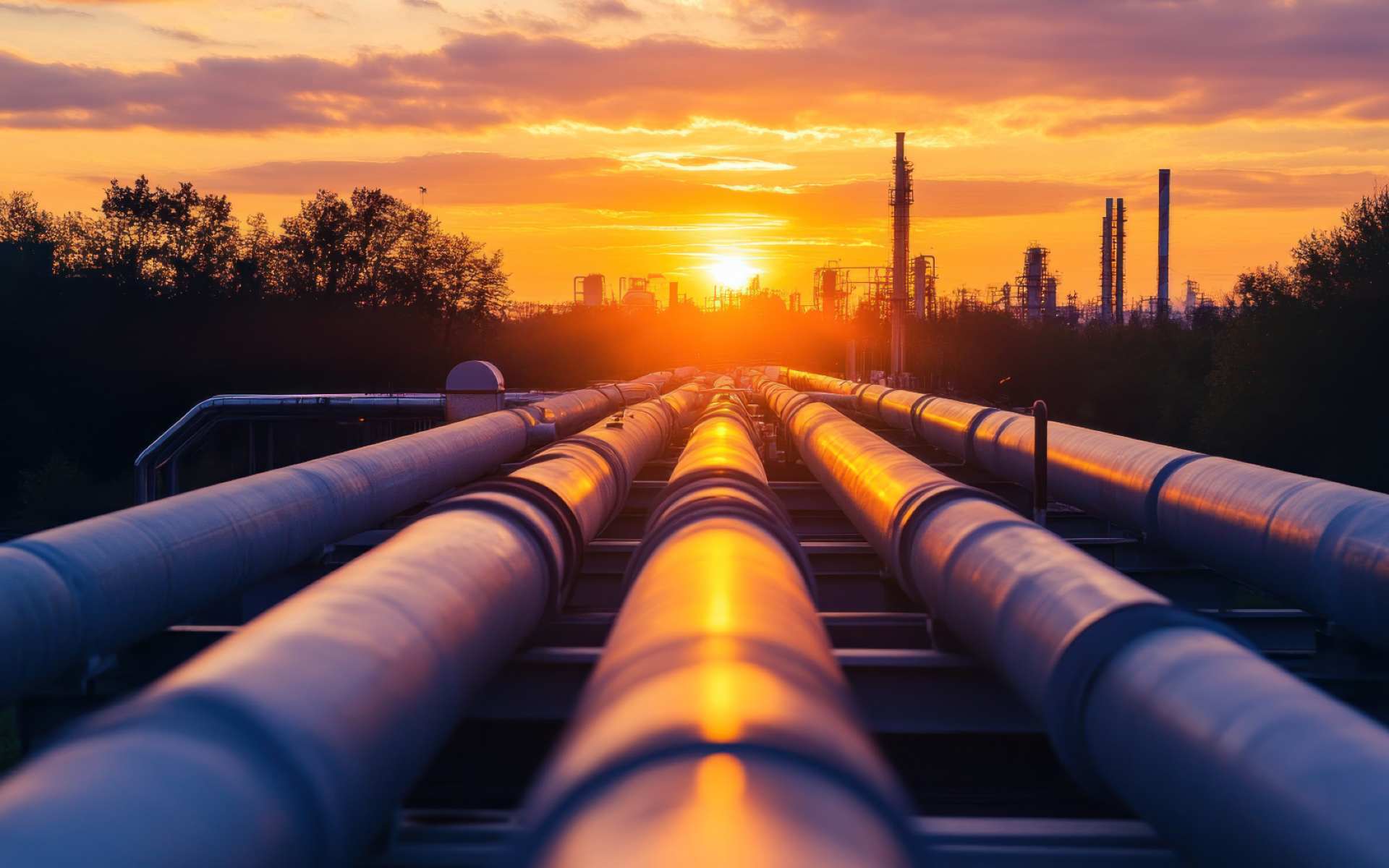
Rising energy demand and expanding production are sharpening focus on Africa’s energy distribution infrastructure, much of which still relies on road transport rather than fixed pipeline networks. Unlike Europe, where extensive cross-border pipelines move oil and gas efficiently across long distances, much of Africa depends on trucks, barges and coastal shipping to deliver fuel from production hubs and import terminals to inland markets. This dependence raises costs, increases losses and constrains industrial growth at a time when energy security and competitiveness are becoming central policy concerns.
Across Europe, decades of investment have created dense pipeline systems that underpin reliable energy flows. Crude oil and natural gas pipelines connect North Sea production with refineries and demand centers in Germany, France and Italy, while import corridors link European markets with supplies from Norway, North Africa and the Caspian region. Infrastructure such as the Trans-Adriatic Pipeline and legacy systems like the Brent pipeline network have reduced transport costs, limited exposure to logistics disruptions and provided scale that road-based supply chains cannot match.
In Africa, the challenge is less about resource availability and more about connectivity. Oil and gas production and fuel imports are largely coastal, while major demand centers and industrial hubs sit inland. In the absence of pipelines, countries across West, East and Southern Africa continue to truck refined fuels and gas hundreds of kilometers, creating bottlenecks and raising end-user prices. From Zambia and Uganda to Nigeria’s inland states and South Africa’s Gauteng industrial heartland, road-based logistics remain the backbone of energy distribution.
“Africa does not have an energy resource problem – it has an infrastructure problem,” states NJ Ayuk, Executive Chairman of the African Energy Chamber. “Without pipelines, you cannot industrialize at scale. You cannot move gas cheaply, you cannot stabilize power markets, and you cannot unlock the full value of upstream production. Pipelines are not optional; they are the foundation of energy security and economic growth.”
Encouragingly, several pipeline projects are beginning to reshape this landscape. The East African Crude Oil Pipeline (EACOP), a 1,443-kilometer system linking Uganda’s Lake Albert oilfields to Tanzania’s port of Tanga, is one of the most significant. With construction advanced by late 2025 and first exports expected in 2026, EACOP demonstrates how targeted pipeline investment can open export routes while reducing reliance on long-haul road transport.
Further west, the proposed Nigeria–Morocco Gas Pipeline represents a more ambitious vision. Backed by Nigeria, Morocco and partners including the UAE, the 5,600-kilometer project aims to transport up to 30 billion cubic meters of gas annually across West Africa, supplying regional markets while ultimately connecting to Europe. Beyond export potential, the pipeline is designed to improve energy access across 13 countries and support gas-fired power and industrial development along its route.
Smaller-scale regional projects are also playing a role. Gas pipeline expansions in Senegal and Ghana are linking offshore production to domestic power plants and industrial zones, lowering generation costs and reducing dependence on fuel trucking. On the refined products side, the Lobito–Lusaka Oil Products Pipeline, expected to come online in 2026, aims to move fuel from Angola’s coast to Zambia’s capital, easing logistics pressure on regional road networks.
African Energy Week (AEW) has emerged as a key platform for advancing these infrastructure conversations. By convening governments, investors, developers and financiers around cross-border pipelines, public-private partnerships and bankable project structures, AEW has helped elevate distribution infrastructure from a technical issue to a strategic priority.
Africa’s truck-based distribution model reflects decades of underinvestment rather than lack of opportunity. As new pipeline projects move from planning to execution, and as capital increasingly aligns behind them, the continent has an opportunity to adapt lessons from Europe’s pipeline-driven system to its own geography and growth ambitions. Building that connectivity will be central to delivering affordable energy, industrial expansion and long-term resilience – objectives that AEW 2026 will continue to place at the forefront of the continental energy agenda.