)
)
)
Africa’s Next Energy Play: From Export Markets to a $3 Trillion Internal Trade Opportunity
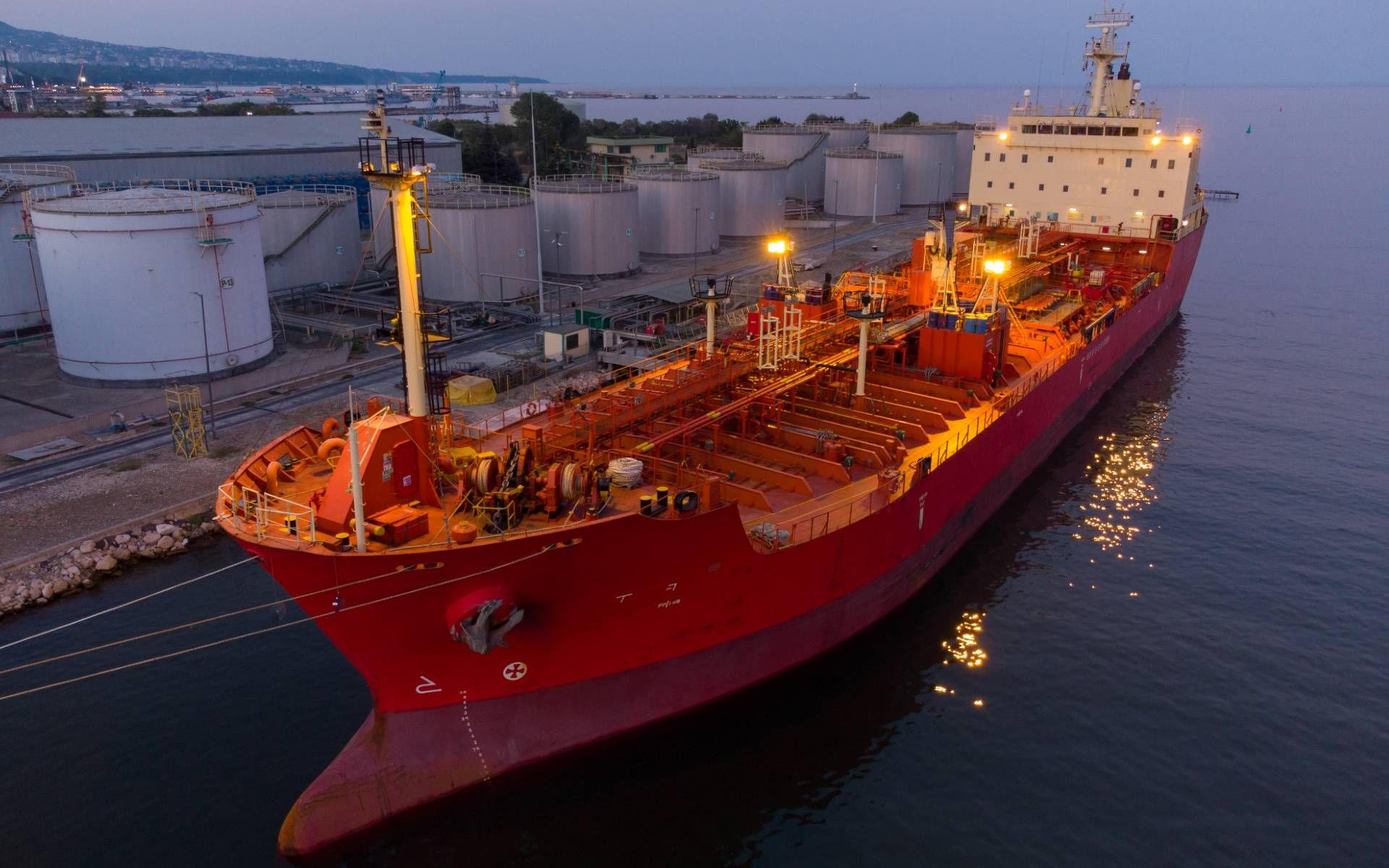
African energy investment has long been structured around export markets. Gas projects in Mozambique and Senegal supply European LNG terminals, while crude from the Gulf of Guinea flows primarily to Asian refiners.
The African Continental Free Trade Area (AfCFTA), however, is beginning to shift that model. Signed by 54 of 55 African Union member states and covering a combined GDP of more than $3 trillion, the agreement brings energy services into a broader continental trade integration agenda. Fuels already account for roughly 20% of intra-African exports, and with coordinated policy and infrastructure investment, that share is expected to grow.
This reflects a structural change in how African energy markets are defined. Export-oriented projects depend heavily on external demand, leaving revenues exposed to global price swings and geopolitical shocks. By contrast, a continental market driven by domestic and regional demand offers a more stable, policy-influenced growth trajectory. For investors, a market of 1.4 billion people with expanding industrial demand is less correlated to external volatility and offers long-term exposure to infrastructure, power generation and downstream value chains within Africa itself.
That shift toward internal integration is increasingly backed by physical infrastructure. The Ten-Year Africa Energy Infrastructure Investment Plan for Cross-Border Interconnectivity, led by AUDA-NEPAD, outlines a pipeline of transmission projects running from 2026 to 2036.
The plan identifies 19 advanced-stage projects requiring $19 billion in investment, alongside a broader pipeline of developments at earlier stages. Its core objective is to connect Africa’s five regional power pools into a unified grid capable of transferring electricity across borders – linking surplus generation markets with deficit regions and enabling large-scale renewable deployment.
The African Energy Chamber's State of African Energy 2026 Outlook identifies the Southern African Power Pool as the most operationally advanced of the five pools, with established cross-border trading mechanisms and relatively strong grid connectivity. Other pools, including those of West and East Africa, are progressing at different speeds, navigating regulatory fragmentation and infrastructure gaps. The Central African Power Pool remains at an earlier stage of development. Together, these systems form the backbone of a future continental electricity market – one that could fundamentally reshape how energy is produced, distributed and consumed across Africa.
As regulatory and infrastructure frameworks begin to align, capital is starting to follow. Intra-African trade currently represents just 15–18% of total continental commerce – well below levels seen in Asia or Europe. But full AfCFTA implementation by 2045 is projected to increase that figure by $276 billion, according to the United Nations Economic Commission for Africa.
Energy is positioned at the center of that growth. Liberalization of energy services under AfCFTA, combined with the rollout of cross-border transmission infrastructure, is creating the conditions for a self-sustaining continental market for the first time.
New financial institutions are also entering the picture. A planned African energy-focused bank, expected to launch in mid-2026, is set to provide dedicated capital for projects aligned with this integration agenda – further reinforcing the shift toward African-led financing solutions.
“Africa is no longer just an export play – it’s becoming a demand-driven energy market in its own right,” said NJ Ayuk, Executive Chairman of the African Energy Chamber. “The combination of AfCFTA, cross-border infrastructure and African-led financing is creating a new investment case – one where capital is deployed not just to move resources out of the continent, but to power industrial growth within it. The opportunity now is to scale that shift.”
African Energy Week (AEW) 2026, convening October 12–16, 2026 in Cape Town, will bring together ministers, investors and national and international energy companies to examine how downstream industrialization and cross-border infrastructure can accelerate continental energy market integration and reduce reliance on European and Asian export economics.
As AfCFTA implementation advances alongside a growing pipeline of transmission projects, AEW 2026 is expected to focus on how to translate policy alignment into bankable, cross-border energy deals. Discussions are expected to address financing models, regulatory harmonization and the role of African-led capital in scaling intra-continental trade. In this context, AEW serves as a key forum for shaping the partnerships and investment frameworks needed to operationalize Africa’s shift toward an internally driven energy market.