)
)
)
Africa’s Onshore Comeback: Indigenous Operators Rewrite the Playbook
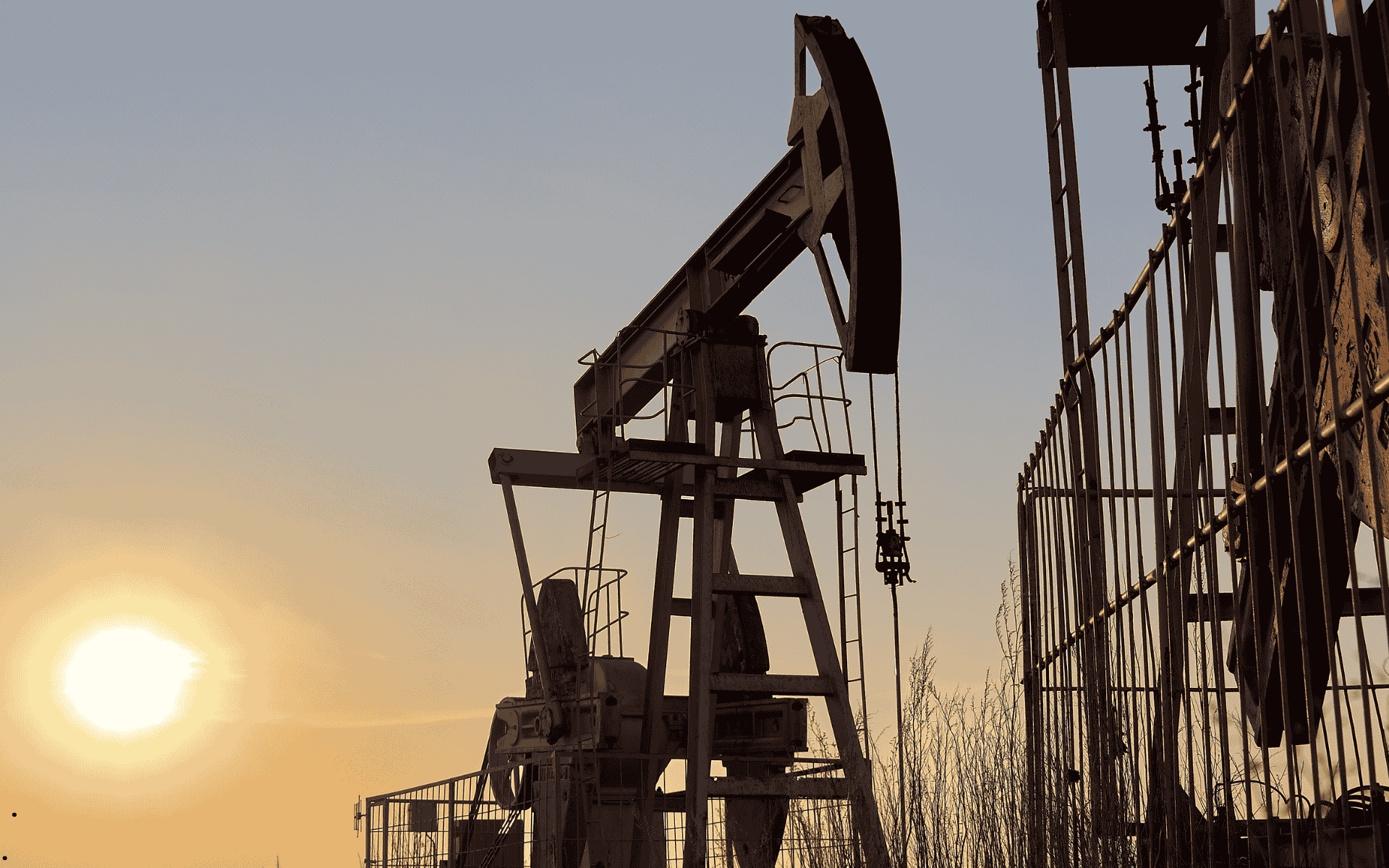
Senegal’s national oil company Petrosen recently announced a $100 million onshore exploration campaign for 2026 after revoking licenses from inactive operators, marking one of the clearest recent signals that Africa’s inland basins are back in focus. The move comes as international oil companies continue reallocating capital offshore, prompting governments and indigenous players to reposition mature and frontier onshore acreage as competitive, reform-backed investment opportunities.
Across the continent, regulatory recalibration, asset transfers to local operators and accelerated digital deployment are reshaping the economics of brownfield redevelopment. With African onshore spending projected to reach $22 billion by 2026 and Brent forecast to average $58 per barrel, competitiveness is increasingly defined by fiscal efficiency, incremental recovery incentives and technology-driven cost control rather than scale alone.
Regulatory Reform and Fiscal Reset
Governments are fine-tuning fiscal frameworks to unlock incremental barrels from mature fields. Angola’s Decree 8/24 reduces Petroleum Production Tax to 15% for incremental output and lowers PSA income tax to 25%, directly incentivizing redevelopment of aging blocks. Egypt’s 2026 stimulus package, backed by a $5.7 billion investment plan to drill 480 wells, accelerates cost recovery and follows roughly $5 billion in arrears repayments to restore investor confidence.
Gabon’s Hydrocarbon Code remains central to its revival strategy, cutting state participation from 20% to 10% and lifting cost recovery caps to 75% for oil and up to 90% for gas. In Nigeria, the Petroleum Industry Act continues to support marginal and onshore operators through reduced tax burdens and royalty-by-volume mechanisms, while flare gas commercialization provisions align brownfield economics with emissions reduction targets.
Indigenous Operators and Brownfield Optimization
Asset divestments from international majors are translating into measurable production gains under local ownership. Renaissance Africa Energy’s $2.4 billion acquisition of Shell’s SPDC in March 2025 lifted output from 140,000 barrels per day (bpd) to 240,000 bpd within 100 days, with a near-term target of 300,000 bpd and a long-term goal of 500,000 bpd and 1 Bcf/d of gas by 2030 under a $15 billion capital program.
Aradel Holdings reported a 55% rise in profit after tax to ₦401.2 billion in 2025, with revenues of ₦697.3 billion and total assets expanding 495% to ₦10.4 trillion after consolidating ND Western. Oando’s acquisition of the Nigerian Agip Oil Company’s assets drove a 132% crude output surge and ₦241.3 billion profit, while Seplat Energy posted $1.116 billion revenue and 886 million barrels of oil equivalent in reserves following its Mobil Producing Nigeria deal.
Digital monitoring and enhanced oil recovery (EOR) underpin these gains, with AI-driven predictive maintenance cutting downtime by an estimated 20% while digitalization reducing exploration costs by 12-20%. CO2-EOR in Egypt’s Western Desert has the potential to lift recovery factors by 5–15%, waterflooding sustains recovery near 40%, and thermal EOR in heavy-oil fields can reach 49% of original oil in place. IoT sensors, drones, cybersecurity systems are now standardizing data-driven field management.
Can Mature Onshore Assets Compete?
Mature onshore assets are demonstrating viability where fiscal incentives reward incremental output and operators maintain lean cost structures. Algeria’s projects such as Tin Fouyé Tabankort Sud and In Amenas II aim to stabilize national production near 1 million bpd, while Nigeria targets 2–2.5 million bpd through marginal field expansion and rehabilitation of shut-in wells. Regional infrastructure, including the Ajaokuta-Kaduna-Kano natural gas pipeline and East African developments like Tilenga in Uganda, anchors domestic demand and reduces exposure to global price volatility.
These themes will feature prominently at the Upstream E&P Forum during African Energy Week 2026 in Cape Town from October 12–16. Technical sessions are expected to address incremental production regimes, digital reservoir modelling, marginal field financing and localized insurance solutions, aligning capital providers with operators focused on brownfield optimization.
“Mature fields are not liabilities; they are strategic assets when managed by capable African operators with the right fiscal terms and technology,” says NJ Ayuk, Executive Chairman, African Energy Chamber. “If we combine regulatory clarity, indigenous capital and digital innovation, Africa’s onshore basins will continue to deliver competitive barrels and domestic energy security.”