)
)
)
AI and Advanced Seismic Technology Are Changing the Odds for African Exploration
Africa accounts for roughly 40% of the 42 high-impact exploration wells planned globally in 2026, the largest share of any region. Worldwide, operators are expected to spend around $55 billion on exploration this year, with more than $10 billion directed at frontier basins – figures not seen since before the pandemic.
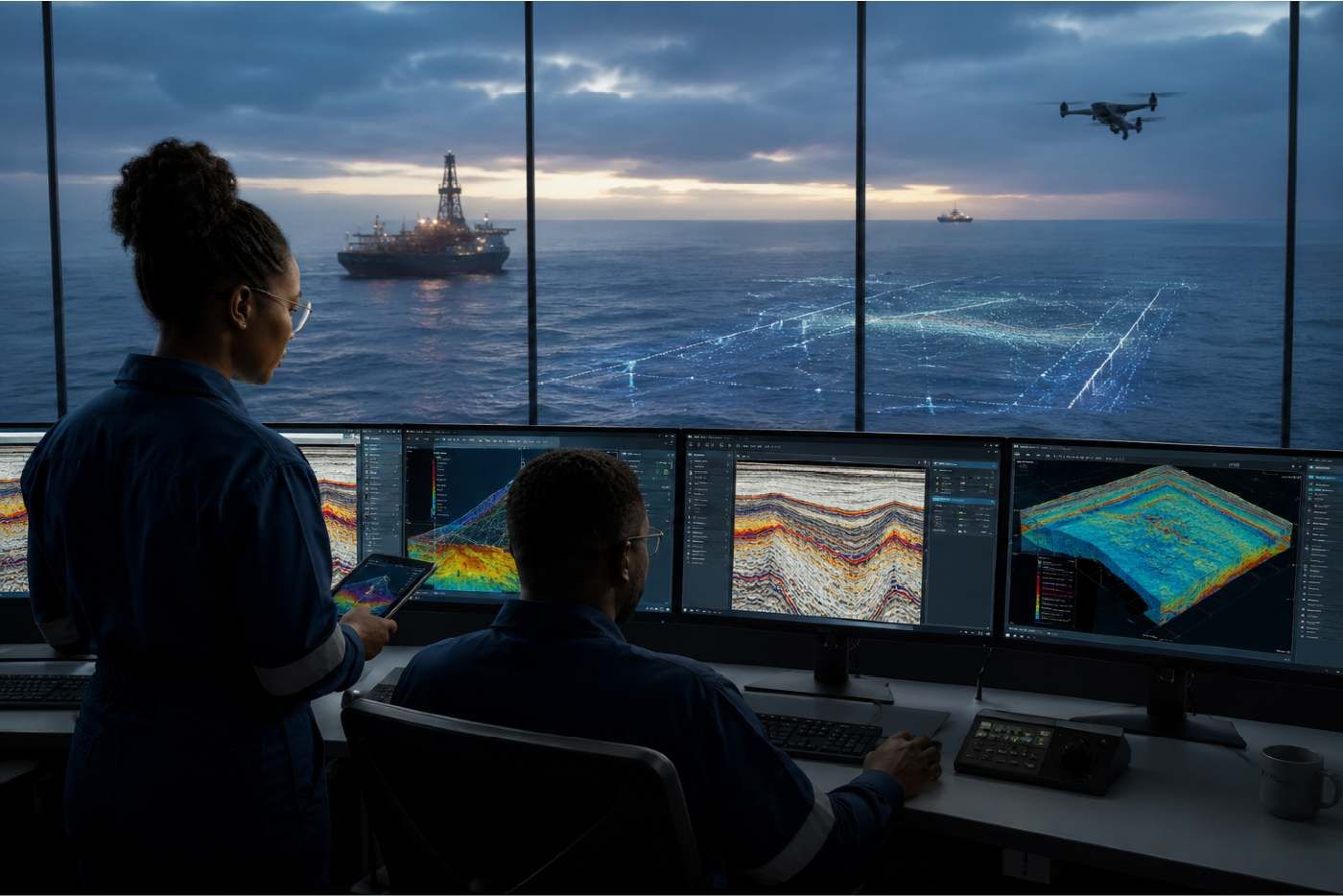
Renegade Intel, the AI and data center conference at African Energy Week (AEW) 2026, will host a dedicated panel on the subject, entitled The Data Driven Basin: How AI Will Reshape Africa's Next Billion-Barrel Discoveries. The session will examine how artificial intelligence and machine learning are reshaping exploration workflows across the continent, from seismic interpretation to reservoir characterization to prospect ranking.
The capital behind those wells has become significantly more disciplined since 2020. Investors demand higher confidence in subsurface models before committing to drill, while the margin for dry wells has narrowed. That pressure is accelerating the adoption of AI and machine learning across exploration, and the results are beginning to show.
According to Rystad Energy, the success rate on high-impact wildcat wells nearly doubled between 2024 and 2025, rising from 23% to 38%, and the volumes found in those wells grew by more than half to roughly 2.3 billion barrels of oil equivalent. Senior industry figures surveyed by the AAPG believe AI and machine learning could cut the time between acquiring acreage and confirming a discovery in half, from a typical four-to-six-year window to two to three years.
Namibia's Orange Basin provides a clear illustration of what advanced subsurface technology can deliver. TotalEnergies' decision to drill the Venus-1 prospect was underpinned by high-resolution seismic imaging and advanced subsurface modeling that reduced pre-drill uncertainty in a frontier setting. The result was a discovery estimated at 1.5 to 2 billion barrels of recoverable oil, the largest made in sub-Saharan Africa, and one that has reshaped expectations for the entire basin.
In Angola, a similar technology-led approach is opening up acreage that has been dormant for a decade. TGS began acquiring a new 12,600 line-km 2D seismic program across Angola's ultra-deepwater in February 2026, the first survey of that scale in those waters since 2015. The campaign, called Ultra Profundo, is using advanced processing methods including full waveform inversion to image pre-salt and sub-salt structures that earlier surveys could not resolve clearly. Initial results are due in the third quarter of 2026, ahead of Angola's planned licensing activity.
These examples point to the broader shift at the heart of Renegade Intel’s mission. Machine learning algorithms can process millions of data points from seismic surveys, well logs and satellite imagery to identify patterns that traditional interpretation would miss or take months to produce. Automated subsurface analysis reduces the cost and time of pre-drill evaluation, improving the probability of commercial success before a rig is mobilized.
For Africa's frontier and underexplored basins, the implications are significant. If AI-driven tools can demonstrably raise success rates and lower per-well appraisal costs, they could help unlock drilling programs in basins that have remained untouched because the risk-reward calculus did not justify the investment under traditional methods. That possibility is central to the conversation at Renegade Intel this October.
“AI will not replace the geoscientist, but it will transform what a geoscientist can do with the data,” says NJ Ayuk, Executive Chairman of the African Energy Chamber. “For a continent sitting on some of the world's most underexplored basins, that is a competitive advantage waiting to be realized, and Renegade Intel is where we start putting it to work.”
Renegade Intel brings together investors, technology providers, energy companies and policymakers to examine how AI and digital infrastructure are reshaping the energy sector across Africa. The conference takes place as part of AEW 2026 in Cape Town from October 12-16.