)
)
)
Batteries Move to the Center of Africa's Power Pipeline
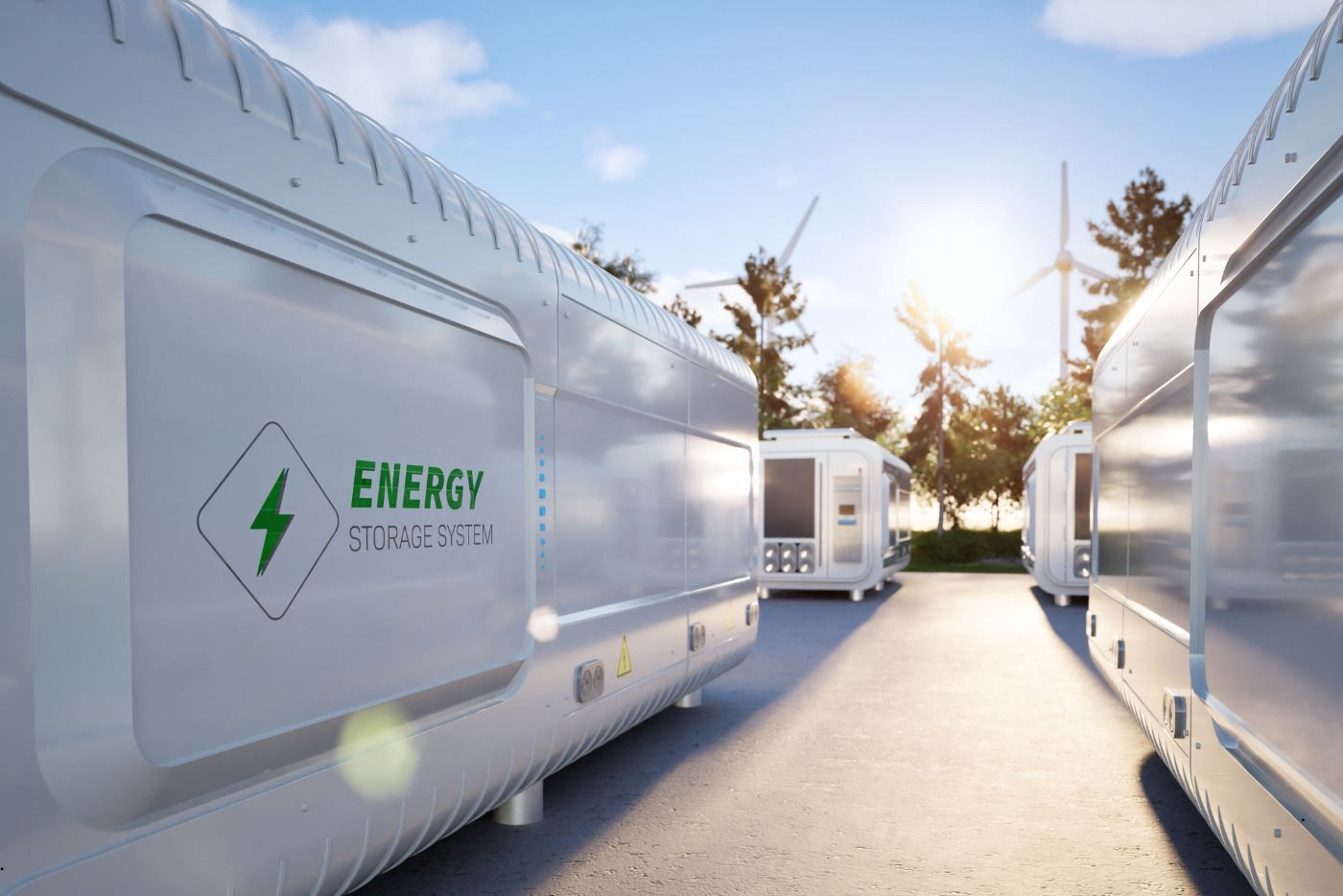
Battery energy storage is becoming a defining feature of Africa's renewable energy pipeline. As solar and wind capacity grows across the continent, storage is changing project economics by shifting generation into peak-demand periods, providing frequency support and reducing pressure on constrained transmission networks.
Two markets in particular, South Africa and Egypt, illustrate how quickly that shift is happening and how different procurement models are taking shape. Both will feature in discussions at Power Africa Today, the power-focused conference debuting at African Energy Week (AEW) 2026 in Cape Town from October 12-16.
South Africa is Procuring Storage at Scale
South Africa has procured roughly 1,744 MW and nearly 7,000 MWh of grid-scale battery storage capacity through three bid windows of the Battery Energy Storage Independent Power Producers Procurement Program (BESIPPPP), with additional hybrid storage procured through the Risk Mitigation IPP Procurement Program (RMIPPPP). Winning projects operate under 15-year power purchase agreements with Eskom and are required to be online by 2027-28.
The pipeline is already producing results. Scatec's Kenhardt BESS, one of the first utility-scale storage projects in the country, is operational, and the 612 MWh Red Sands project – South Africa's largest standalone battery system – reached financial close in mid-2025 with construction underway. According to the latest South Africa Renewable Energy Grid Survey, roughly half of the country's 220 GW renewable energy project pipeline now integrates battery storage.
The commercial and industrial (C&I) market is adding a further layer. Large power users are now pairing solar with BESS in behind-the-meter configurations, and trader-intermediated offtake structures are emerging as the dominant model for the largest C&I transactions, diversifying the buyer base beyond the public procurement channel.
Egypt is Building Africa's Largest Solar-Plus-Storage Assets
Egypt had no utility-scale battery storage before mid-2025, but now has one of the largest BESS pipelines on the continent. In July 2025, AMEA Power commissioned Egypt's first utility-scale battery project, a 300 MWh system co-located with its 500 MW Abydos solar plant in Aswan. That project was delivered in approximately six months and represented the first initiative under Egypt's 4 GW Emergency Renewable Energy Program.
The scale of Egyptian projects has grown quickly since. In January 2026, Scatec signed a PPA with the Egyptian Electricity Transmission Company for 1.95 GW of solar paired with 3.9 GWh of battery storage, the largest solar-plus-BESS installation in Africa. AMEA Power is also advancing two standalone BESS projects – Nefertiti in Aswan and Horus in the Gulf of Suez – with a combined 1.5 GWh capacity and estimated investment of $442 million. The European Bank for Reconstruction and Development (EBRD) is studying up to $223.5 million in senior debt financing for the pair. Egypt's rapid build-out offers a case study in how DFI-backed financing can accelerate storage deployment, a theme Power Africa Today will examine alongside the South African experience.
Three Models, One Direction
Three distinct procurement approaches are emerging across both markets. Standalone storage, exemplified in South Africa's BESIPPPP and Egypt's Nefertiti and Horus projects, is procured specifically for grid stability and peak shifting. Solar-plus-storage, demonstrated through the Abydos and Scatec PPA models, bundles generation with dispatch flexibility to deliver firm, around-the-clock power. Meanwhile utility procurement, evident through dedicated programs like BESIPPPP, is creating a structured pipeline that gives developers and lenders the visibility they need to commit capital at scale.
Each model addresses a different investor and system need, but all are signaling that storage is now a primary consideration in African power projects. Power Africa Today, debuting at AEW 2026 in Cape Town, will bring together developers, financiers, utilities and regulators to examine how these storage models can scale and which financing structures will unlock the next wave of battery deployment across the continent.