)
)
)
Beyond Energy Access: Clean Cooking Emerges as a Social Imperative in Africa
Over the past five years, sub-Saharan Africa added 13 million people annually to clean cooking access. Yet with over 900 million still reliant on traditional fuels, progress falls short of universal access. The International Energy Agency (IEA) estimates $37 billion in investment is needed by 2040, presenting a clear opportunity for investors. Beyond energy access, scaling clean cooking will improve health, advance gender equity and spur small business growth - making it as much a social imperative as an energy one.
Natural Gas: A Vehicle for Social Empowerment
As a low-emission and increasingly available clean cooking solution, natural gas is poised to address some of the continent’s most pressing socio-economic challenges. These include a reliance on firewood, charcoal and other traditional biomass fuels for cooking, which creates serious health implications – particularly for women, who are the ones most exposed to these fuels. Transitioning to LPG drastically reduces exposure to harmful smoke and fine particulates, delivering measurable public health gains.
The adoption of clean cooking fuels at the IEA-suggested rate would also create up to 460,000 jobs by 2040. Many of these opportunities could be localized, empowering women and youth to build sustainable livelihoods within their communities. Clean cooking fuels also provide fertile ground for SMEs. Expanding LPG access requires logistics networks, cylinder manufacturing, distribution hubs and retail points - sectors where local entrepreneurs can thrive. As such, LPG is well-positioned to become a catalyst for social development in Africa.
Ongoing Projects
Investments in Africa’s clean cooking sector reached $500 million in 2025 so far, reflecting a strong drive by private and public companies to advance projects in LPG and other clean cooking fuels. This year, the African Development Bank allocated $282 million for 335,000 clean cooking devices in Tanzania and approved a $8.79 million grant to support clean cooking initiatives in Uganda as part of a broader $2 billion commitment in Africa. Tanzania is also developing the Tanga LPG terminal, set to come online in 2027, while Uganda strives to produce and distribute 500,000 LPG cylinders by Q3, 2025. Kenya is looking at developing a 30,000-ton LPG storage and bottling facility in Mombasa while South Africa’s Transnet is developing an LPG rail freight project.
Amid this rise in LPG development, women and SMEs have emerged as not only the beneficiaries of clean cooking but the drivers of change. The Women in LPG network supports women-owned business across the industry while women-led companies such as Hakem Energies in South Africa are expanding access to clean cooking through a range of services. Looking ahead, as Africa accelerates the production of LPG, women and SMEs will be at the forefront of enhancing adoption.
African Energy Week 2025
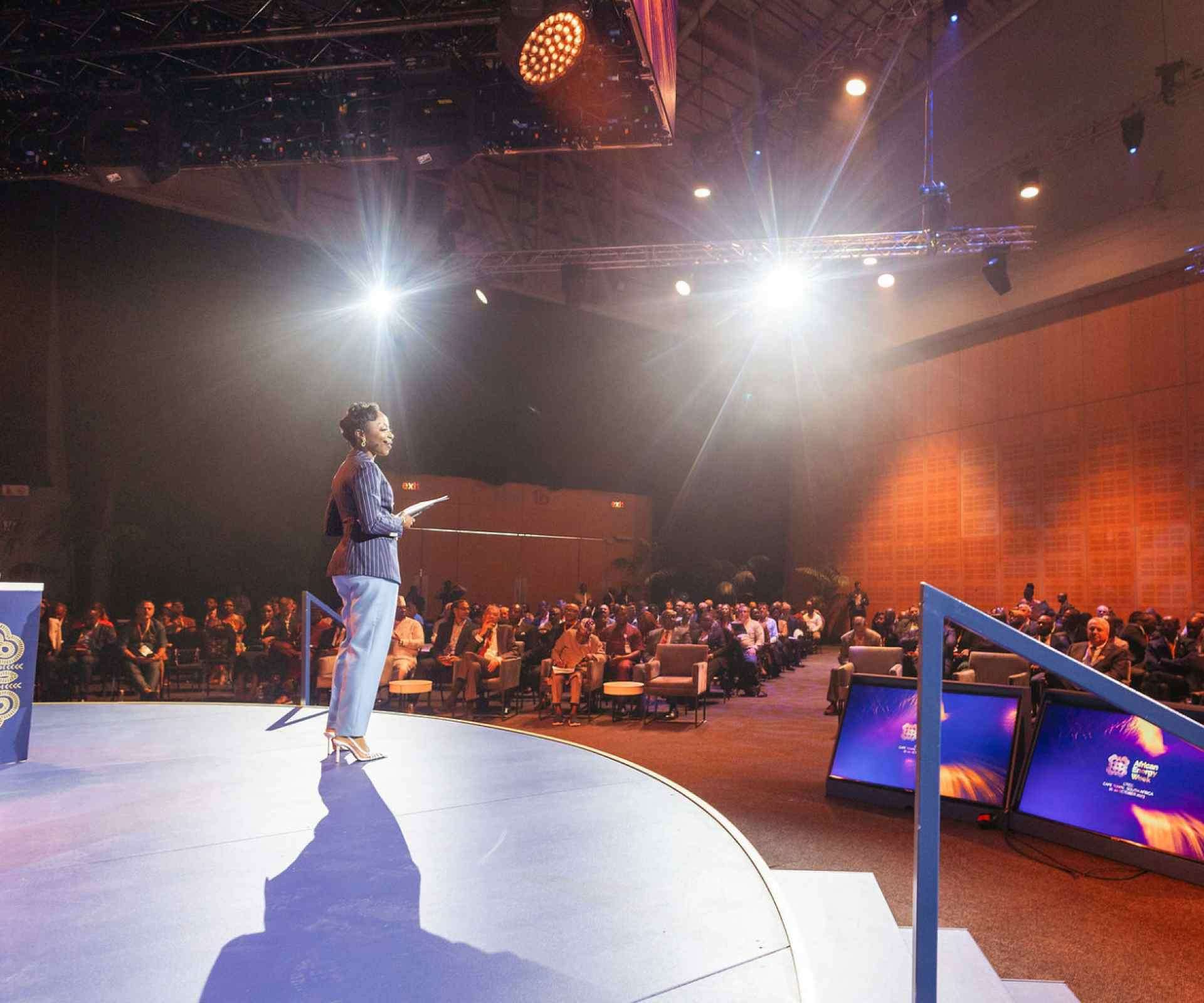
The upcoming African Energy Week (AEW): Invest in African Energies conference – taking place September 29 to October 3 in Cape Town – will delve into the role natural gas plays as a viable clean cooking solution in Africa. Kicking off the week will be a pre-conference workshop led by the Gas Exporting Countries Forum on Natural Gas for Africa’s Sustainable Development, which focuses on the role gas play in supporting economic development, social progress and environmental protection.
Across the main conference agenda, a series of panels will examine the impact clean cooking solutions will play in Africa – both in improving energy access and fostering social transformation. Sessions include From Firewood to Freedom: Promoting Clean Cooking in Africa, Monetizing LPG to Enhance the Value of the Barrel in Africa’s Inland Markets, CNG: A Lower-Carbon Energy to Grow Africa’s Communities, among others. In addition to gas-focused discussions, the conference will explore the role women and SMEs play in Africa’s clean cooking development. Sessions include Energy Security in Africa: Why Women’s Participation in Africa’s Resource Governance Matters and From Start-ups to Scaleups: Why SMEs are Africa’s Game Changers. By tackling key topics, AEW: Invest in African Energies 2025 strives to advance projects, address challenges and support the sustainable growth of Africa’s economies.
“As Africa moves toward ambitious goals of universal energy access and low-carbon development, clean cooking solutions such as LPG must remain at the center of policy and investment agendas. These solutions are scalable, relatively low-emission and immediately impactful in ways that resonate far beyond energy statistics,” states Tomás Gerbasio, VP Commercial and Strategic Engagement, African Energy Chamber.
AEW: Invest in African Energies is the platform of choice for project operators, financiers, technology providers and government, and has emerged as the official place to sign deals in African energy. Visit www.aecweek.com for more information about this exciting event.