)
)
)
From Debt to Equity: Industry Leaders Chart Africa’s Future in Oil and Gas Financing
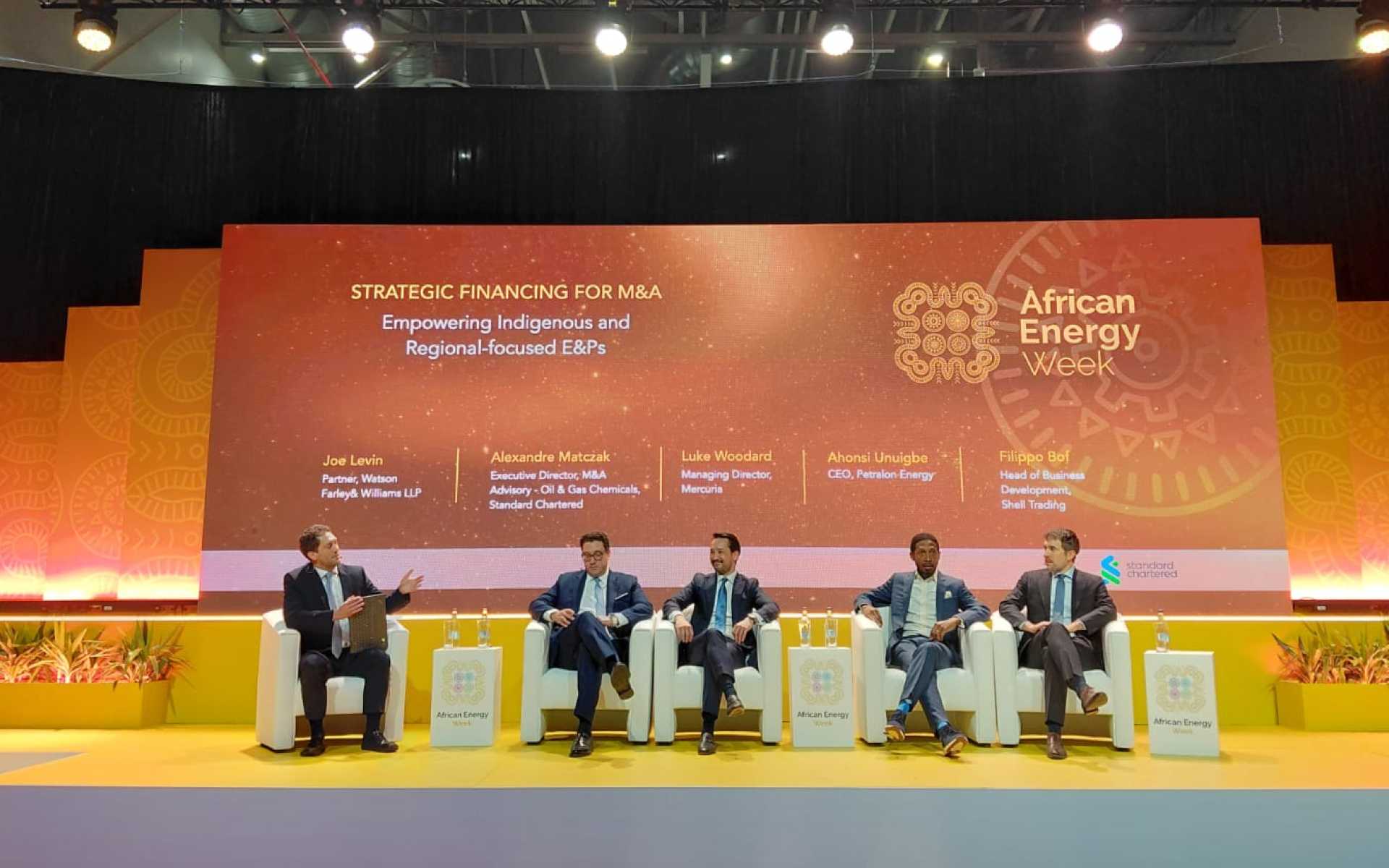
Alexandre Matczak, Executive Director of M&A Advisory, Oil and Gas and Chemicals at Standard Chartered Bank, noted a cautiously optimistic outlook on capital raising. "International banks, where we have liquidity, will always remain there. We are seeing some of this liquidity coming back. Private credit hasn't yet arrived fully, but it is certainly something to watch." According to Matczak, the landscape is slowly evolving, with new players and fresh equity emerging, particularly from non-traditional markets like the Middle East.
Ahonsi Unuigbe, CEO of Petralon Energy, underscored the asset-specific nature of financing access, pointing out that it was unfairly biased towards producing assets. "If an asset is producing, everyone is knocking on your door to provide you with funding, whether it is equity or debt, but ironically, that is not when you need it.”
“For assets not yet in production but with proven reserves, and for those abandoned decades ago requiring significant reinvestment and time to restart, European lenders are less forthcoming, while African funders such as Afrexim, AFC, and Standard [Chartered] Bank are more bullish in supporting these projects. We have seen an uptick in private credit in amounts under $50 million that can be sourced locally."
This sentiment was supported by Luke Woodard, Managing Director, Energy Investments and Structuring at Mercuria, who emphasised the sector’s capital risk appetite. "We have taken more equity risks in upstream and seek local partnerships to share risk, but there is still a significant gap in private and public equity availability. Lenders are readily financing producing barrels, but greenfield projects are much harder globally. We want more investors to share risk and solve these funding challenges."
Unuigbe noted that the challenge in securing equity lies in the protracted nature of equity fundraising, which has complicated the scaling up of production, despite successful debt raises.
Meanwhile, Flippo Bof, Head of Business Development, Africa and Med at Shell Trading and Shipping Company, highlighted that a new financing model was seemingly emerging. "Traditionally, producers and their bankers structured capital, with traders filling funding gaps. Today, traders take a more active role, combining engineering consortia skills and equity partners to support projects. Where equity is limited, there is no debt, so we support engineering groups through logistics improvements and midstream financing to make investment cases more attractive."
Matczak believes there is a solution to these challenges. "The winning strategy is collaboration between international players and local partners, including National Oil Companies, as the internationals bring the technical knowledge, the technologies and the funding, while locals have in-depth knowledge on the operating environment, regulatory frameworks and communities. Local ecosystems of independents are critical for success, even though competition currently overshadows cooperation."
Unuigbe added his personal experience on partnerships and local knowledge. "We have successfully operated with Nigerian local partners and international firms – local intelligence combined with foreign funding and technology leads to production success. However, not all local partnerships work well, and one must be selective."
Across Africa, public institutions, local banks, and traders are stepping up to fill financing gaps as traditional Western lenders pull back due to changing regulations, the move towards more sustainable energy sources and risk tolerance. Private credit and internationally sourced equity will therefore be increasingly vital, particularly for mid-sized and non-producing asset developments.
"Banks remain debt providers and are risk-averse to equity participation since the Global Financial Crisis. The future will see more private equity returning as successful projects demonstrate viability,” Matczak concludes.