)
)
)
Energy Finance Summit Explores Sustainable Financing Solutions at AEW 2024
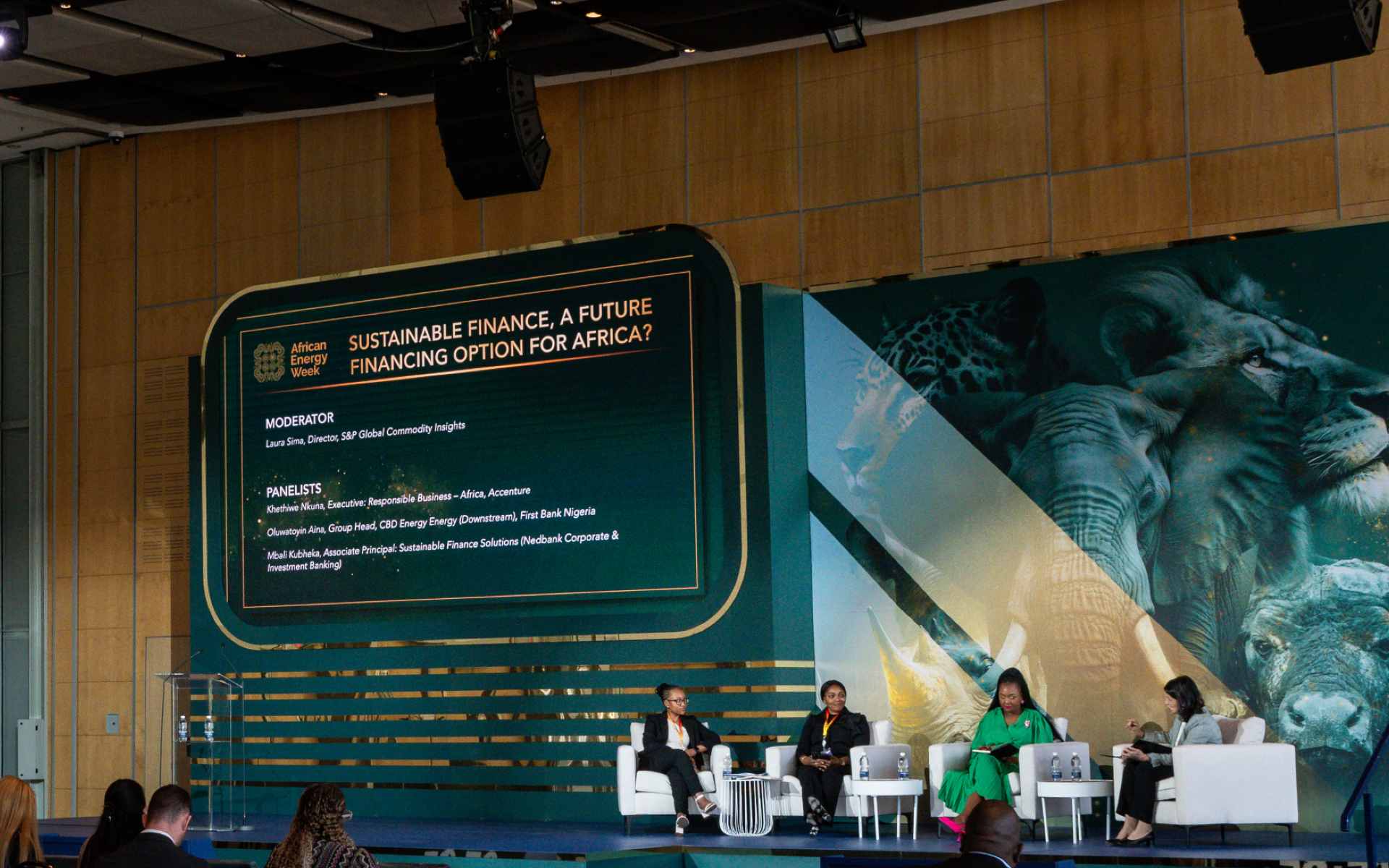
A Energy Finance Summit at this year’s African Energy Week: Invest in African Energies 2024conference featured a panel discussion that explored the development of sustainability-linked instruments by financial institutions and energy companies to help speed up the energy transition process.
Business management consultant Accenture released a study this year on how businesses can improve social development goals in order to attract more sustainable finance for projects. The study noted that sourcing sustainable materials, accelerating climate action and adopting responsible employment practices lay the foundation for long-term stakeholder and investor participation.
“We need to see how we leverage our ecosystem and partners to lift people out of poverty,” stated Khethiwe Nkuna, Executive for Responsible Business in Africa at Accenture, adding, “We aim to leverage entrepreneurship opportunities and job creation. We try to leverage green energy to lift young people out of poverty. We also collaborate with other players around social bonds to fast-track and enable social impact.”
Meanwhile, as the financial institution expands into the West African market, Nedbank Corporate and Investment Banking announced its first sustainable finance transaction in Ivory Coast in August this year. The deal involved a $19.9 million sustainability-linked term loan and revolving credit facility.
“The most important part of sustainable financing is that they enable us to measure our impact,” stated Mbali Kubheka, Associate Principal of Sustainable Finance Solutions at Nedbank Corporate and Investment Banking.
Financial institutions across Africa will continue to play a crucial role in driving sustainability in energy, particularly in the context of supporting the transition to cleaner, more sustainable energy sources. Nigerian financial institution, First Bank of Nigeria, recently signed a $200 million loan facility agreement with pan-African banking group the African Export-Import Bank (Afreximbank) to support the needs of clients across various industries including energy, manufacturing and telecommunications.
“For us, we have an ESG [environmental, social and governance] framework, which is embedded into our credit review process. This applies to the oil, gas, energy and mining industries. We try to help clients measure their emissions to see how compliant they are to social requirements,” stated Group Head of Energy and International Oil Trading at First Bank of Nigeria, Oluwatoyin Aina.
It was further noted that carbon financing is a way for projects to reduce greenhouse gas emissions and support climate action in the African energy sector. The panelists highlighted that offsetting carbon emissions and driving decarbonization facilitates a strong incentive for international finance institutions to support the deployment of green bonds, sustainable bank loans and biodiversity conservation initiatives.