)
)
)
Energy Leaders Call for Stronger Frameworks to Bridge Africa’s Financing Gap
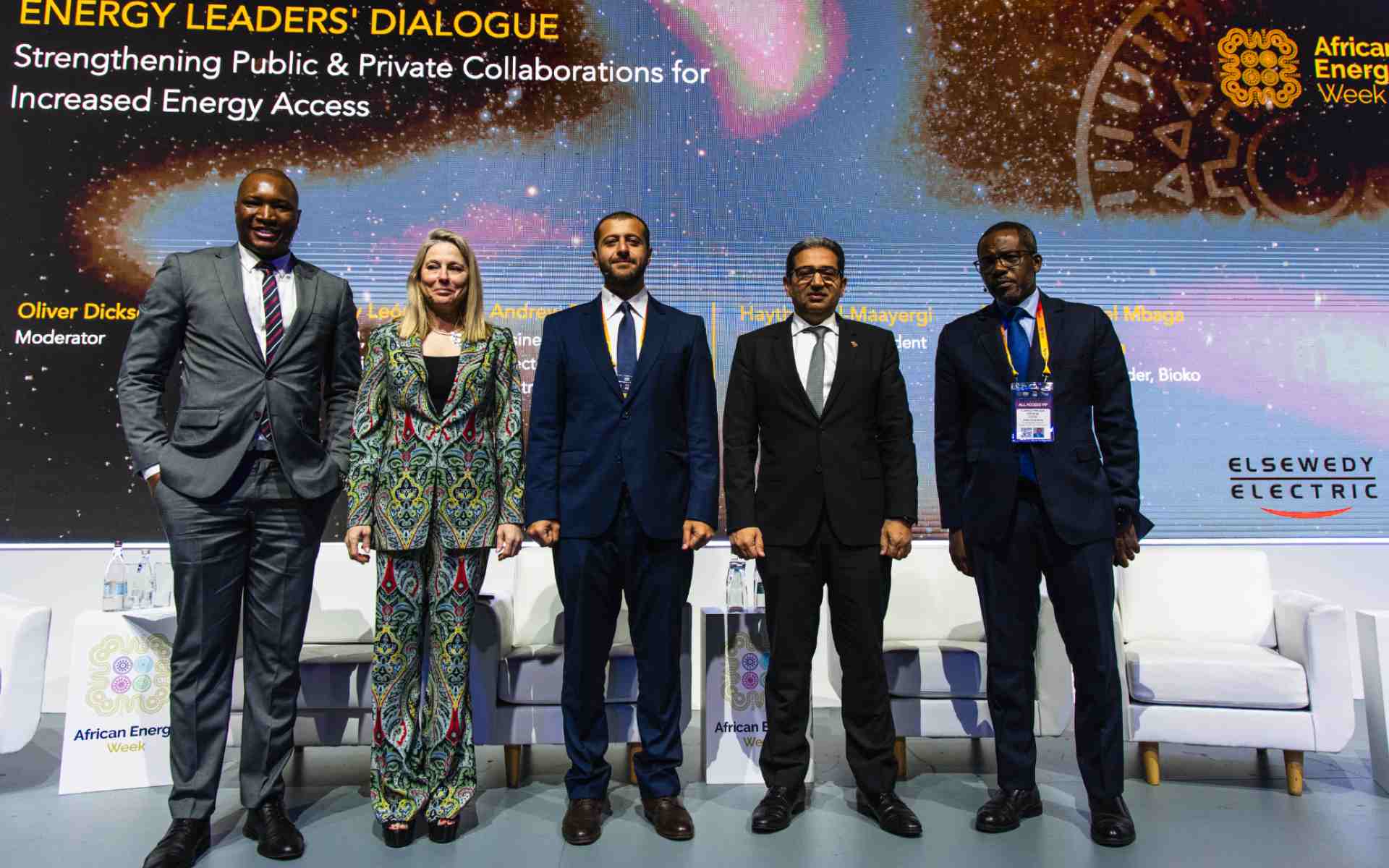
Energy leaders from across Africa’s private and financing sectors have called on stronger collaboration between governments and private financiers to bridge Africa’s energy financing gap. High-level executives from Elsewedy Electric, Afreximbank, the World Nuclear Association and Bioko Consulting highlight that a focus on governance, transparency and legal certainty is key to ensuring universal access to energy across the continent.
At African Energy Week (AEW): Invest in African Energies 2025, energy leaders underscored the role of institutional frameworks in addressing Africa’s financing challenges. The Energy Leaders’ Dialogue: Strengthening Public & Private Collaborations for Increased Energy Access session – sponsored by electrical company Elsewedy Electric – underscored the need for strong governance to build investor confidence and accelerate universal access.
“The mix between public and private always works very well for us because it gives us the best of both worlds,” stated Haytham El-Maayergi, Executive Vice President Global Trade Bank at pan-African financial institution Afreximbank
Andrew Daoud, Business Development Director-Africa, Elsewedy Electric outlined how the company is expanding reneable energy and grid modernization projects – including EPC contracts in Rwanda and Chad – demonstrate the role of bankable public-private partnerships (PPPs) in driving investment. He pointed to its financing of major infrastructure projects such as Nigeria’s Dangote Refinery and the Lake Kariba floating solar project in Zimbabwe, underscoring how public-private collaboration can unlock both conventional and renewable energy opportunities.
“What we are seeing right now is not a choice. For every PPP we need to ask if its commercially viable and socially valuable. Governance is the most important thing,” Daoud stated.
Meanwhile, Sama Bilbao y León, Director General, World Nuclear Association highlighted its work with the African Energy Chamber – the voice of the African energy sector – and International Atomic Energy Agency to advance nuclear deployment, with new technologies such as small modular reactors offering cost-effective solutions for emerging markets.
“The partnership between governments that recognize the long-term opportunities and social development opportunities of nuclear projects can help catalyze private sector leadership in the space,” Bilbao y León stated.
For his part, Gabriel Mbaga Obiang Lima, CEO and Founder of consulting services firm Bioko Consulting – active in Central and West Africa – showcased the company’s partnerships with governments and private investors, including a strategic alliance with Weizhuo Technology and the Abu Dhabi Islamic Bank to strengthen energy independence in the Gulf of Guinea.
“What we need to achieve is an honest conversation between government, bankers and operators, and each of them are speaking different languages and have different demands,” Lima stated.
The panelists concluded that closing Africa’s energy financing gap will require not only capital, but also coordinated institutional leadership to ensure projects are both commercially viable and socially impactful.