)
)
)
Industry Leaders Unpack Just Energy Imperatives for Africa at AEW 2024
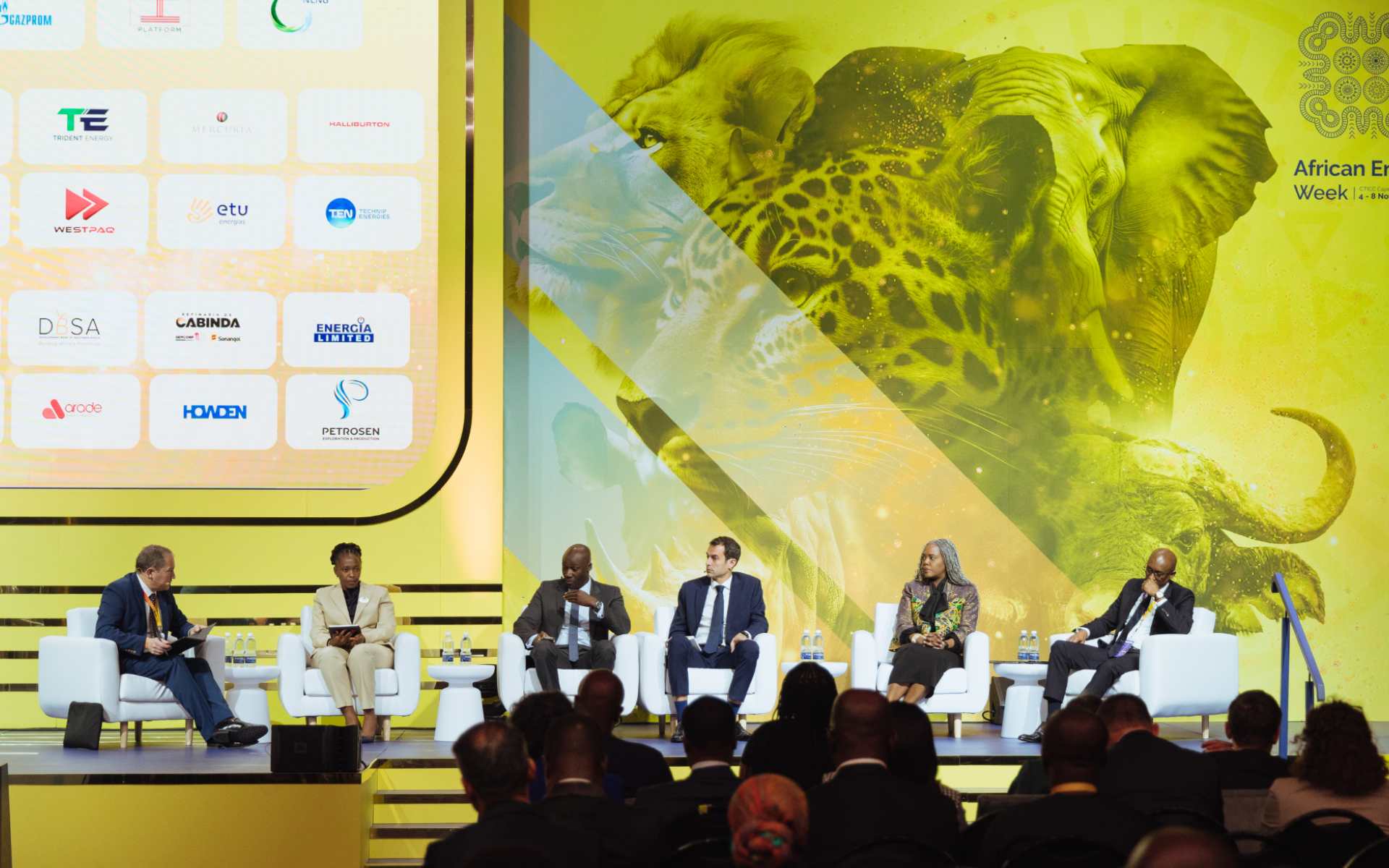
African energy leaders face a unique obligation to balance their commitments to governments, consumers, suppliers, employees, and other stakeholders. Speaking on this during a bp sponsored session at African Energy Week: Invest in African Energy 2024, Taelo Mojapelo, CEO of bp Southern Africa, emphasized the need to maintain viable businesses that sustain and create jobs, supply fuel across various sectors, and remain profitable—all while supporting Africa’s transition to sustainable energy.
“We have to be responsible in the way we do it,” Mojapelo added.
Mojapelo highlighted that 43% of Africa’s population lacks access to energy – placing the continent far behind in achieving the UN’s SDG 7 which calls for affordable, reliable, sustainable, and modern energy for all by 2030.
She said Africa needs to define its own agenda around the just transition, ensuring that negative impacts on workers and communities are appropriately mitigated.
“Africa’s industrialization must ramp up at pace…and we must take advantage of the abundant lower-carbon natural resources for the benefit of our continent,” which includes 5,000 billion cubic meters of natural gas reserves yet to be approved for development, as well as abundant solar resources, she said.
The necessity to fundamentally change the way humans consume energy and how energy is distributed in a bid to end energy poverty and contribute to the energy transition, places a heavy load on the shoulders of all leaders in the energy industry.
Khady Ndiaye, Vice President and Country Manager for Senegal at deepwater exploration and production company Kosmos Energy, said that just energy transition is about providing the energy that the world needs today by using climate friendly technologies and also being a force of good in the country in which you operate.
“In Senegal, where 30% of our population is without electricity, we have discovered immense reserves of gas that are largely unexploited that we could use to provide the energy we need today to develop our country and provide cheap energy to our population,” she said.
“In my opinion, this is what the energy transition is all about. It is allowing Africa to use its resources to develop itself while progressing on the path of the energy transition,” she noted.
Adding to the topic, Jean-Marc Kloss, Managing Director for West Africa at oilfields service provider SLB, said just energy leadership is about guiding a fair and inclusive energy transition. “Energy affordability, energy security and energy sustainability are the key principle to advancing just energy leadership in Africa,” he said.
Cheick-Omar Diallo, Leader Task Force Communication and Spokesperson for Tilenga – EACOP at TotalEnergies, highlighted the importance of sustainable job creation, not only during the construction phase of a project, but also during its operational phase. This can be done by developing and fostering sustainable local businesses through a foundation that creates local employment.
Edgar Longui, Director Global Strategic Marketing at engineering and technology company Technip Energies, said it is important to work towards innovations and solutions that can stop the increase in energy poverty in South Africa.
On the topic of longer-term skills training, knowledge transfer and job creation, Longui pointed out the need for innovation in finding ways to upskill and train people, and to leave no one behind. He noted that training takes time, and that companies should be aware of this incubation time.
bp is a Platinum Sponsor of the AEW: Invest in African Energies 2024 conference, which is being held in Cape Town this week.
The company, which celebrated its 100th year in South Africa this year, was awarded title of ‘ESG Leader of the Year’ on Tuesday evening at the AEW: Invest in African Energies 2024 Awards Ceremony.
bp is transitioning from an oil company to an integrated energy company focused on ESG and sustainability. It aims for a 10-15% emissions reduction by 2025, 20-30% by 2030 and net-zero by 2050. Plans include methane measurement at sites, a 50 GW renewable capacity by 2030, and support for a just energy transition in Africa through education, social investment and biodiversity, in line with the Paris Agreement.