)
)
)
Infrastructure Momentum Redefines East African Energy Corridor Ahead of AEW 2026
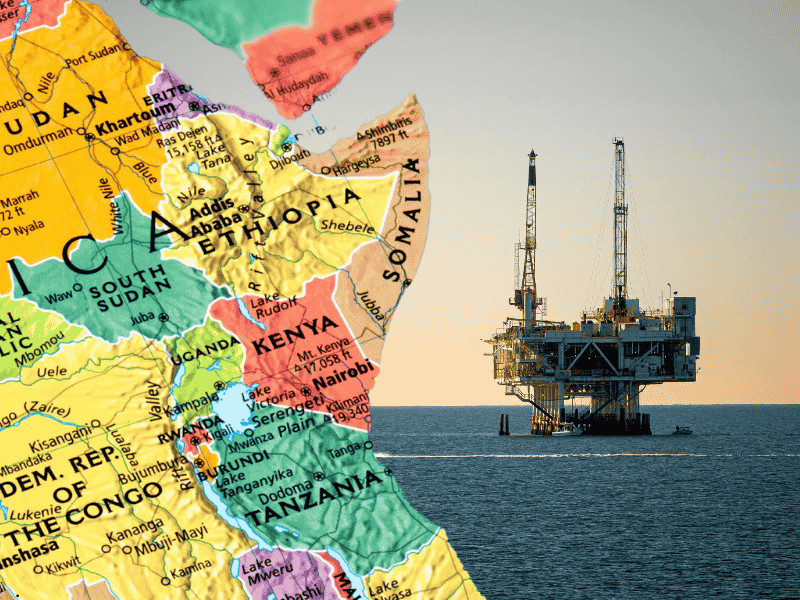
East Africa is emerging as a strategic energy corridor, with several large-scale infrastructure projects underway. Tanzania is pursuing a binding agreement for its long-delayed LNG project while simultaneously launching key storage infrastructure. The East African Crude Oil Pipeline (EACOP) is targeting October 2026 exports, while Kenya’s South Lokichar Basin eyes first oil by year-end. These moves signal the region’s readiness to become a vital export hub, demonstrating the value of infrastructure-led development ahead of African Energy Week (AEW) 2026.
“East Africa is showing that transformational energy growth does not begin with a discovery alone – it begins when countries build the infrastructure, legal frameworks and export systems that turn resources into long-term economic value. From Tanzania’s LNG agenda to EACOP and Kenya’s expanding energy backbone, the region is proving that infrastructure is the bridge between ambition and bankable delivery,” states NJ Ayuk, Executive Chairman of the African Energy Chamber.
Tanzania: LNG Ambitions Meet Strategic Infrastructure
Tanzania’s energy ambitions are anchored in its $42 billion LNG project. Despite years of delays, the Shell and Equinor-led project is edging closer to an investment framework, with Deputy Minister for Energy Salome Makamba indicating that the country is targeting signature of the Host Government Agreement by mid-2026. The agreement would put the project on a path toward FID, with first LNG cargoes expected in the early 2030s. Upon completion, Tanzania LNG will not only support the monetization of the country’s 57 tcf of natural gas reserves, but position it as a major LNG exporter.
Alongside gas development, Tanzania is advancing downstream infrastructure to support regional energy trade. The country broke ground on a $274 million petroleum storage expansion at Dar es Salaam Port in March 2026, adding 15 new tanks with 378,000 cubic meters of capacity. In addition to reducing tanker waiting times by 68%, the project will cut fuel costs and strengthen supply reliability across the broader East African market. That is what makes Tanzania’s story so compelling. The country is not treating LNG as a standalone development - it is building the commercial and logistical architecture to support scalable energy growth.
EACOP Anchors East Africa’s Infrastructure-Led Growth
The EACOP is the clearest symbol of East Africa’s infrastructure-led energy model yet. The 1,443-km pipeline - developed by a consortium comprising TotalEnergies, CNOOC, Uganda National Oil Company (UNOC) and Tanzania Petroleum Development Corporation - will transport 230,000 bpd of crude from Uganda’s Lake Albert Basin to international markets via Tanzania’s Port of Tanga. As of January 2026, the $5 billion project was 79% complete, with officials confirming that construction remains on schedule for July 2026 commissioning - despite opposition by environmental groups.
For East Africa, the project represents more than a pipeline: it is a strategic energy corridor connecting in-land basins to export markets. But Uganda is looking beyond exports. In January 2026, UNOC signed a deal with Alpha MBM Investments for the development of a $4 billion oil refinery. Set for completion by 2029/2030, the refinery will have a capacity of 60,000 bpd, reducing refined imports and strengthening security of supply in East Africa.
Kenya Opens Investment Prospects Ahead of Lokichar First Oil
Kenya is positioning itself as a destination for foreign investment as the country pursues first oil at its South Lokichar project. The country recently launched the sale of a 65% stake in the Kenya Pipeline Company (KPC) through an IPO expected to raise around 106.3 billion Kenyan shillings. The move signals a market-based approach to financing strategic infrastructure, aligning with broader plans by KPC to modernize and diversify its portfolio.
This comes as the Gulf Energy-led South Lokichar project gains momentum, with the first phase (2026) targeting 20,000 bpd and a planned second phase increasing output to 50,000 bpd by 2032. Gulf Energy recently acquired an onshore drilling rig to support the development toward first oil, strengthening the development of East Africa’s emerging energy corridor. Ahead of AEW 2026, East Africa is offering a strong investment message: it is no longer a frontier region, but an infrastructure-led market where investments are translating into bankable, scalable economic assets.