)
)
)
Les acteurs clés des secteurs de l’énergie, de l’investissement et de l’aval s’unissent pour faire avancer le programme énergétique de l’Afrique lors de l’AEW 2026
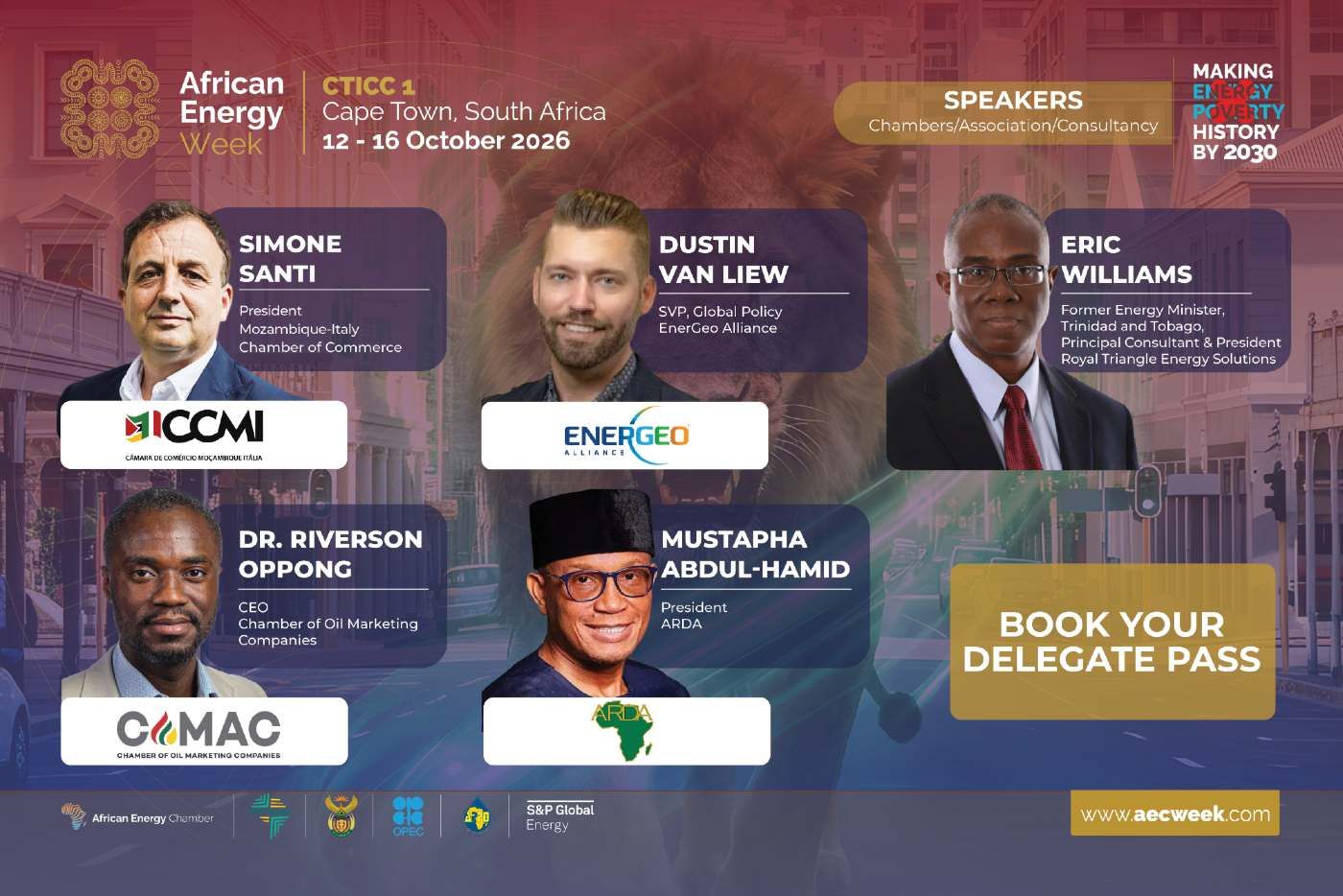
From cross-border investment partnerships and regulatory reforms to regional fuel markets and industrial finance mechanisms, the focus of attention on Africa’s energy sector is now shifting towards the policies, institutions, and business frameworks needed to support long-term growth. As African countries intensify their efforts to attract investment, strengthen energy security, and build industrial capacity, African Energy Week (AEW) 2026 – taking place in Cape Town from October 12 to 16 – will bring together a diverse group of industry leaders shaping the future of upstream development, downstream expansion, trade partnerships, and local content.
Mozambique has established itself as a hub for international investment, thanks to recent initiatives aimed at strengthening ties between African and European markets. In June, the Mozambique-Italy trade mission brought together 21 Italian companies in Maputo for discussions with government officials on infrastructure, energy, and industrial development, culminating in a declaration of intent regarding the "Green Cities" project within Italy's Mattei Plan for Africa. Simone Santi, president of the Mozambique-Italy Chamber of Commerce, who will be speaking at AEW 2026, is helping to advance these initiatives.
Regulatory certainty and efficient permitting processes remain key priorities as African countries compete for global upstream investments. EnerGeo Alliance – whose Senior Vice President for Global Policy, Dustin Van Liew, will attend AEW 2026 – has expanded its engagement across the continent through collaboration with the African Energy Chamber (AEC) and advocacy for exploration-friendly policies. The organization has also highlighted the economic benefits of strengthening the upstream sector in South Africa and recently endorsed the country’s “Bas Bill,” seen as a catalyst for building resilient regional gas value chains.
Across West Africa, downstream operators are grappling with price volatility, supply chain pressures, and evolving global market conditions. The Ghana Chamber of Petroleum Marketing Companies (COMAC) has been at the forefront of these discussions, recently forecasting significant fuel price reductions while advocating for greater transparency throughout the fuel distribution value chain. Dr. Riverson Oppong, CEO and Industry Coordinator of COMAC Ghana, will represent this perspective at this year's event.
Meanwhile, the African refining and distribution sector is entering a new phase of expansion. The African Refiners and Distributors Association (ARDA) recently celebrated its 20th anniversary by advancing discussions on refining capacity, supply chain resilience, and participation in the African Energy Bank. The association also intensified its cooperation with regional partners while preparing important forums focused on supply chain, kerosene, and LPG. ARDA President Dr. Mustapha Abdul-Hamid will participate as a speaker.
The monetization of natural gas and the development of local content continue to shape Africa's industrial growth agenda. As new LNG projects advance and governments seek to extract greater economic value from hydrocarbon resources, the experience of established producing regions becomes increasingly relevant. Eric Williams, President of Royal Triangle Energy Solutions and former Minister of Energy and Power Industries of Trinidad and Tobago, will bring to the discussion over four decades of expertise in energy policy, gas marketing, and resource management.
Together, these leaders represent key segments of the African energy value chain, from exploration and investment promotion to downstream distribution, refining, and gas marketing. Their participation in AEW 2026 will fuel discussions on how African markets can strengthen their competitiveness, mobilize new sources of capital, and establish integrated energy systems capable of supporting long-term economic growth.
“Across the continent, governments and the private sector are working to create the conditions necessary to attract investment, develop infrastructure and strengthen energy security. The expertise embodied by these stakeholders reflects the breadth of opportunities emerging in the African energy sector and will provide valuable insights to stakeholders as they chart the course for the next phase of development,” said NJ Ayuk, Executive Chairman of the AEC.