)
)
)
Libya Reopens Upstream Sector as De-Risked Licensing Gains Momentum Across Africa
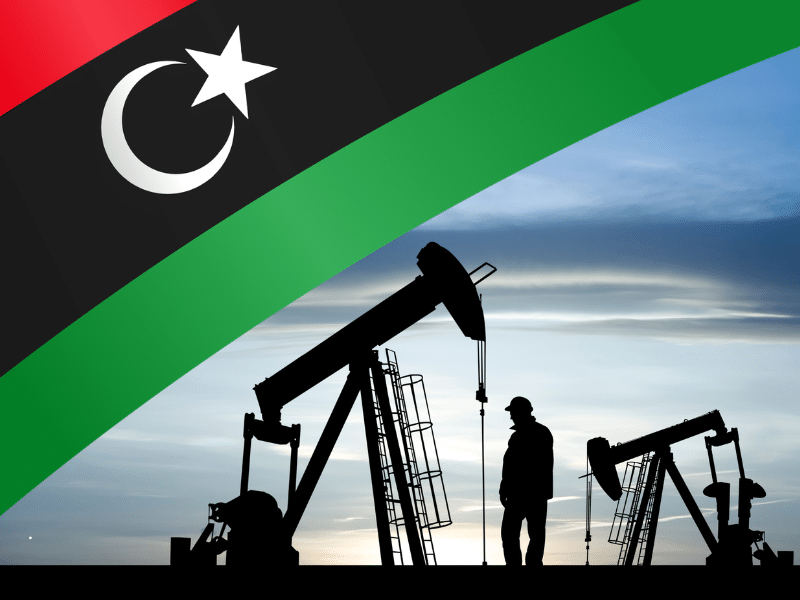
Libya’s return to international upstream licensing in February 2026 marked one of the most closely watched developments in Africa’s energy sector in nearly two decades. The award of exploration blocks to Chevron, Eni-QatarEnergy, Repsol, Nigeria’s Aiteo and a consortium of partners including Hungary’s MOL and Turkey’s TPOC signaled a cautious but meaningful reopening of Africa’s largest proven oil reserve base, under revised fiscal and contractual terms designed to rebuild investor confidence.
While only five of the 20 offered blocks were awarded, the outcome reflects a broader continental trend: capital is returning selectively, prioritizing geological certainty, infrastructure access and regulatory clarity. Across Africa, governments are repositioning acreage through transparent licensing, improved fiscal terms and high-quality subsurface data, reframing frontier exposure as a measured, risk-managed investment opportunity rather than a speculative gamble.
De-Risking Africa’s Upstream
Libya’s latest licensing round illustrates how contractual reform can recalibrate investor appetite without overselling political risk. The introduction of modernized production-sharing agreements, replacing the legacy EPSA-IV framework, improved cost recovery, clarified force majeure clauses and embedded ESG compliance. The result was disciplined participation anchored in proven basins such as Sirte and Murzuq, rather than aggressive frontier expansion.
Data transparency has emerged as the second pillar of de-risked acreage. Investors increasingly demand high-resolution seismic imaging and well-defined subsurface models before committing capital. This shift reflects rising drilling costs and tighter capital discipline, particularly in ultra-deepwater plays. Countries that invest upfront in seismic reprocessing and open data are materially reducing geological uncertainty and shortening the path to final investment decisions.
Fiscal recalibration completes the de-risking equation. Across Africa, signature bonuses have been reduced to globally competitive levels, royalties are increasingly graduated, and gas-specific incentives are becoming standard. These measures lower entry barriers while preserving long-term state value. The emphasis has moved decisively from maximizing upfront payments to accelerating development timelines and sustaining production over multiple decades.
Nigeria and Angola Translate De-Risking into Licensing Strategy
Nigeria’s 2025 oil licensing round exemplifies how regulatory clarity and digital execution can reposition a mature producer for renewed investment. Offering 50 blocks across onshore, shallow-water, frontier and deepwater terrains, the round targets up to $10 billion in capital inflows and as much as two billion barrels of reserve additions. Reduced signature bonuses of $3-7 million further enhances competitiveness.
The Nigerian Upstream Petroleum Regulatory Commission has reinforced transparency through a fully digital, Petroleum Industry Act-compliant bidding process, clear pre-qualification thresholds and firm timelines extending into late 2026. By prioritizing discovered but undeveloped and fallow assets, Nigeria is lowering exploration risk while aligning upstream investment with its Decade of Gas agenda and midstream monetization strategy.
Angola complements this licensing momentum with a data-first de-risking model. Through extensive seismic reprocessing across the Kwanza and Lower Congo basins, supported by partners such as TGS, SLB and Viridien, Angola is improving sub-salt imaging and reservoir definition. This approach underpins its final 2019-2025 licensing round and prepares the ground for a new multi-year strategy from 2026.
From Licensing to Partnership: Africa’s Investment Narrative in 2026
Beyond Nigeria and Angola, de-risked acreage is shaping licensing strategies across the continent. Mauritania’s planned offshore auction builds on the Greater Tortue Ahmeyim LNG success, while Equatorial Guinea’s EGRonda 2026 targets feedstock for its Gas Mega Hub. Even delayed rounds in Sierra Leone and Tanzania reflect a recalibration toward better data, clearer terms and realistic timelines.
This shift aligns with broader market fundamentals. Africa is expected to account for roughly 40% of global high-impact exploration wells in 2026, with upstream capital expenditure forecast near $41 billion. Investors are no longer chasing volume alone; they are backing jurisdictions that integrate geology, fiscal stability and infrastructure into a coherent investment proposition.
“Libya’s return to licensing, Nigeria’s transparent bid rounds and Angola’s data-driven approach shows that Africa is no longer asking investors to take blind risk,” says NJ Ayuk, Executive Chairman, African Energy Chamber. “By de-risking acreage through clear fiscal terms, quality data and regulatory clarity, African producers are positioning the continent as a globally competitive and investable energy destination.”
These themes will converge at African Energy Week (AEW) 2026 in Cape Town, where policymakers, operators and financiers will focus on translating licensing momentum into bankable projects. As de-risked acreage becomes the defining feature of Africa’s upstream offering, AEW will serve as the platform where exploration opportunity meets execution, partnership and long-term energy security for the continent.