)
)
)
Multilateral Lenders Re-Engage with Nuclear as Africa's Procurement Pipeline Grows
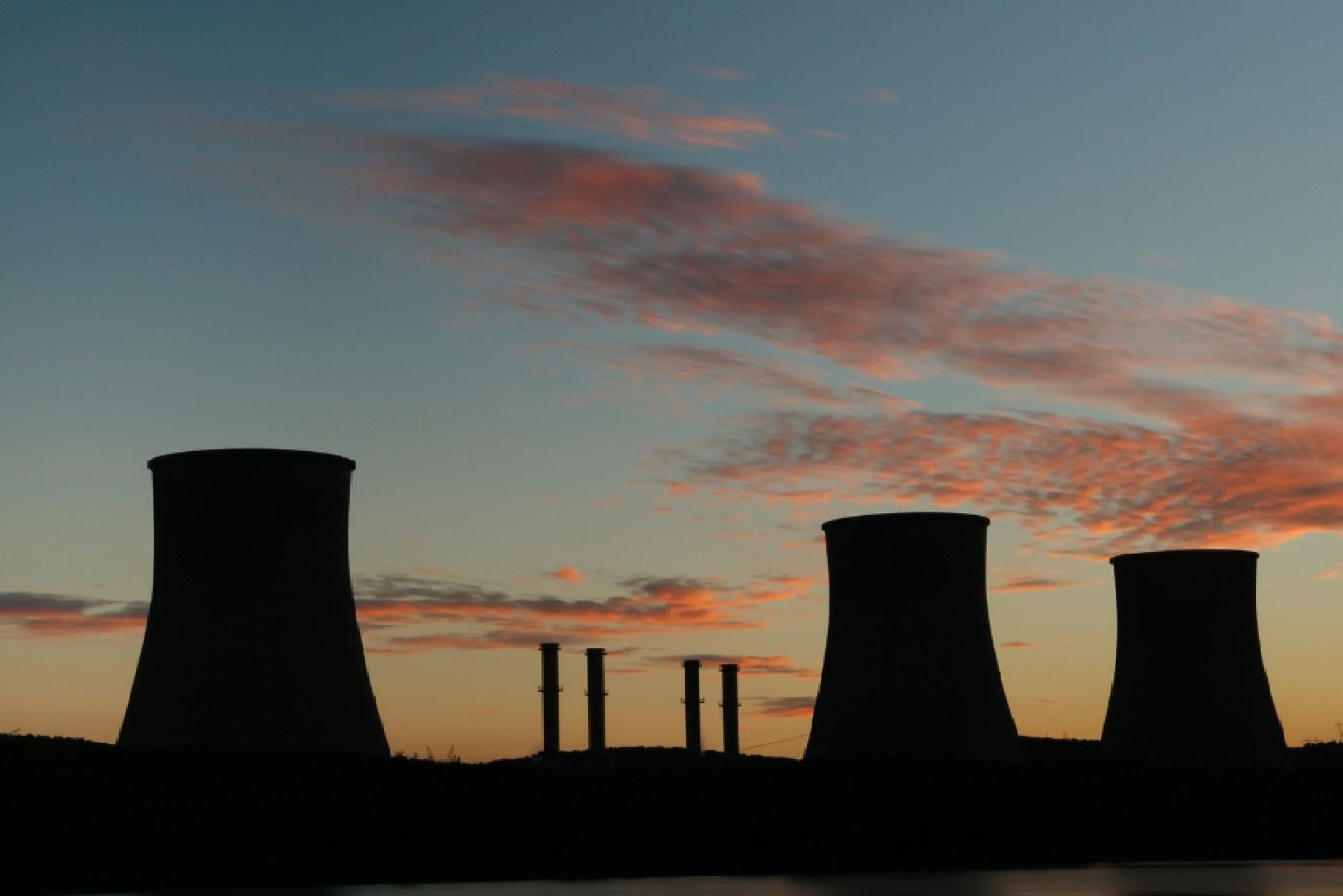
The World Bank's formal return to nuclear power financing is reshaping the investment outlook for African countries pursuing baseload nuclear capacity. A panel discussion at the Power Africa Today conference, taking place at the African Energy Week (AEW) 2026 Conference and Exhibition in Cape Town from October 12-16, will explore what this development means for the continent’s power ambitions and how the convergence of new procurement mandates, construction milestones and multilateral capital could support nuclear deployment across Africa.
Africa’s nuclear market is still in its infancy stage, despite significant uranium resources and growing demand for baseload power applications. An agreement between the World Bank Group and the International Atomic Energy Association (IAEA) in 2025 signal a step towards advancing nuclear development. The partnership marks the World Bank’s first formal re-engagement with nuclear in decades. The International Atomic Energy Agency signed similar agreements with the Asian Development Bank and the OPEC Fund that year, widening the financial architecture available to countries pursuing nuclear programs.
South Africa’s Koeberg facility is at the forefront of Africa’s nuclear development, with plans to strengthen capacity even further. The country’s Integrated Resource Plan (IRP) 2025 mandates 5.2 GW of new nuclear capacity by 2039, with the first 1.2 GW targeted by 2036 as part of a R2.2 trillion national energy investment strategy. In April 2026, state utility Eskom published a draft environmental scoping report identifying Thyspunt in the Eastern Cape as the preferred site for a new facility of up to 5.2 GW. The Nuclear Energy Corporation of South Africa is separately advancing a Small Modular Reactor demonstration program after an expression of interest in March 2026 drew 54 potential technology partners from 12 countries.
While South Africa's Koeberg Nuclear Power Station remains the continent's sole operating commercial nuclear plant, several other countries are advancing nuclear development. El Dabaa, a 4.8 GW facility on Egypt's Mediterranean coast, is the largest civil nuclear construction project currently underway in Africa. A $25 billion Russian state loan will cover roughly 85% of the estimated $30 billion cost. Construction reached a milestone in July 2026 with the installation of the reactor pressure vessel for Unit 2, seven months after Unit 1 completed the same step. Unit 1 is expected to begin supplying electricity in 2028, with the three remaining units scheduled to come online progressively through 2030.
Several other countries are building their own nuclear programs. Ghana is targeting approximately 1 GW by 2038, Kenya is advancing a 2 GW plant with a 2034 commissioning target, and Rwanda and Nigeria are both pursuing smaller reactor technologies suited to their grid infrastructure.
At AEW 2026, a panel session on Nuclear Power in Africa: Examining the Unique Value Nuclear Baseload Offers African Power Systems, will bring together government officials, utility operators, regulators and nuclear technology providers to assess how the continent's growing list of procurement commitments can be translated into dispatchable generation.
“We're seeing procurement mandates, multilateral backing and engineering milestones all within the same 12-month window. That’s never happened before in Africa's nuclear space,” says NJ Ayuk, Executive Chairman of the African Energy Chamber. “The discussion at Power Africa Today should be about how to maintain that momentum and convert it into megawatts.”
The Power Africa Today conference convenes power sector leaders, financiers and energy officials alongside AEW 2026 to tackle the continent's electricity challenges. With nearly 600 million people across Africa still lacking access to electricity, the conference provides a platform for advancing the partnerships needed to deliver reliable baseload generation at scale.
Register for AEW 2026 at aecweek-registration.com/2026 and learn more about Power Africa Today at aecweek.com/power-africa-today.