)
)
)
Namibia Confident for First Oil by 2029/2030 with Breakthrough Volans-1X Well Results
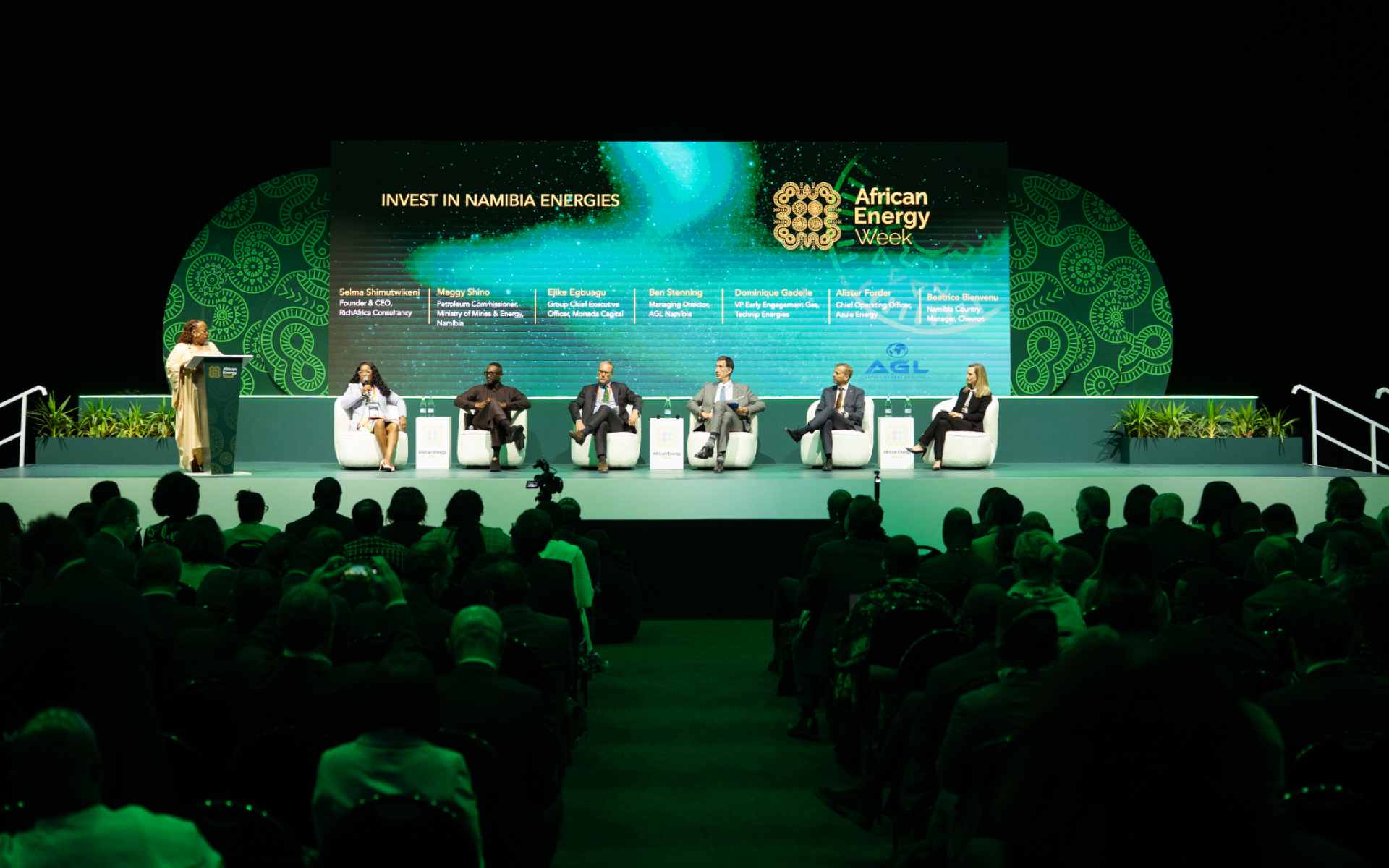
Namibia is on track to commence oil production by 2029/2030, bolstered by the recent successful drilling of the Volans-1X well on Block PEL 85 offshore Namibia. This well has yielded positive results, marking encouraging news for the Orange Basin, which continues to be a prolific petroleum region for Namibia, Maggy Shino, Petroleum Commissioner at Namibia’s Ministry of Mines and Energy, said at an African Energy Week (AEW): Invest in African Energies 2025 panel on Wednesday.
The drilling campaign confirms the Basin’s reputation as an area of growing global significance in oil and gas exploration. Africa Global Logistics (AGL) sponsored the panel session titled Invest in Namibia Energies, highlighting Namibia’s energy advancement.
In recent years, Namibia’s streak of offshore oil discoveries have firmly placed the Orange Basin on the map as one of the world's most promising petroleum regions. The recent Volans-1X discovery now joins Rhino Resources’ previous successes, including Capricornus-1X and Sagittarius-1X. These confirm Namibia’s emergence as a strategic destination for exploration and a potential hub for oceanic production.
Namibia’s Deputy Minister of Mines and Energy, Kornelia Shilunga, emphasized the country’s transformative energy journey. “We are witnessing a historic energy evolution. Our offshore discoveries, like Capricornus, Venus and Mopane, underscore the Orange Basin’s outstanding petroleum potential, while onshore basins such as Okavango also attract international players. Moving from exploration to evaluation and development phases signifies a new chapter, one that will deeply benefit our economy, people and partners.”
The pace of exploratory activity, along with the technical rigor applied in drilling and analysis, reflects the confidence that international investors have in Namibia’s resources and fiscal frameworks.
Benjamin Stenning, Managing Director for Namibia, AGL, emphasized the readiness of infrastructure as pivotal for meeting the goal of first oil production. “AGL has invested extensively in the ports of Walvis Bay and Luderitz, improving capacity by 65% to 70% in 2025. Our projects include a €30 million logistics development that will create significant employment. Despite progress, guaranteed docking during complex offshore operations remains a challenge needing attention,” he highlighted.
Shino further highlighted the country’s ambitious milestone. “Work is accelerating with approval processes being streamlined and development plans from major investors such as TotalEnergies and BW Energy actively under review. Our infrastructure plans are designed to be phased and flexible to meet growing demand.”
Beyond its offshore prospects, Namibia’s upstream landscape is seeing robust interest inland, particularly in the Okavango Basin. The Namibian government has refined its licensing regimes and improved fiscal policies to ensure competitiveness, while simultaneously safeguarding national interests.
“The Namibian government has taken such a professional approach to learn about the industry from other countries and lessons learned on what was done well and where improvements could be made, as well as local consultations around Namibia itself. This is really a best practice for other governments. The favourable legal and fiscal environment adds an optimistic outlook on Namibia’s Walvis Basin portfolio,” stated Beatrice Bienvenu, Country Manager for Namibia and West Africa, Chevron.
Alister Forder, COO of Azule Energy, added, “We believe the ambitious target to reach first oil by 2029/2030 in Namibia is achievable, though it will be tough and challenging. Achieving this ambition will require strong partnerships at many levels – government, local companies like Namcor, financing partners and collaboration among oil companies to enhance understanding of the subsurface. With collective effort, we are confident we will succeed."
Ejike Egbuagu, Group CEO of Moneda Invest Africa, emphasized finance innovation for local content development. “By partnering with local banks like FNB and Standard Bank, we are enabling SMEs to gain access to capital despite historic industry uncertainties, ensuring local participation benefits Namibians directly.”
Namibia’s energy sector stands at the threshold of a transformational era, set to emerge as a regional energy powerhouse that blends oil and gas development with a strong commitment to sustainability and community development. Dominique Gadelle, LNG Process Engineering Manager at Technip Energies, reaffirmed the company’s commitment to Namibia’s energy future through technology and capacity building, including engineering training and integrating SMEs into its operations.