)
)
)
Namibia Inches Towards First Oil as Independent Operators Advance Exploration Programs
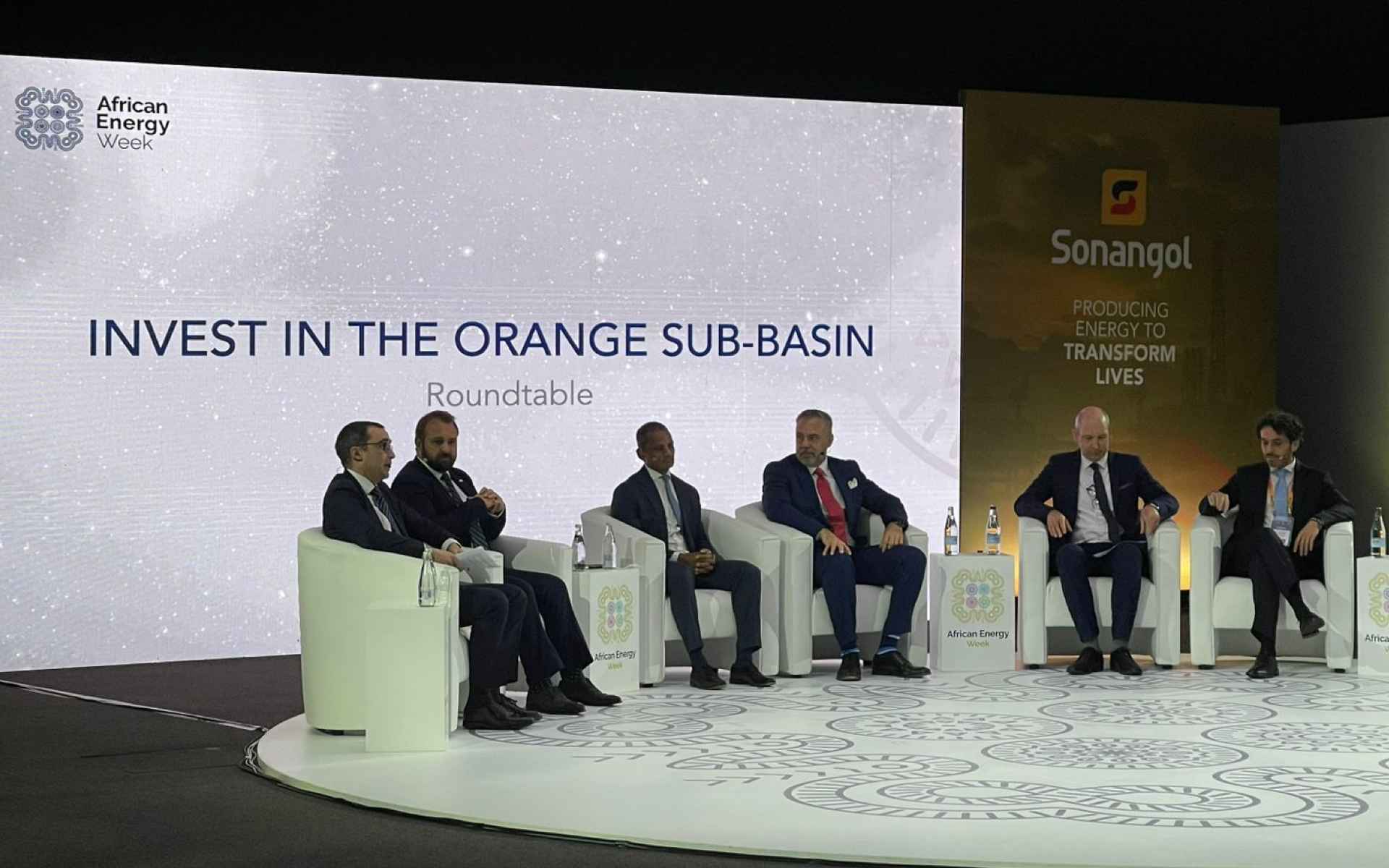
Independent operators active in Namibia’s Orange Basin are advancing ambitious exploration campaigns aimed at driving the country towards first oil production. During a roundtable discussion sponsored by Yinson Production at African Energy Week (AEW): Invest in African Energies 2025, speakers shared insights into ongoing exploration campaigns, showcasing that this is the time for smaller players in the country’s Orange sub-Basin.
Rhino Resources is currently advancing one of the most active exploration campaigns in the Orange Basin. In 2025, the company announced multiple discoveries, including Sagittarius-1X and Capricornus-1X, confirming the basin’s deepwater potential. Its most recent find was made at the Voltans-1X well – announced on October 1, 2025.
Travis Smithard, CEO, Rhino Resources, highlighted that this success is largely attributed to “balancing vision with determination and resilience while mitigating risk. It also comes down to how you partner with service companies and about making sure you’re high-grading your portfolio and your technical capability as a small player.”
He added that “It’s about collaboration. We need to make sure there is an industry focus to move from exploration to development.”
Mason Granger, CEO & Director of Oregen Energy Corporation, offered a similar perspective, emphasizing the substantial opportunities available in Namibia for smaller companies such as Oregen. A new entrant in Namibia, the company has increased its ownership in WestOil Limited to 48.5%, giving it a 33.95% indirect working interest in Block 2712A.
Granger explained that Namibia offers “the seismic prize and opportunities for smaller companies. There are still highly-attractive opportunities in the country and we are actively looking at additional prospects. We’re trying – depending on the availability of capital – to have a portfolio of exploration prospects that are all exciting in their own right.”
Toronto-based Sintana Energy is also building a diverse Namibian portfolio, holding interests in five offshore assets and one onshore block across three basins. In 2025, the company’s partners secured a second 12-month extension for Block PEL 79, extending the license to July 2026. The block’s proximity to Rhino’s Capricornus-1X discovery highlights its prospectivity. Meanwhile, at PEL 87, Sintana is seeking a farm-in partner to fund drilling operations, offering 6,593 km² of high-quality 2D seismic coverage to de-risk exploration.
Robert Bose, CEO & Member, Board of Directors, Sintana Energy, said that, “We are continuously assessing opportunities to get to first oil,” adding that what attracted the company to Namibia was “the accelerated activity and the opportunity to step into a strong portfolio of licenses. We have a job to do as a small company in Namibia.”
Azule Energy, Angola’s largest independent equity producer of oil and gas, made its entry into Namibia in December 2024 by farming into PEL 85. This agreement coincided with Rhino Resources spudding the block’s first wildcat well, marking a significant milestone for Azule’s expansion beyond Angola. Giovanni Aquilina, Exploration Director of Azule Energy, explained that this was a strategic move for the company, representing its first international transaction. The company plans to leverage its experience gained in Angola to advance Namibia towards first oil.
He said: “What attracted us to the Orange Basin was the geological opportunity and similarity to the Angolan deepwater system. While Angola is a different canvas and more mature on the infrastructure and regulatory side, Namibia is extremely rich. We believe that Namibia is not a challenge but an invitation for us to work together to build the industry from the ground up.”
TGS continues to provide the seismic backbone for exploration success in the Orange Basin. The company has built an extensive Namibian dataset comprising over 50,000 line-km of multi-client 2D seismic data, along with more than 97,500 km of regional 2D coverage, giving operators essential tools to assess basin-wide prospectivity and de-risking of investments.
James Gara, Business Development Manager, Africa Mediterranean & Middle East at TGS, highlighted the value of integrated datasets in Namibia. He stated that, “having an integrated data library like we do allows you to interpret the map on a basin scale. Integrated datasets are more robust, especially when they have been correlated against existing well data. This provides more confidence for regional exploration.”