)
)
)
The New Commercial Model: How Data Centers and 25-Year Offtake Deals Could Unlock Africa’s Stranded Gas
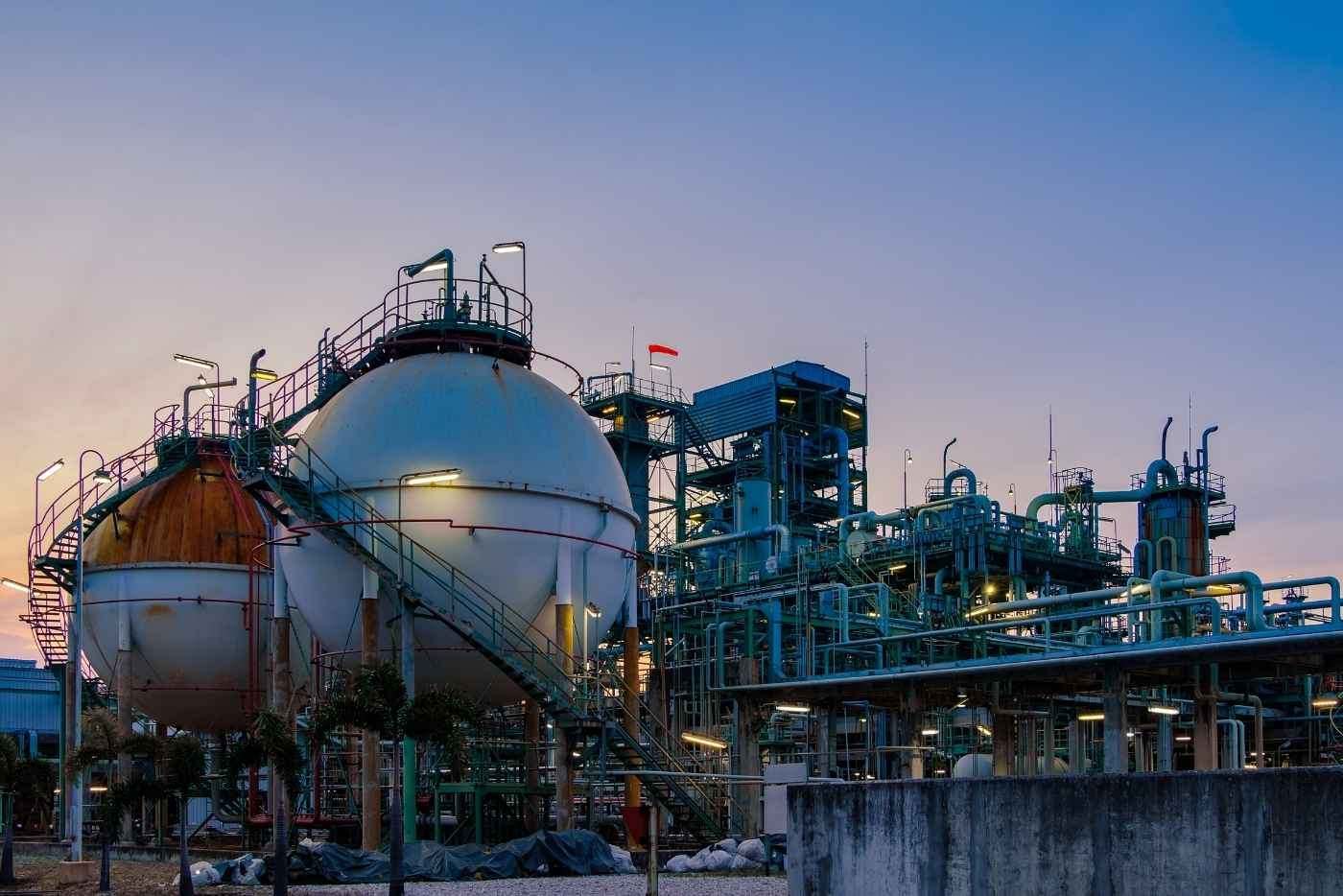
A structural financing gap has long constrained Africa’s gas sector: despite vast reserves, local producers often lack the long-term offtake certainty needed to secure development capital. Nigeria alone holds around 209 trillion cubic feet of proven natural gas reserves, yet much remains undeveloped due to weak demand guarantees and constrained upstream financing.
That dynamic is beginning to shift as AI and hyperscale computing drive unprecedented electricity demand. The IEA projects global data center consumption could exceed 1,000 TWh by 2026, driven largely by AI workloads. For Africa, this creates a rare alignment: data centers require stable baseload power, while gas producers need long-term contracts to unlock financing.
A New Integrated Commercial Model
Under this emerging structure, an indigenous gas producer develops reserves – often stranded or marginal – while a nearby gas-to-power plant supplies electricity directly to a data center campus. The campus is typically anchored by a hyperscaler or infrastructure fund. In return, the operator signs 20 to 25-year power purchase agreements or dedicated energy supply contracts.
This long-term visibility materially improves bankability. With a creditworthy off-taker in place, institutions such as Afreximbank, the African Development Bank (AfDB) and global infrastructure funds can finance upstream gas development with reduced risk. Midstream and power assets can also be financed as a single integrated value chain, creating a vertically aligned system linking gas production, power generation and digital infrastructure demand.
Data centers are particularly well suited to anchor this model. They require uninterrupted baseload power, operate on long investment cycles and cannot tolerate supply volatility. As a result, hyperscalers are increasingly signing multi-decade energy agreements globally to secure operational stability.
This trend is already being seen in mature markets, where technology firms are directly investing in dedicated energy assets – including renewables and, increasingly, firm gas generation – to guarantee supply for AI workloads. In Africa, the effect could be even more pronounced: a 25-year contract from a data center effectively acts as a “credit enhancer,” unlocking upstream gas development that would otherwise struggle to reach FID.
Nigeria as a Test Case
Nigeria is uniquely positioned to pilot this model as it combines vast stranded gas resources, existing LNG infrastructure and a persistent domestic power deficit. The country still struggles to monetize supply at scale due to infrastructure bottlenecks and weak domestic offtake. At the same time, major investments are underway – most notably, the $10 billion NLNG Train 7 expansion, which will lift capacity from 22 to 30 mtpa and reinforce Nigeria’s role as a regional gas hub. Shell’s $2 billion offshore gas FID further underscores continued upstream confidence.
Yet despite these projects, Nigeria faces chronic electricity shortages and an estimated $29 billion annual economic loss from unreliable power, highlighting the gap between gas availability and end-use demand. This is precisely where data centers become catalytic. Lagos is emerging as a regional digital and fintech hub, yet remains constrained by grid instability – making captive gas-to-power solutions for hyperscaler-backed data centers a practical route to anchor long-term demand, improve reliability and unlock upstream gas financing.
Institutional Alignment
Scaling this model will require a mix of different types of financing. Institutions like Afreximbank and AfDB can provide core funding, guarantees and help reduce risk, while infrastructure funds can bring long-term equity for both gas production and related power infrastructure. Export credit agencies and climate-focused investors may also play a role, especially where gas is seen as supporting the transition by enabling digital infrastructure and strengthening grid stability.
African Energy Week (AEW) 2026 and its expanding AI and Data Center Track is emerging as the key platform where these hybrid energy-digital models are being shaped into investable frameworks. As governments, developers, hyperscalers and financiers converge, the focus is shifting from resource potential to bankable contracts, risk allocation and financing structures that directly link gas supply to long-term digital demand.
“Africa’s gas cannot remain stranded while the world’s digital economy is starving for reliable energy. We must connect our resources to long-term demand anchors like data centers if we want to unlock real financing and industrial growth,” said NJ Ayuk, Executive Chairman of the African Energy Chamber.
If structured correctly, data centers could become the missing demand anchor that enables final investment decisions across Nigeria’s gas sector. By tying hyperscale digital demand to 20–25-year energy contracts, Africa can convert stranded gas into bankable infrastructure – accelerating both energy monetization and digital industrialization.