)
)
)
Nodal Seismic Technology Unlocks Onshore Success for African Independents
As supermajors retreat from Africa’s mature onshore basins, a wave of independent and small-cap operators is deploying new seismic systems and advanced data reprocessing to unlock acreage once considered too expensive or too risky to explore. These smaller, more agile players are operating with lower acquisitional costs and higher success rates, proving that modern technology can diversify the upstream market and transform marginal prospects into commercial viability.
Independents Lead Angola’s Inland Rebound
Independent oil companies are returning to Angola’s onshore Kwanza Basin with renewed confidence, armed with modern seismic technology that is transforming once-overlooked acreage into viable exploration targets. Nigerian energy company Oando formally entered Angola’s upstream market in early 2025 through operatorship of Block KON 13, while Corcel consolidated its stake in Block KON 16 to over 70%, advancing technical studies and leveraging existing and new seismic data as it moves toward a drilling program in 2026.
The shift marks a broader strategic pivot across Africa’s onshore sector. As supermajors divest legacy inland assets to focus on offshore megaprojects, small-cap and independent players are stepping in with modern acquisition techniques, including wireless nodal systems, high-resolution 3D seismic, and AI-analyzed legacy datasets, that dramatically reduce both geological uncertainty and upfront capital requirements. In 2025, Shell completed the sale of its Nigerian onshore subsidiary to Renaissance, a consortium comprising ND Western, Aradel Energy, First E&P, Waltersmith, and Petrolin, reflecting this industry-wide transition from majors to independents across mature onshore basins.
Nodal Revolution Cuts Costs, Improves Data Quality
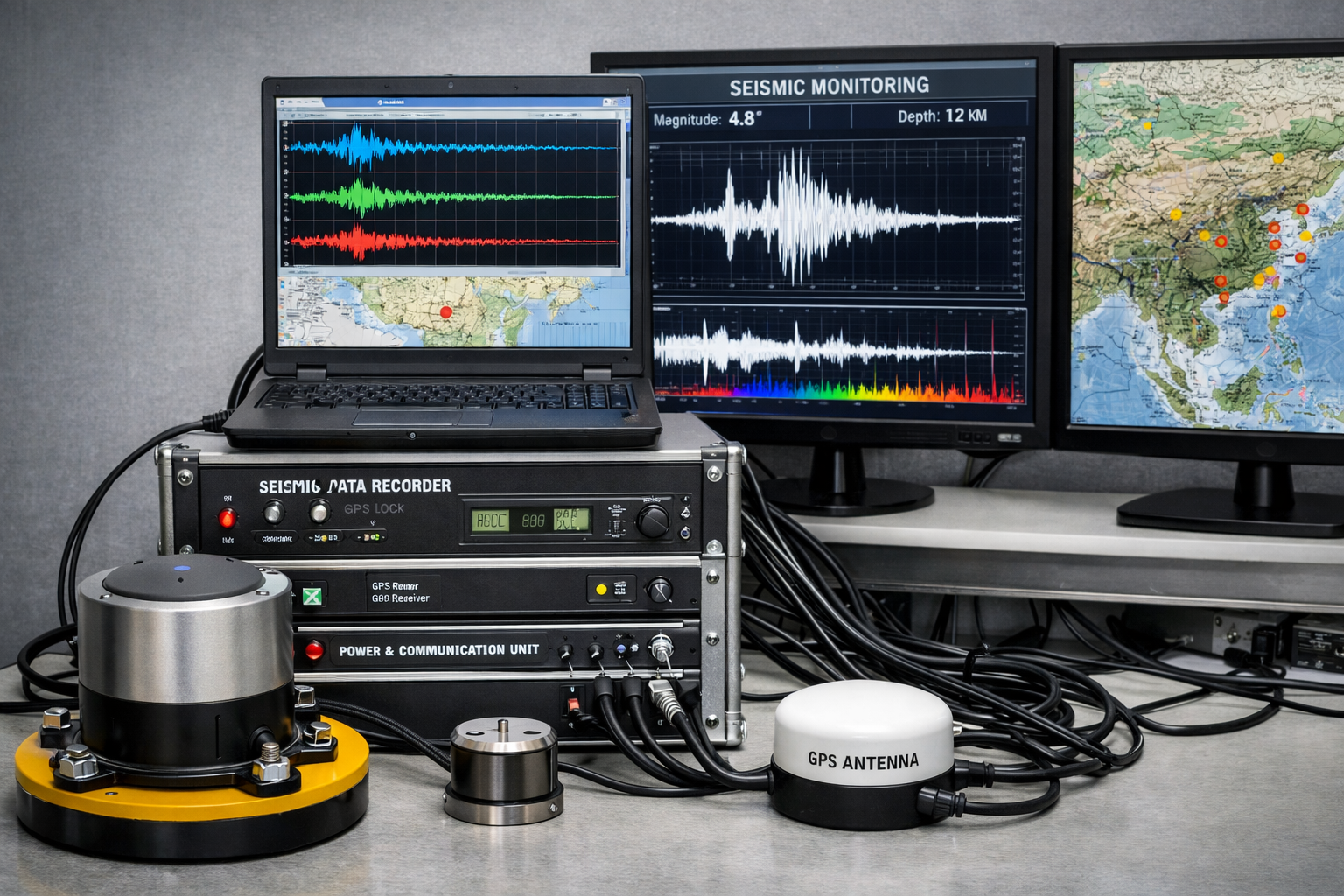
The deployment of autonomous nodal seismic systems is fundamentally changing the economics of onshore exploration. In Libya, TAY Oil Services and Polaris commissioned North Africa’s largest nodal seismic acquisition project in mid-2025, deploying 40,000 STRYDE nodes across 1,480km² in Concession 57 for state-owned AGOCO. The semi-automated, containerized system enables high-density 3D surveys without the logistical and financial constraints of conventional cable-based systems, cutting survey costs and crew sizes while dramatically increasing trace density per square kilometer.
According to Abdellatif Hakkoumi, Polaris Regional Manager, the company required an innovative nodal system capable of supporting high channel counts across Libya’s expansive areas. The technology delivers improved subsurface imaging, reduced geological uncertainty, optimized well placement, and lower drilling risks in Libya’s complex geology, defined by thick carbonate sequences and rugged terrain.
Zimbabwe Discovery Validates Legacy Data Reprocessing
Australian firm Invictus Energy has demonstrated the value of reprocessing legacy seismic data in frontier basins. The company reprocessed decades-old seismic surveys originally acquired by Mobil Oil Corporation in the 1990s using modern processing techniques, revealing a world-class prospect in Zimbabwe’s Cabora Bassa Basin. Invictus then acquired 1,400km of high-resolution 2D seismic data, which led to the Mukuyu gas-condensate discovery in late 2023, estimated at 1.3 trillion cubic feet (tcf) with minimal impurities ideal for low-cost processing.
The Mukuyu discoveries ranked as the second-largest oil and gas find in sub-Saharan Africa in 2023. Following this success, Zimbabwe granted the site National Project Status in September 2025, providing fiscal benefits and expedited permitting. Subsequent interpretation of the 2023 CB23 seismic survey identified eight additional prospects in the eastern Cabora Bassa Basin totalling 2.9 tcf of gas and 184 million barrels of condensate on a gross mean unrisked basis, with Invictus planning 3D seismic acquisition and additional exploration drilling in 2026.
Mature and Frontier Plays Both Benefit
The technology renaissance is reviving both mature and frontier acreage. In Nigeria's Niger Delta, where production has declined since peak output in the 1970s, modern 3D seismic is uncovering bypassed pay in reservoirs that were invisible to older technology. Nigeria's upstream regulator offered 28 onshore blocks in its 2025 licensing round across the Niger Delta and Benue Trough/Anambra Basin, with prequalification closing in February 2026 and bidding scheduled to conclude by July 2026.
Meanwhile, in frontier territories, companies like ReconAfrica are applying similar techniques to greenfield basins. The Canadian explorer signed a Memorandum of Understanding (MoU) with Angola's ANPG in April 2025 to explore over 5.2 million acres in the onshore Etosha-Okavango basin, planning 2D seismic programs and geochemical analysis of surface oil and gas seeps beginning in early 2026. ReconAfrica is also progressing seismic data reprocessing on its Ngulu block offshore Gabon, where 3D seismic interpretation began in January 2026.
Looking Ahead to African Energy Week 2026
The seismic-driven transformation of Africa's onshore exploration landscape will take center stage at African Energy Week (AEW) 2026, scheduled for October 12-16 in Cape Town. As governments continue to modernize regulatory frameworks and independents demonstrate technical and commercial success using advanced seismic technologies, the event will serve as a platform for operators, service companies, and financiers to assess how nodal systems, reprocessed legacy data, and high-resolution 3D surveys are translating geological potential into bankable projects across the continent's onshore basins.
“The shift we’re witnessing across Africa’s onshore basins represents a technological upgrade and a foundation for sustainable industry growth,” states NJ Ayuk, Executive Chairman, African Energy Chamber. “Independent operators are proving that modern seismic tools can lead to commercial prospects. When you reduce exploration costs while improving success rates, you create space for African companies and smaller players to compete.”