)
)
)
North Africa's Brownfield Revival Targets Europe's Growing Need for Gas
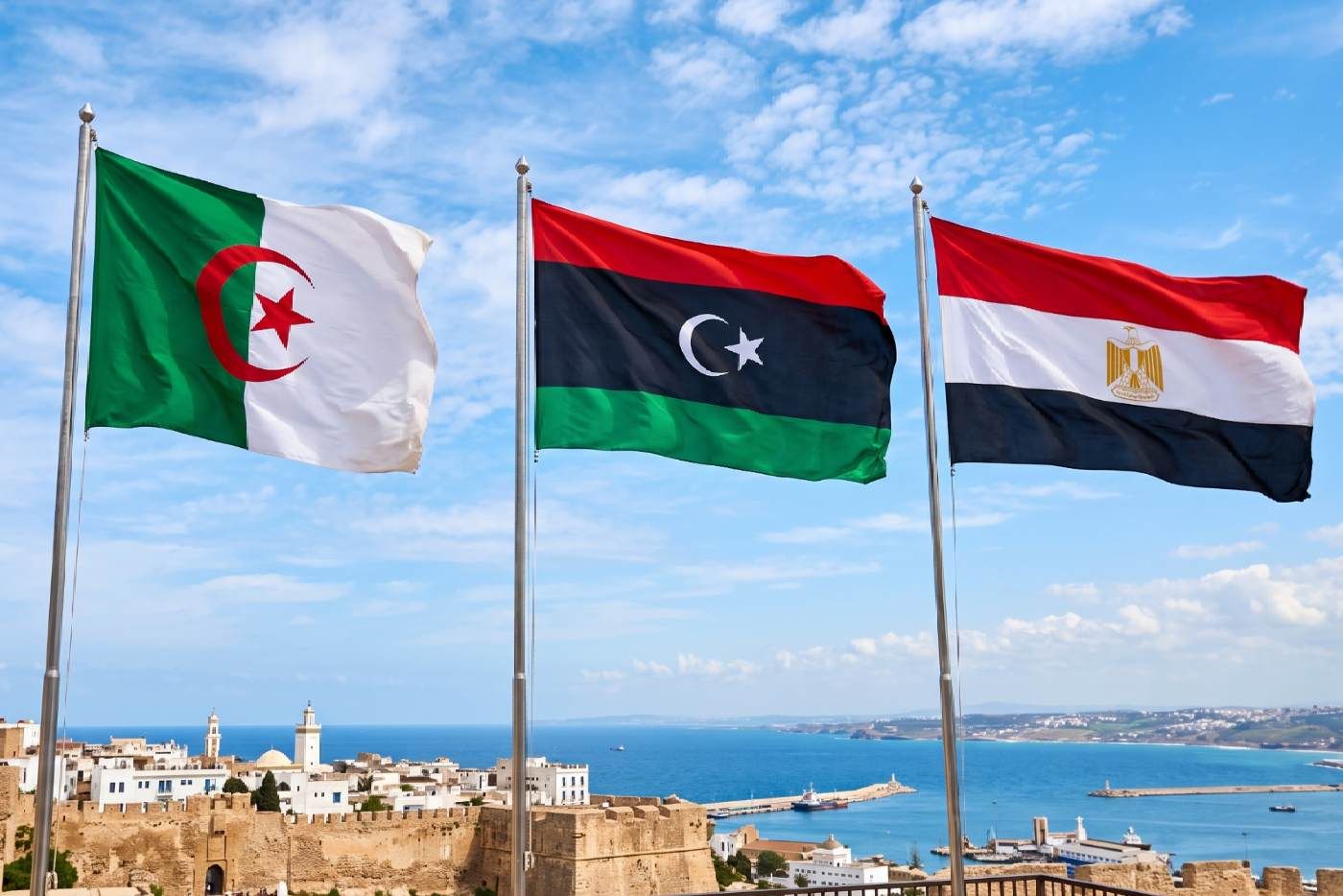
The panel “North Africa's Onshore and Brownfield Expansion: Focus on Algeria, Egypt, Libya” at African Energy Week 2026, held October 12-16 in Cape Town, examines how each country plans to convert that spending into production. European gas import patterns have shifted significantly since 2022, with the continent's buyers actively broadening their supplier base and prioritizing energy security. The EU has identified North Africa and the Eastern Mediterranean as priority partners in that diversification effort, and North Africa's existing pipeline corridors to Southern Europe position the region to capture a sizeable share of realigning demand.
“The investment case for brownfield expansion in North Africa has never been stronger. These countries have proven reserves, existing infrastructure and direct pipeline access into a European market that is actively looking for gas alternatives,” said NJ Ayuk, Executive Chairman of the African Energy Chamber.
Algeria is leading the way, with state-owned Sonatrach's 2026-2030 plan comitting $60 billion. The majority is directed at sustaining output from legacy giants Hassi R'Mel and Hassi Messaoud, an example of the brownfield-first approach the AEW panel will champion. The $2.3 billion Hassi R'Mel Phase III boosting project focuses on compression and recovery at a field that has been producing for over 65 years. Algeria already accounts for roughly 18% of EU pipeline gas imports, and Sonatrach is in talks to expand the Medgaz link to Spain by up to one billion cubic meters per year.
Egypt's petroleum ministry has pursued a different playbook, planning to drill 101 wells in 2026 with 67 targeting the Western Desert after settling $5 billion in overdue payments to international oil companies (IOCs) in late 2025. Twenty-one new agreements worth $1.1 billion followed. In May 2026, Agiba Petroleum Company, a joint venture between the Egyptian General Petroleum Corporation (EGPC) and Italian energy company Eni, announced the Western Desert's largest discovery in 15 years, with estimated reserves of 70 million barrels of oil equivalent. How that momentum converts into export-ready supply will be a focal point at the Cape Town panel discussion.
Libya's production recovery presents another strong case for brownfield expansion. Output reached 1.4 million barrels per day in early 2026, a ten-year high, and the National Oil Corporation (NOC) is targeting 1.6 million by year-end. In January, state-owned Waha Oil Company signed a $20 billion, 25-year development deal with TotalEnergies and ConocoPhillips to more than double the venture's output to 850,000 barrels per day. Brownfield programs are advancing at Sarir, Messla and Al-Atshan, and the country completed its first upstream licensing round in 17 years.
African Energy Week 2026 takes place October 12-16 in Cape Town, convening more than 9,000 delegates, 300 ministers and VIPs, and 1,500 companies from across Africa's energy value chain. Endorsed by the African Energy Chamber, AEW is the continent's leading platform for upstream investment dialogue, policy engagement and deal origination. Learn more about the event and register as a delegate at aecweek-registration.com/2026/.