)
)
)
Russia Expands Energy Partnerships Across Africa to Meet Rising Demand
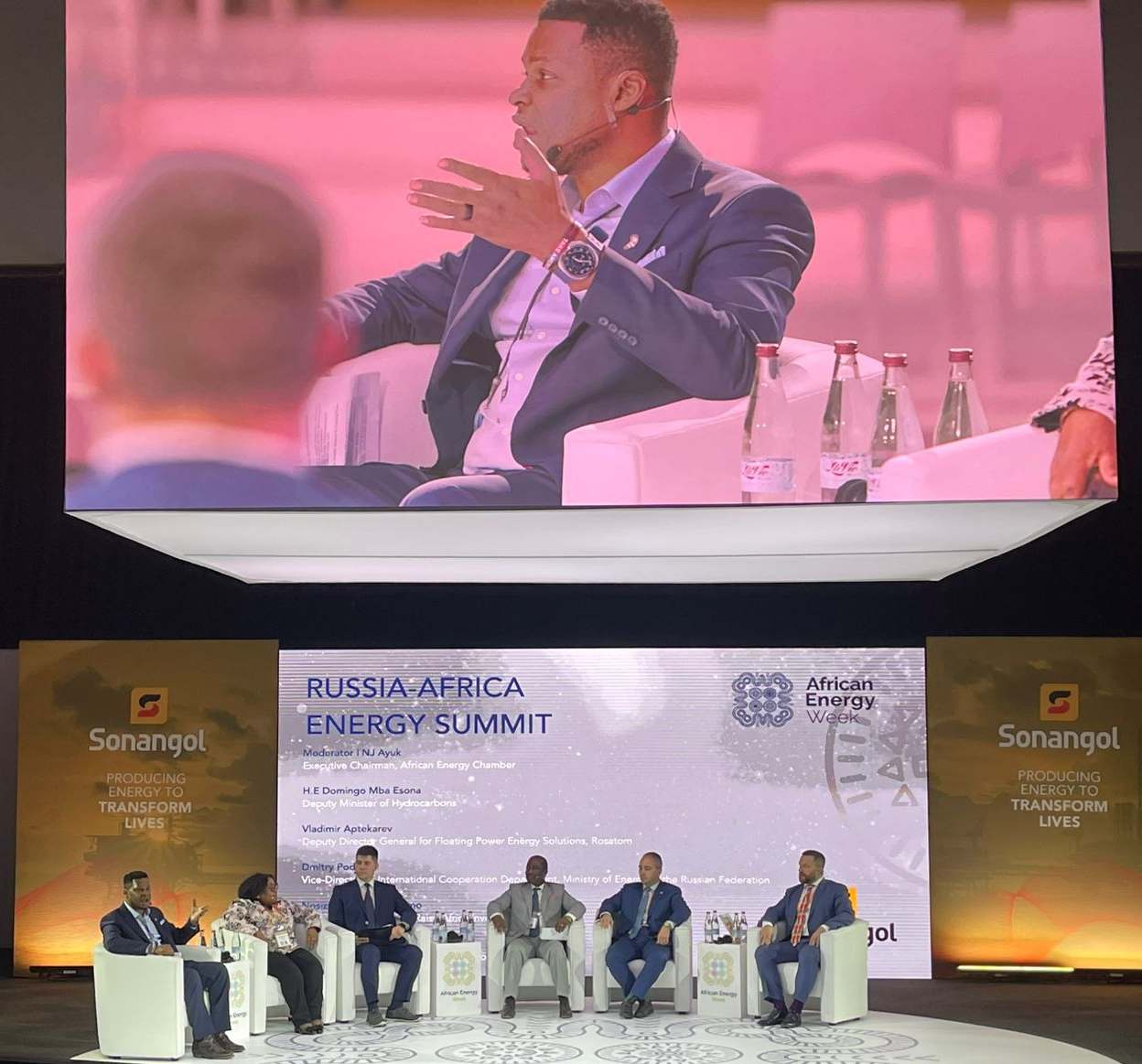
Russia is strengthening its energy footprint in Africa, with officials and company leaders highlighting new partnerships in oil, gas, and nuclear power. Speaking at African Energy Week (AEW): Invest in African Energies 2025, they emphasized alignment with broader G20 goals on energy security and sustainability.
Dmitry Poduev, Vice-Director of International Cooperation Department, Ministry of Energy of the Russian Federation, highlighted that the country “has and will continue to be a partner for Africa. We are ready to cooperate in various different fields. We see opportunities to contribute to the stability of fuel supply on a commercial basis and are open to negotiations.”
This affirmation comes as many countries open new investment opportunities across various sectors. Equatorial Guinea, for example, is driving an ambitious investment strategy, striving to attract capital and expertise in a variety of energy and mining projects.
Domingo Mba Esono, Vice Minister of Mines and Hydrocarbons, Equatorial Guinea, explained that “we have a lot of opportunity. With the licensing round launching in April 2026, there will be blocks available. We have an open-door policy in the mining sector and a database for any company to look at the potential there. We are inviting Russian companies to come to Africa so that we can continue fostering this cooperation.”
Rosatom is leading Russia’s nuclear engagement in Africa. The company is working with Rwanda to establish a nuclear science and technology center and has signed multiple cooperation agreements with Mali, Guinea-Conakry and the Republic of the Congo. By providing nuclear power solutions, Rosatom is positioning Russia as a key enabler of Africa’s energy diversification and capacity-building.
Vladimir Aptekarev, Deputy Director General for Floating Power Energy Solutions, Rosatom, drew insight into the role of floating nuclear solutions. He shared that “If you compare floating solutions to other nuclear solutions, they are faster to develop and offer baseload power without the need for heavy industry. From the point of contract signing, it takes five years to bring the first unit into production. Then we can add a unit every year, of between 100 MW to 200 MW annually.”
Beyond power, Africa requires significant investment across its infrastructure sector to address challenges associated with fuel security. Andrey Maslov, Director, Centre for African Studies at HSE University, explained that in terms of energy, “Africa contributes a lot to global markets, but at the same time, it imports a lot of its fuel. If that money is spent on building generating capacity, it will bring a lot more benefits. Governments often lack data and a clear understanding of what is going on in their energy systems.”
Nosizwe Nokwe-Macamo, Executive Chairperson of Raise Africa Investments, underscored the need for a “multi-pronged approach” to address this challenge. She stated that this approach needs come at a “business level, an academic level, a government level and a national oil company (NOC) level.”
By leveraging Russian expertise, African states can benefit from strengthened energy infrastructure, innovative technology and established global ties.