)
)
)
SANEDI Recommends ISO Framework to Boost Energy Efficiency at AEW 2025
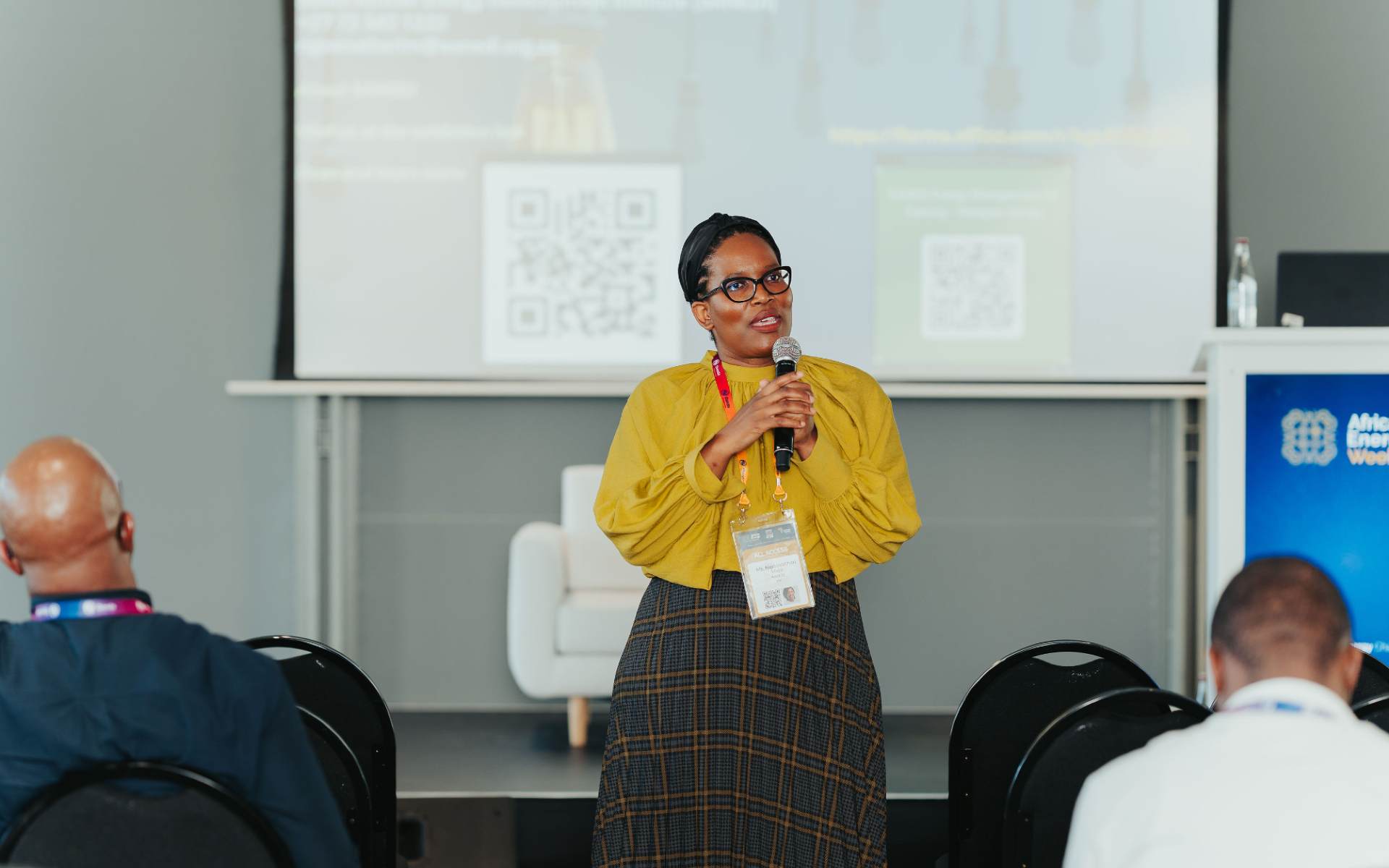
The South African National Energy Development Institute (SANEDI) has urged businesses across the continent to adopt the ISO 50001:2018 framework as a practical approach to implementing energy efficiency, highlighting its critical role in Africa’s sustainable energy future. The recommendation came during SANEDI’s Energy Management 101: Empowering Africa’s Energy Champions Through Foundational Knowledge seminar, held during the African Energy Week (AEC) 2025 on Monday.
Ngoanathari Maja, Manager - Energy Efficiency in Public Buildings and Infrastructure at SANEDI, highlighted the ISO 50001:2018 framework as a structured approach for businesses. “The framework emphasizes commitment, clear roles and responsibilities, significant energy use, energy performance indicators, energy-saving opportunities, operational control, and continuous evaluation and improvement,” Maja explained. “Energy efficiency cuts across all energy sources and requires a sustainable approach at every level.”
Maja framed energy efficiency as the “first fuel,” noting that improved management allows businesses to save energy, free up capacity and create new opportunities without waiting years for additional power plants.
“We cannot become Africa’s energy champions if we don’t talk about energy efficiency. If we save energy, we give ourselves the opportunity to gain more megawatts. Energy efficiency can create opportunities for inclusion, jobs, industries, and new products. There is a strong link between energy management and sustainability,” she added.
A key focus of the session was understanding energy use through accurate data. Maja explained that energy efficiency gains start with knowing what and how energy is consumed. “Data is critical. We can easily improve energy efficiency in baseload consumption. The baseline is the activity happening while consuming energy, and it must be monitored continuously.”
Participants were also introduced to low-cost, high-impact strategies and energy action planning techniques that can be implemented immediately, demonstrating that energy efficiency is not solely about large-scale investments. “Energy access is incomplete if it doesn’t include energy efficiency,” Maja concluded.