)
)
)
Senegal Assesses Prospects of Raising Sangomar Above 100,000 BPD
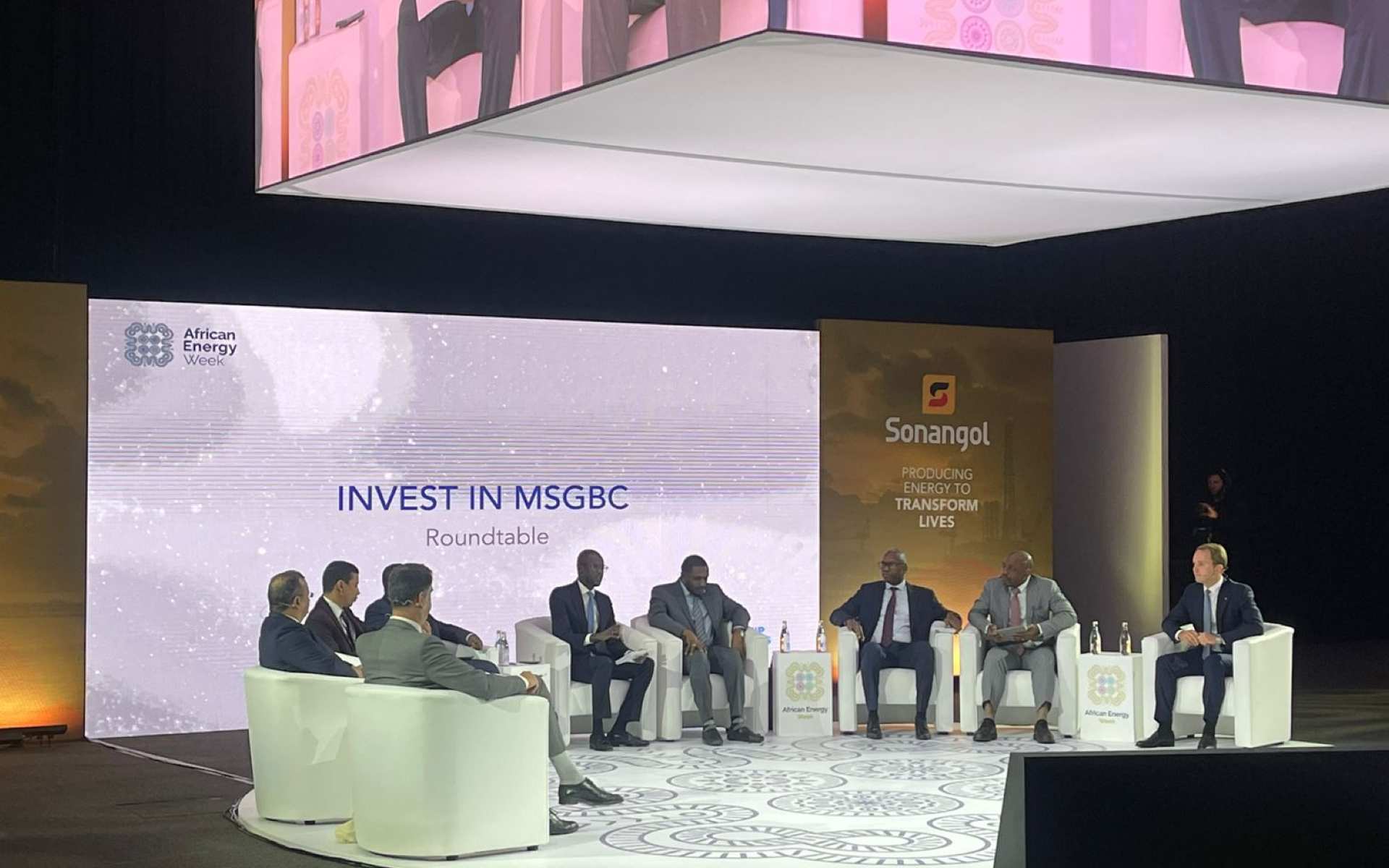
Senegal is currently assessing opportunities for the next phases of the Sangomar oilfield development, striving to increase production above 100,000 barrels per day (bpd). The project started operations in 2024, with oil production reaching 9.1 million barrels in Q2, 2025.
Speaking during a Technip Energies-sponsored Invest in MSGBC Roundtable session at African Energy Week: Invest in African Energies 2025, Ibrahima Noba, Director for Exploration, Ministry of Energy Petroleum and Mines, Senegal, explained that “Sangomar is not only a milestone but the launchpad for how Senegal will become a global player in the oil industry.”
He added that, “We are now looking, alongside our partner, to see what can be done in the next phases. Depending on these assessments, we will see how we can raise production over 100,000 bpd and see how we can [monetize] gas opportunities to feed the country with associated gas.”
Beyond Sangomar, the MSGBC region has emerged as one of Africa’s most dynamic energy frontiers, with major gas projects and ambitious exploration campaigns reshaping the future of the region. The Greater Tortue Ahmeyim (GTA) gas development has been the cornerstone of the region’s gas agenda, starting production in 2024 and now pursuing its second phase. As operator of GTA, Kosmos Energy continues to anchor the MSGBC region’s upstream growth.
“We have exported 11 cargoes and are about to export the next condensate in the coming days. This is a big milestone for the country and region, showcasing collaboration across the industry. Now is the time to optimize what we have and scale up,” said Ismail Sid Ahmed, VP and Country Manager Mauritania, Kosmos Energy.
The GTA project produces gas from the Gimi FLNG vessel, developed by Golar LNG. The vessel reached Commercial Operations Date in 2025, marking a milestone for the project. According to Karl Fredrik Staubo, CEO, Golar LNG, “this is only the beginning of the 20-year contract. We are planning on ordering our fourth FLNG vessel, which we had hoped to deploy in the MSGBC basin. We want to partner with anyone who has three trillion cubic feet (tcf) or above.”
According to Dominique Gadelle, Vice President, Early Engagement Gas, Technip Energies, “GTA was a very complex project because of the subsea, but at the end of the day, we succeeded. We are now part of the LNG exporter club.”
Mauritania is now eyeing the development of the BirAllah gas field, which holds an estimated 80 tcf of reserves, as well as opportunities in low-carbon energy. The government aims to produce 12.5 million tons of green hydrogen annually by 2035 and has become the first country worldwide to adopt a “hydrogen code” law.
Chemsdine Sow Deina, Director General of Petroleum and Low Carbon Hydrogen, Ministry of Energy and Petroleum of Mauritania, explained that, “We have huge potential for gas, around 100 tcf. At the same time, the country has a vision in terms of decarbonization. Our objective is to reach net-zero carbon emissions by 2050 by using what we have - our gas to produce blue hydrogen - and to make the oil industry cleaner and greener.”
The Gambia is seeking to build on growing regional momentum by advancing exploration across its offshore acreage. Lamin Camara, Permanent Secretary, Ministry of Petroleum and Energy, The Gambia, said that, “recent discoveries in Senegal and Mauritania have raised our profile. We have drilled some wells which have shown the existence of petroleum systems. We are currently negotiating with three different companies and expect to conclude these discussions by the end of the year.”
Guinea-Conakry is also laying the foundation for a more competitive upstream industry. Lanciné Condé, Director General, SONAP, shared that, “We have been working hard to make fiscal and regulatory frameworks align with our neighbors so that companies have a first-mover advantage.”
As countries move to reshape their energy systems, the role established logistics chains play in supporting cross-border trade becomes imperative. Sidi Ahmed Abeidna, CEO, SOGECO SA (AGL Group), stated that, “Logistics is key. Senegal and Mauritania have successful cross-border operations. With the success of GTA, there is a bright future, positioning the MSGBC region as a global leader.”