)
)
)
Sonangol’s Lobito Refinery Reaches 27% Completion
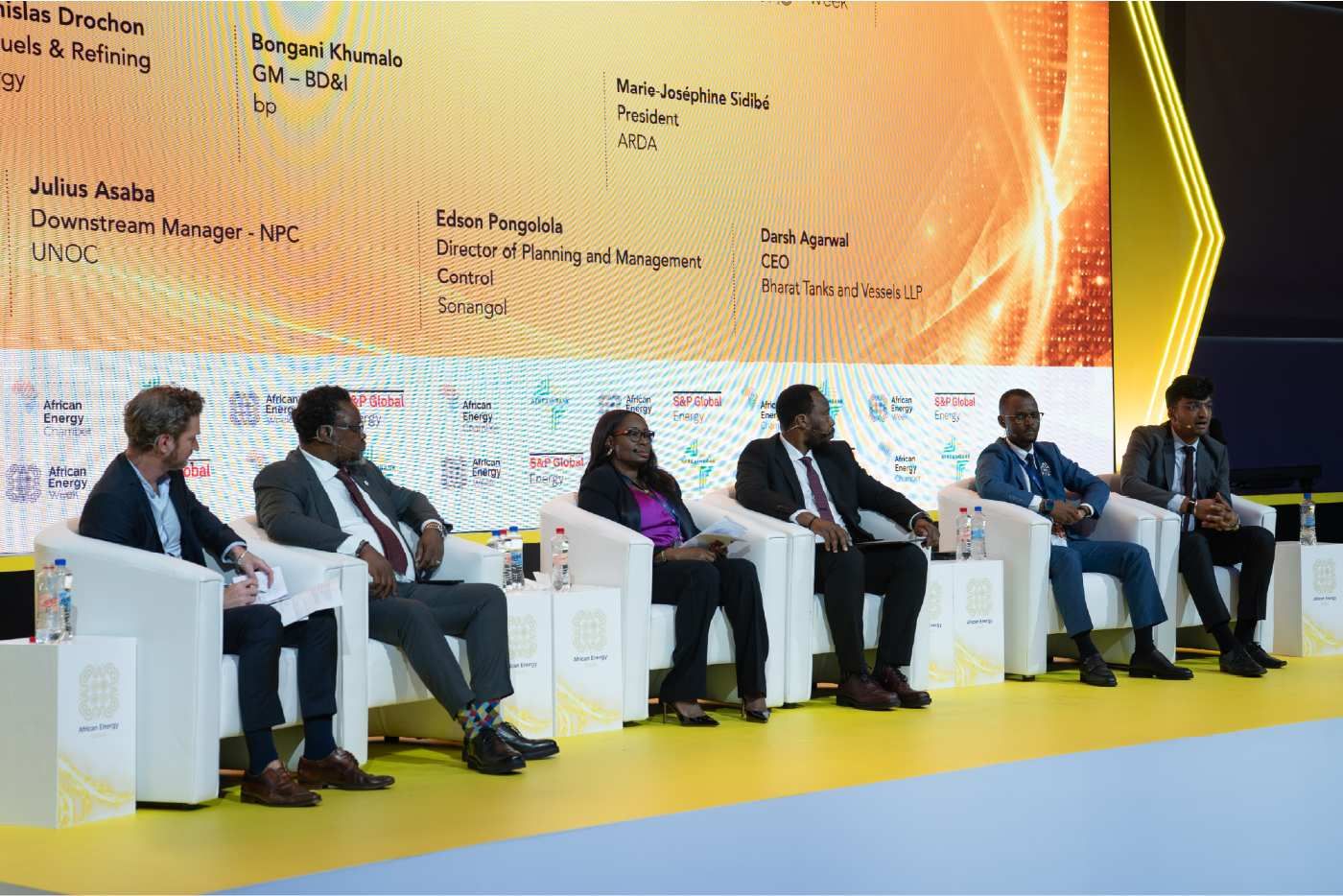
Angola’s 200,000-barrel-per-day Lobito refinery, being developed with Chinese contractor CMT3, is approximately 27% complete, with full completion expected within the next few years, Edson Pongolola, Director of Planning and Management at Sonangol E.P., said during African Energy Week (AEW) 2026 in Cape Town.
Pongolola outlined Angola’s strategy to reduce dependence on imported refined petroleum products by expanding domestic refining capacity and developing infrastructure to serve regional markets.
Angola consumes 5.5 million tons of petroleum products annually, with demand growing by around 5% per year. Pongolola expects consumption to reach 7 million tons within the next four to five years. Sonangol has upgraded gasoline-processing units at its existing Luanda refinery, increasing gasoline production capacity to four times its 2019 level, with the units coming online in 2022. Beyond Luanda and Lobito, the company is also advancing phase two of the Cabinda refinery project.
Regional cooperation is also central to improving resilience. Julius Asaba of Uganda National Oil Company (UNOC) discussed Uganda’s efforts to diversify supply routes and expand domestic storage capacity, including through its involvement in regional pipeline infrastructure. “We import 90% of our fuel through Kenya. We work hand in hand with Tanzania as well. Tanzania is a very good partner,” Asaba said.
Marie-Joséphine Sidibé, President of the African Refiners and Distributors Association, said the continent must turn its energy needs into projects that can attract financing. “We bring together countries, governments, industry stakeholders, operators and the entire value chain to turn these needs into bankable projects that investors can finance,” she said. Sidibé also highlighted the cost of relying on overseas refining. “Around 70% of Africa’s oil production is exported for processing,” she said, arguing that expanding domestic refining would help retain more value on the continent and support industrialization.
Darsh Agarwal, CEO of Bharat Tanks and Vessels LLP, said demand for storage infrastructure has risen since March, with African governments and national oil companies increasingly prioritizing energy security. “The question which is asked is how much time will it take,” he concluded, reflecting the urgency behind new downstream projects.