)
)
)
TotalEnergies Secures Deepwater Rig for Nigerian Exploration Campaign
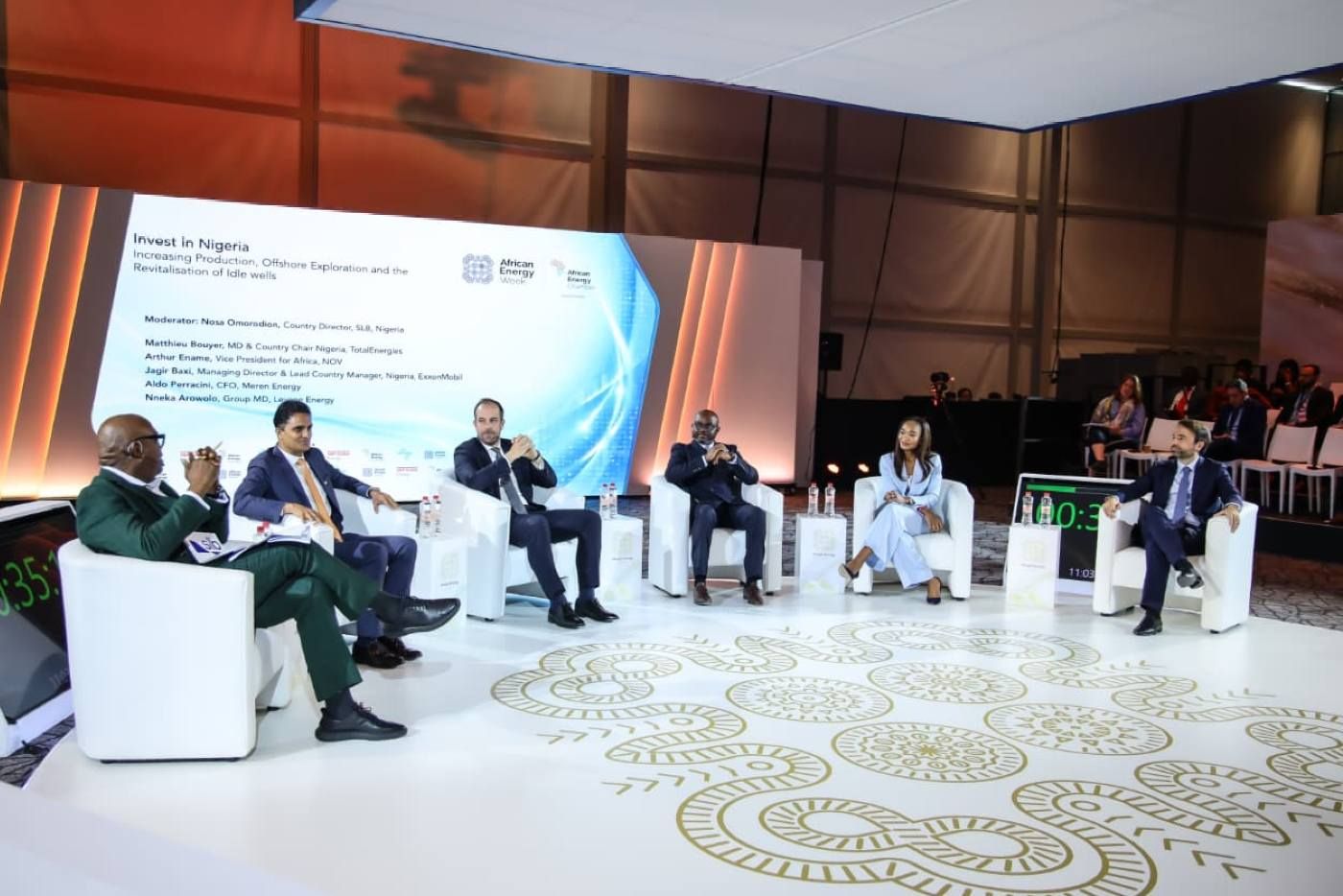
TotalEnergies expects a deepwater drilling rig to arrive in Nigeria by the end of October 2026, following a nine-month mobilization process that previously took three years. Speaking during the Invest in Nigeria panel at African Energy Week (AEW) 2026 in Cape Town, Matthieu Bouyer, Managing Director and Country Chair of TotalEnergies Nigeria, said the rig will support new exploration drilling, highlighting improvements in project execution as regulatory reforms and investment incentives support renewed upstream activity.
Bouyer said TotalEnergies is also working with the Ministry of Finance to restore deepwater capital allowances that changed under Nigeria’s new tax regime, which he argued conflict with the incentives introduced through executive orders.
“The growth we saw in the last year in Nigeria is coming from basically restoring security in the [Niger] Delta,” he added, calling pipeline security the foundation for sustaining base production.
The government’s incentives, revised gas pricing and Nigerian bank financing for partner AMNI unlocked the Ima gas project after two decades of discussion, credited Bouyer. TotalEnergies and AMNI took FID on Ima in September, targeting 350 million cubic feet per day from 2028 to supply Nigeria LNG.
On the same panel, ExxonMobil gave an update on its $1 billion Usan infill project targeting 40,000 bpd of new oil. The project has entered field execution, with a rig mobilized on the block since July, said Jagir Baxi, Managing Director and Lead Country Manager for ExxonMobil Nigeria. Baxi said the investment followed the resolution of legacy production sharing contract issues and the application of 2024 presidential directives on local content. “Without that, there is no new investment,” he said.
Panel moderator Nosa Omorodion, Country Director for SLB Nigeria, noted the regulator’s recent finding that Nigeria accounted for 38% of upstream capital sanctions in Africa in 2025, compared with 4% in 2021.
Baxi said Nigeria, producing about 1.7 million bpd of crude and condensate, needs systemic reform to move faster. “I don’t think we can do this project by project to be able to get to 3 million barrels by 2030,” he said. Bouyer, however, argued that project-by-project work remains the most practical way to clear immediate barriers to FIDs.
Meren Energy, a non-operating partner in Nigerian deepwater licenses, expects activity to start across all of its Nigerian assets from late 2026 or early 2027, said CFO Aldo Perracini. Meren is prioritizing infill drilling and existing discoveries, and plans to pursue exploration acreage in the bid round. “We see Nigeria as our key development opportunity right now,” he said.
Nneka Arowolo, Group MD of Levene Energies, said Nigeria has honored stability provisions when changes in law have been tested. She argued that indigenous acquirers will be judged on their ability to grow the country’s reserves. “We need to see reserves replacement. That ultimately is going to be the test of value creation,” she said.
Arthur Ename, Vice President for Africa at NOV, said the three million bpd target will test Nigeria’s ability to deliver projects on schedule. He said delays often come from poorly managed interfaces between contractors rather than from technology. He also urged operators to book manufacturing slots early and offer suppliers longer-term contracts so the service sector can plan and invest ahead of demand.