)
)
)
U.S. Development Finance Corporation Passes $14 Billion in African Commitments, Targets LNG and Pipelines
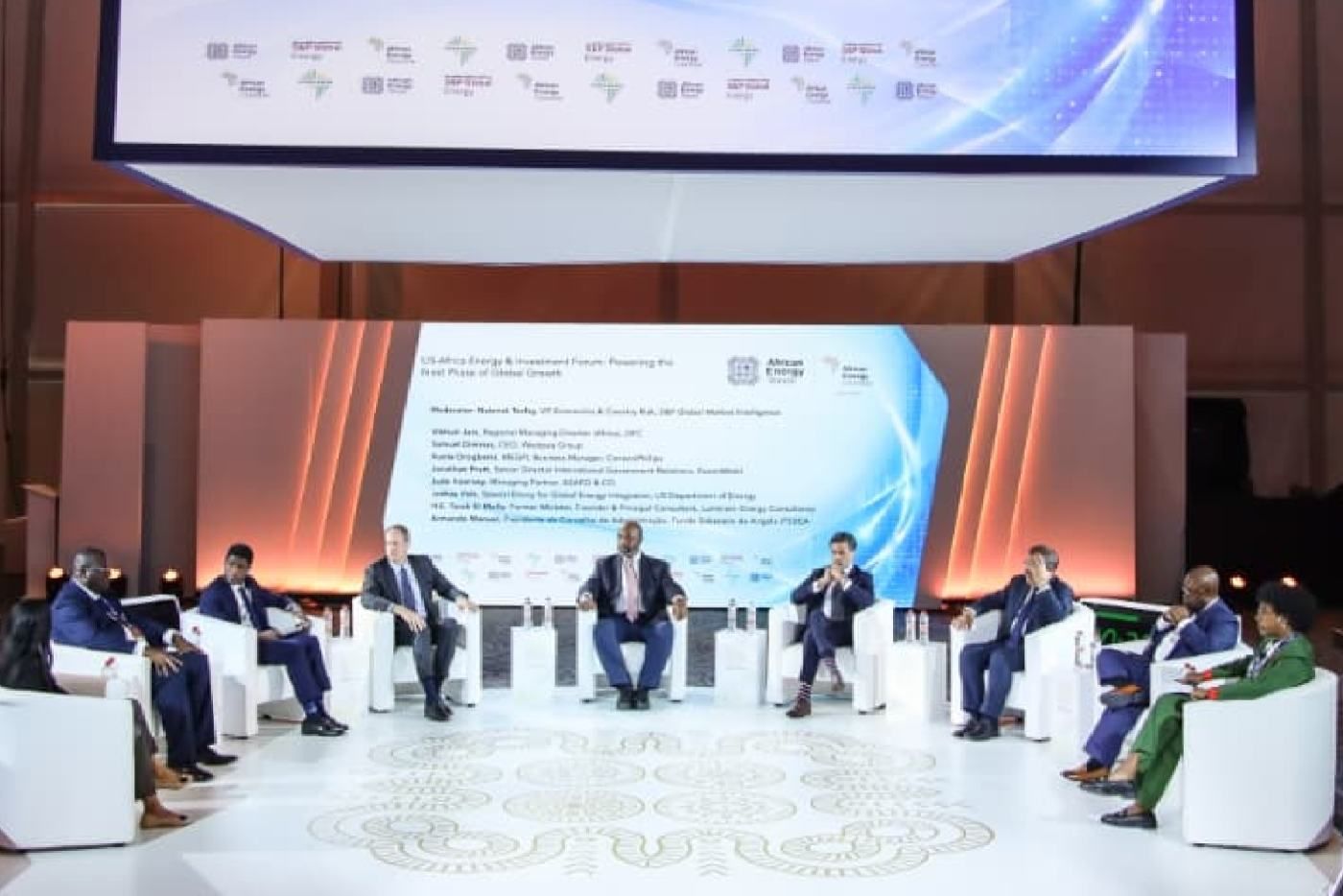
The U.S. International Development Finance Corporation (DFC) has more than $14 billion in investment commitments across Africa and is increasingly backing large infrastructure such as LNG import terminals and pipelines, said Vibhuti Jain, Regional Managing Director for Africa, at African Energy Week (AEW) 2026 in Cape Town.
Speaking at AEW’s U.S.-Africa Energy & Investment Forum, Jain said the U.S. government’s overseas investment arm will not finance projects without proper feasibility studies, impact assessments and bankability analysis, but offers reimbursable grants to help partners complete that early-stage work. For interlinked gas projects, she said host governments should provide the guarantees needed to make each segment bankable.
Angola’s sovereign wealth fund, Fundo Soberano de Angola (FSDEA), has also set aside a dedicated tranche of capital for project preparation, since many African projects fail to reach financial close because they are poorly prepared, said Chairman of the Board Armando Manuel. The fund is prioritizing transmission lines while also considering midstream, downstream and marginal oil field opportunities. Manuel said about 95% of FSDEA’s securities are invested in the U.S., and pointed to the Longonjo rare earths project as a model for U.S. co-investment in Angola. DFC committed project development funding to Pensana to advance refining facilities at Longonjo, where FSDEA holds 29.1% of Pensana’s share capital through a subsidiary.
U.S. financing for the continent extends beyond DFC, with the Export-Import Bank of the United States (US EXIM) now holding 30% of its exposure in Africa, said Joshua Volz, Special Envoy for Global Energy Integration at the U.S. Department of Energy. “There is no future global energy architecture without Africa. Africa is not a nice-to-have, it’s a must-have,” he said. Volz urged African governments to shorten permitting timelines, arguing that delays deter capital more than political risk does.
Operators speaking on the panel noted that fiscal certainty remains the deciding factor for large-scale investment. Jonathan Pratt, Senior Director of International Government Relations at ExxonMobil, said fiscal terms and stabilization clauses determine whether the company commits to 30- to 40-year investments. Tarek El Molla, Egypt’s former Minister of Petroleum and Mineral Resources and now Founder of Luminant Energy Consultancy, said Egypt attracted super-majors by guaranteeing fiscal stability through parliament. “If you just promise things, convincing them that everything is going to be accepted, I don’t think that they will trust you,” he said.
The panel noted that local content rules can cause friction with international investors as an unintended side effect. Jude Kearney, Managing Partner at pan-African law firm ASAFO & CO, argued requiring a local partner to own 51% of a joint venture deters investors when that partner does not fund a matching share of costs. Samuel Diminas, CEO of U.S.-African services firm Westpaq Group, said registering a service company can take one to three years in many African markets compared with about three days in the U.S., though he expects U.S. involvement in African energy to grow in the coming years.